
Sprinkler system water risk: a guide for facility managers

A sprinkler system water risk is defined as the potential for harm caused by water discharged, leaked, or contaminated within a fire suppression sprinkler system. This includes structural damage to buildings, microbial contamination of water supplies, and regulatory compliance failures. A single activated sprinkler head releases 15–25 gallons of water per minute, enough to cause significant damage within the first hour. For facility managers and compliance officers, understanding what is a sprinkler system water risk is not optional. It sits at the intersection of fire safety, water hygiene, and property protection, and the consequences of getting it wrong range from costly repairs to enforcement action under UK health and safety legislation.
What is a sprinkler system water risk and what causes it?
Sprinkler system water risks arise from several distinct failure modes, each with different consequences for your building and its occupants.
Mechanical damage to sprinkler heads is one of the most common causes of accidental discharge. Sprinkler heads are fragile by design. A forklift, a ladder, or even a carelessly swung door can trigger a head and release hundreds of gallons of water before the system is isolated. NFPA 13 requires that heads in high-risk zones be fitted with listed guards, yet this requirement is frequently overlooked during fit-outs and refurbishments.
Internal pipe corrosion, particularly Microbiologically Influenced Corrosion (MIC), is a hidden but serious threat. MIC develops inside sprinkler piping when bacteria colonise the internal surface of steel pipes, accelerating corrosion and producing pinhole leaks. These leaks are easy to dismiss as minor, but they signal systemic degradation that can compromise the entire system.
The primary causes of sprinkler system water risks include:
Stuck or failing valves that prevent proper system isolation during maintenance or accidental discharge
Degraded seals and O-rings around sprinkler heads, which allow slow drips that worsen over time
Backflow events, where pressure fluctuations in the water main draw stagnant, contaminated water from the sprinkler pipework back into the potable supply
Sediment and biofilm buildup inside pipes, which reduces flow efficiency and creates conditions for microbial growth
Accidental activation during maintenance, particularly when contractors work near heads without conducting a job hazard analysis
Pro Tip: Before any maintenance or construction work near sprinkler systems, require contractors to complete a job hazard analysis. Accidental activation during routine work is one of the most preventable and expensive sprinkler incidents a facility manager will face.
How does sprinkler water cause damage to buildings and contents?
The damage from a sprinkler activation follows a predictable but brutal timeline. Understanding it helps you respond faster and limit the financial impact.
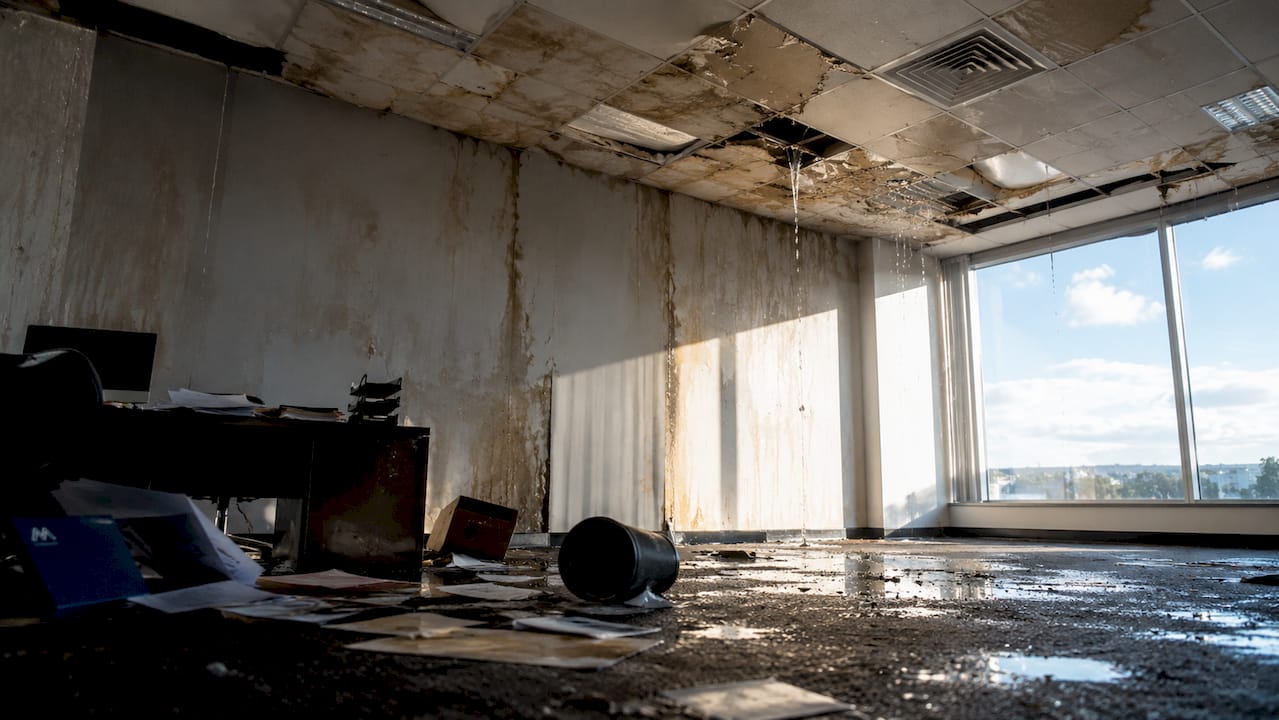
Within the first 60 minutes, water penetrates porous materials including drywall, carpet, insulation, and ceiling tiles. A single head discharging at 20 gallons per minute produces 1,200 gallons in an hour. That volume saturates a localised area completely, and the weight of absorbed water can cause ceiling collapse.
Between 1 and 24 hours, water wicks laterally into subfloors, wall cavities, and structural timbers. This hidden migration is the reason surface drying alone is never sufficient. Moisture metres and thermal imaging are needed to locate water that has travelled beyond the visible wet zone.
The critical window is 24–48 hours. Mould colonises within 24 hours of water exposure in warm, humid conditions. Once mould establishes, remediation costs multiply and the building may require partial closure. Drying must begin within this window, not after the insurance assessor has visited.
The materials most commonly affected, and why they matter:
Drywall absorbs water rapidly and loses structural integrity within hours. It cannot be dried in place if saturation exceeds a certain threshold and must be cut out and replaced.
Timber flooring and subfloors warp and cup as moisture content rises. Cupping is visible within 48 hours; structural damage to joists takes longer but is far more expensive to repair.
Insulation retains moisture long after surface materials appear dry, creating a reservoir for mould growth inside wall and floor assemblies.
Electrical installations present an immediate safety risk when water contacts wiring, junction boxes, or distribution boards.
One detail that surprises many facility managers: sprinkler systems activate individually, with one head per fire event. The damage is concentrated, not building-wide. That concentration means a single room can receive the full force of discharge, making localised damage severe even when the wider building is unaffected. Professional water damage restoration requires both structural drying and sanitation, not just surface mopping.
Why is contamination risk, including Legionella, significant in sprinkler systems?
Sprinkler pipework is not designed to carry potable water. It sits static for months or years between activations, creating ideal conditions for microbial growth. Accidental discharge water is frequently black, foul-smelling, and contaminated with rust, biofilm, and bacteria. This is not a cosmetic problem. It is a public health risk.
Legionella pneumophila thrives in water systems where temperatures sit between 20°C and 45°C and where stagnant conditions allow biofilm to form. Sprinkler pipework that is rarely flushed meets both criteria. When a head activates or a pipe leaks, aerosolised water droplets can carry Legionella into the breathing zone of building occupants. A water hygiene audit of your sprinkler system should assess these conditions as part of your broader Legionella control programme.
The contamination risks specific to sprinkler systems include:
Backflow into potable supplies: Pressure fluctuations during firefighting or water main breaks can draw contaminated sprinkler water back into the drinking water network. This is a cross-connection risk that requires a tested backflow prevention device on every sprinkler supply line.
Biofilm and sediment: Stagnant water deposits sediment and supports biofilm, which shelters bacteria from disinfection treatments.
Aerosolisation during discharge: Water released at pressure creates fine droplets that travel through ventilation systems and into occupied spaces.
Cross-contamination of adjacent systems: In large facilities, sprinkler pipework runs close to domestic hot and cold water services. A leak or backflow event can affect both.
The water hygiene risk hierarchy places elimination and substitution above monitoring and personal protective equipment. For sprinkler systems, that means designing out stagnant zones, fitting backflow prevention, and scheduling regular flushing, not simply testing water after a problem appears.
What are the best practices for managing sprinkler system water risks?
Managing sprinkler system water risks requires a combination of physical controls, scheduled maintenance, and documented compliance procedures.
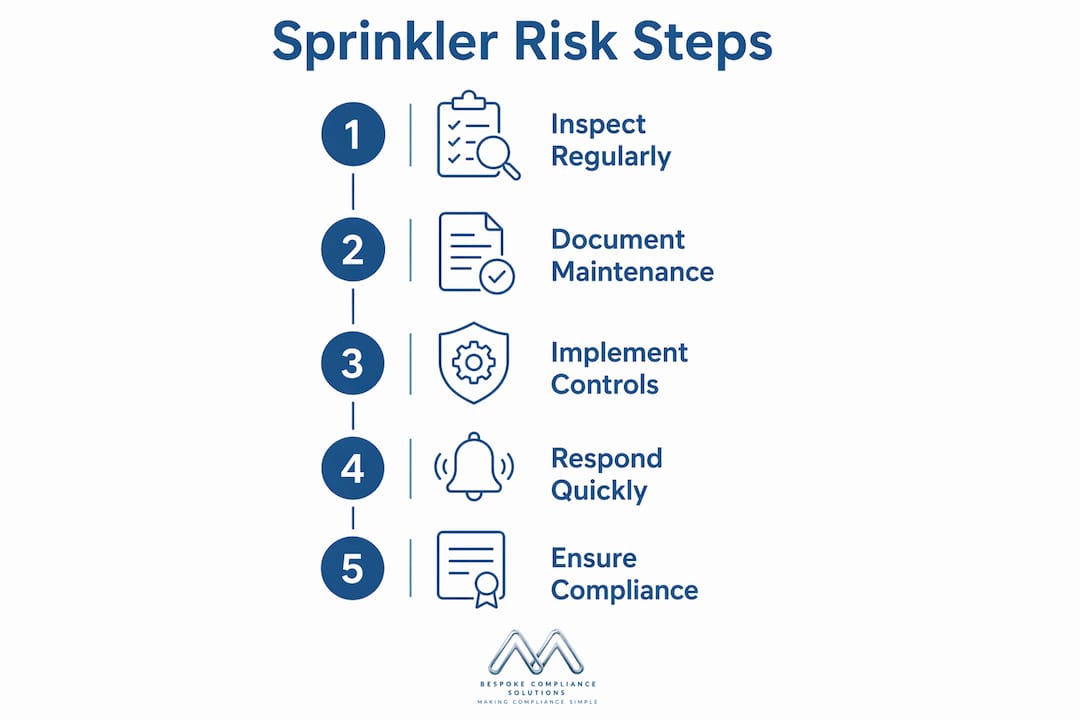
Inspection and maintenance under NFPA 25 sets the minimum standard for sprinkler system integrity. Leaking heads or stuck valves can result in daily fines or certificate revocation if not addressed within the timeframes NFPA 25 specifies. UK facilities operating under BS 9251 or BS EN 12845 face equivalent obligations under those standards.
The most effective mitigation measures, in order of priority:
Fit listed guards on all sprinkler heads in warehouses, car parks, plant rooms, and any area with vehicle or equipment movement. Guards prevent mechanical damage without affecting activation performance.
Install and test backflow prevention devices on every sprinkler supply connection. Test annually and after any significant pressure event on the water main.
Schedule quarterly visual inspections of all accessible heads, valves, and pipework. Document findings in a logbook and act on defects within defined timeframes.
Conduct annual water testing inside the sprinkler pipework to detect MIC, sediment, and microbial contamination before they cause failure.
Develop a written emergency response protocol for accidental discharge. This should include isolation procedures, contact lists for restoration contractors, and a timeline for notifying insurers and regulators.
Commission a Legionella risk assessment that explicitly covers your sprinkler system, not just domestic hot and cold water services. Many assessments omit sprinkler pipework entirely.
Pro Tip: Waterproofing the structural areas around sprinkler system installations reduces the impact of leaks and accidental discharge significantly. A waterproofing strategy for plant rooms, riser shafts, and basement areas is a low-cost measure that pays for itself after a single incident.
The restoration response after a discharge event must begin within hours, not days. Water extraction and dehumidification must start promptly to prevent mould colonisation and structural damage. Sanitation of contaminated surfaces is equally necessary, given the microbial content of sprinkler water. Facilities in healthcare settings face additional obligations, and a healthcare water risk assessment should inform the response protocol for those environments.
Key takeaways
Sprinkler system water risks cause structural damage, microbial contamination, and regulatory penalties when not actively managed through inspection, backflow prevention, and rapid response.
Point | Details |
Discharge volume is significant | A single head releases 15–25 gallons per minute, causing severe localised damage within 60 minutes. |
Mould window is 24–48 hours | Drying and sanitation must begin within this period to prevent mould colonisation and structural loss. |
Backflow is a potable water risk | Contaminated sprinkler water can enter drinking supplies during pressure changes without a tested backflow prevention device. |
Legionella risk is real in stagnant pipework | Sprinkler pipes that sit unused create ideal conditions for Legionella growth and must be included in risk assessments. |
Compliance failures carry penalties | Leaking heads and stuck valves breach NFPA 25 and equivalent UK standards, risking fines and certificate revocation. |
What facility managers get wrong about sprinkler water risks
The most common mistake I see is treating sprinkler systems as fire safety infrastructure and nothing else. Facility managers invest in annual fire system inspections but leave the water hygiene dimension entirely unaddressed. Sprinkler pipework is, by definition, a water system. It carries stagnant water at ambient temperatures for extended periods. That makes it a Legionella risk, a backflow risk, and a contamination risk, regardless of whether it ever activates.
The second mistake is underestimating minor leaks. A slow drip from a sprinkler head is not a nuisance. It is evidence of MIC corrosion or seal degradation, and it will worsen. I have seen facilities where a “minor drip” became a catastrophic pipe failure within weeks because no one escalated the finding from the inspection log.
Speed matters more than most managers expect when a discharge does occur. The 24-hour mould window is not a guideline. It is a hard biological reality. Facilities that wait for insurance approval before starting extraction consistently face higher remediation costs and longer closures than those that act immediately and document everything for the claim afterwards.
The facilities that manage these risks well share one characteristic: they treat water hygiene as a continuous programme, not a periodic checkbox. That means trained staff, documented inspections, and a specialist partner who understands both the fire safety and the water hygiene dimensions of sprinkler systems.
— Sammi
How Bespokecompliancesolutions supports sprinkler water risk compliance
Sprinkler system water risks sit at the boundary between fire safety and water hygiene compliance. Bespokecompliancesolutions specialises in exactly that boundary.
Bespokecompliancesolutions provides bespoke Legionella risk assessments that cover all water systems on your site, including sprinkler pipework that most assessors overlook. The team delivers water sampling and analysis, Legionella testing, and implementation of control programmes tailored to your building type and occupancy. Whether you manage a commercial office, a healthcare facility, or a mixed-use development, Bespokecompliancesolutions builds a compliance programme around your specific risks, not a generic template. Contact Bespokecompliancesolutions to schedule a water hygiene assessment that addresses your sprinkler system alongside your wider water risk obligations.
FAQ
What is a sprinkler system water risk?
A sprinkler system water risk is the danger posed by water released, leaked, or contaminated within a fire suppression sprinkler system, including structural damage, microbial contamination such as Legionella, and regulatory non-compliance.
How much water does a sprinkler head release when activated?
A single sprinkler head releases between 15 and 25 gallons of water per minute. That volume causes significant localised damage within the first 60 minutes of activation.
Can sprinkler systems cause Legionella contamination?
Yes. Stagnant water inside sprinkler pipework creates conditions where Legionella bacteria can grow. Backflow events can carry contaminated water into potable supplies, and aerosolised discharge can expose occupants to infection risk.
How quickly must water damage from sprinklers be addressed?
Drying and sanitation must begin within 24–48 hours of water exposure. Mould colonises as early as 24 hours after saturation, and delays significantly increase remediation costs and structural damage.
What standards govern sprinkler system inspection in the UK?
UK facilities operate under BS 9251 for residential systems and BS EN 12845 for commercial installations. NFPA 25 provides internationally recognised inspection and maintenance protocols that many UK compliance programmes reference alongside British Standards.
Recommended
Comments