
5 minute UKAS check for legionella testing in England
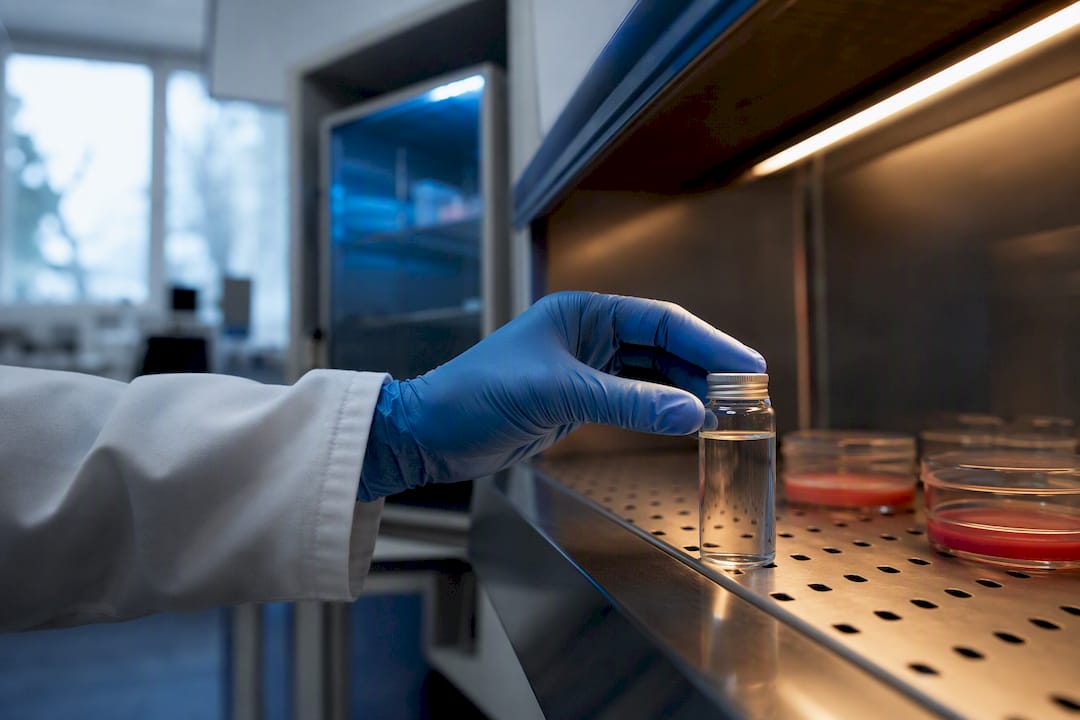
If you’re sending water samples for compliance purposes, the laboratory must carry “Legionella in water” on its UKAS Schedule of Accreditation and test using the culture method BS EN ISO 11731. A UKAS logo on a website proves nothing on its own. Before you book anything, pull up the lab’s Schedule on ukas.com and confirm the scope and method match. Then check whether you actually need to sample at all, because testing is risk-driven, not routine.
TL;DR:
UKAS accreditation for legionella testing covers BS EN ISO 11731 culture methods and must be verified through the Schedule of Accreditation, not marketing claims.
Routine sampling is rarely necessary for well-maintained systems with correct temperature controls, but high-risk, healthcare, or failed systems require targeted testing based on specific triggers.
Always confirm laboratories participate in proficiency testing and use current, UKAS-approved methods to avoid unreliable or outdated testing practices.
A continuous, integrated approach linking risk assessment, accredited testing, and remediation minimizes mistakes and ensures effective legionella management.
Table of Contents
What UKAS accreditation for legionella testing actually covers
UKAS accreditation is granted per test, not per laboratory. A lab can hold UKAS accreditation for dozens of water parameters and still have no accreditation for legionella whatsoever. That distinction trips up more duty holders than any other part of the compliance chain.
Two standards matter here. Laboratories work to ISO/IEC 17025, the general standard for testing competence, while the specific method for legionella culture is BS EN ISO 11731. Inspection bodies carrying out risk assessments, rather than lab analysis, typically work to ISO/IEC 17020, and UKAS RG9 guidance sets out how that accreditation should align with HSE’s ACoP L8, HSG274 and BS 8580‑1.
UKAS also publishes technical bulletins that push laboratories towards current methods and away from withdrawn standards. Worth knowing before you pick a supplier:
Accreditation for general water chemistry does not cover legionella culture testing.
The Schedule of Accreditation, not the lab’s marketing page, is the only document that proves scope.
BS EN ISO 11731:2017 is the method UKAS expects labs to be working to now, per its own technical bulletin on water microbiology.
When is legionella laboratory sampling actually required?
Most hot and cold water systems in England control legionella risk through temperature, not through routine sampling. If your system is well maintained and your temperature monitoring checks are hitting target, laboratory testing usually isn’t required month to month.
Sampling becomes necessary in specific circumstances:
Regulated high-risk systems — cooling towers are typically sampled quarterly under HSG274 Part 1, and spa pools monthly under HSG274 Part 3.
Healthcare premises — sentinel outlet sampling under HTM 04‑01 applies to hospitals and similar settings, reflecting the higher vulnerability of patients.
Failed controls — if temperature monitoring shows a calorifier or outlet running outside target range and the fault isn’t quickly resolved.
A previous positive result — follow-up sampling confirms whether remedial work has worked.
Outbreak or case investigation — triggered by public health teams rather than routine schedules.
Risk assessment recommendation — your written risk assessment may flag site-specific reasons to sample, even outside these categories.
Outside these triggers, sampling every system “just in case” wastes budget and can muddy your audit trail with results nobody asked for.
How to verify and choose a UKAS-accredited laboratory
Checking a lab’s credentials takes about five minutes and it’s the single most skipped step in the entire process.
Step 1: Find the accreditation number. Most labs display it on their website. Search that number on ukas.com or ask the lab directly.
Step 2: Open the Schedule of Accreditation. This is a PDF, not a certificate graphic. Search it for “Legionella” and check the method listed alongside it, which should be BS EN ISO 11731 or a documented variant that UKAS has separately assessed.
Beyond scope, a few practical checks separate a reliable supplier from a risky one:
Turnaround time for culture results (about a week to two weeks is standard).
Whether they supply sterile sample kits and courier collection, or leave you to source your own.
Participation in proficiency testing schemes, which demonstrates ongoing competence rather than a one-off assessment.
Evidence the lab has updated its method in line with UKAS’s water microbiology technical bulletin rather than still referencing withdrawn standards.
A neutral comparison of UK legionella testing laboratories found prices starting around £45 per sample among labs with confirmed legionella scope, and flagged the same recurring buyer mistake: assuming a general UKAS badge covers legionella when it doesn’t.
Pro Tip: Save the Schedule of Accreditation PDF alongside your risk assessment records. If you’re ever audited, being able to show the lab’s exact scope at the time of sampling is worth more than any invoice.
Red flags to walk away from: no Schedule available on request, vague answers about “which method” is used, or references to older ISO standards without explanation of why they’re still valid.
What good sampling looks like in practice
A good result starts before anyone opens a sample bottle. Sample points should come straight from your written risk assessment and scheme of control, typically sentinel outlets (nearest and furthest from the calorifier), calorifier drain points, cold water storage tanks, and any showers or outlets used infrequently.
Technique matters more than people expect. Bottles need to contain sodium thiosulphate to neutralise any residual disinfectant, otherwise you get a false negative. Label each bottle clearly and log a chain of custody: who took it, when, and from where. Decide in advance whether you need a first-draw cold sample or a run-to-temperature hot sample, since mixing these up invalidates the point of testing that outlet.
Transport is where good samples go bad. Keep bottles cool and get them to the laboratory soon after sampling, typically within a couple of days, a window backed by HSE’s own guidance on testing and monitoring water systems. Most UKAS-accredited labs provide prepaid return packaging and a courier service specifically to protect this window, so use it rather than relying on standard post.
On methods: culture testing under BS EN ISO 11731 typically takes about ten days and remains the standard for regulatory compliance. Rapid qPCR screening can give a same-day indication, useful for triage, but it cannot distinguish live from dead organisms and does not replace culture for compliance purposes.
Reading the report: HSG274 action levels and what happens next
Your lab report will state the species detected (if any), the result in colony-forming units per litre (cfu/L), or “not detected.” Occasionally a report comes back invalid due to overgrowth of other organisms masking the legionella count, in which case resampling is the only option.
Below 100 cfu/L — system regarded as under control; continue routine monitoring.
100 to 1,000 cfu/L — review control measures, resample, and investigate why the count has risen.
Above 1,000 cfu/L — immediate remedial action required, which usually means disinfection and a review of the whole control regime.
File every report in the site logbook alongside a note of what corrective action, if any, was taken. Auditors and enforcing authorities look for a decision trail, not just a stack of results. For healthcare settings, a result above the review threshold often needs escalation through infection control teams rather than just facilities management. If you’re unsure how to read a report against these thresholds, this guide to interpreting legionella water samples walks through it step by step.
Why UKAS scope checks are the step everyone skips
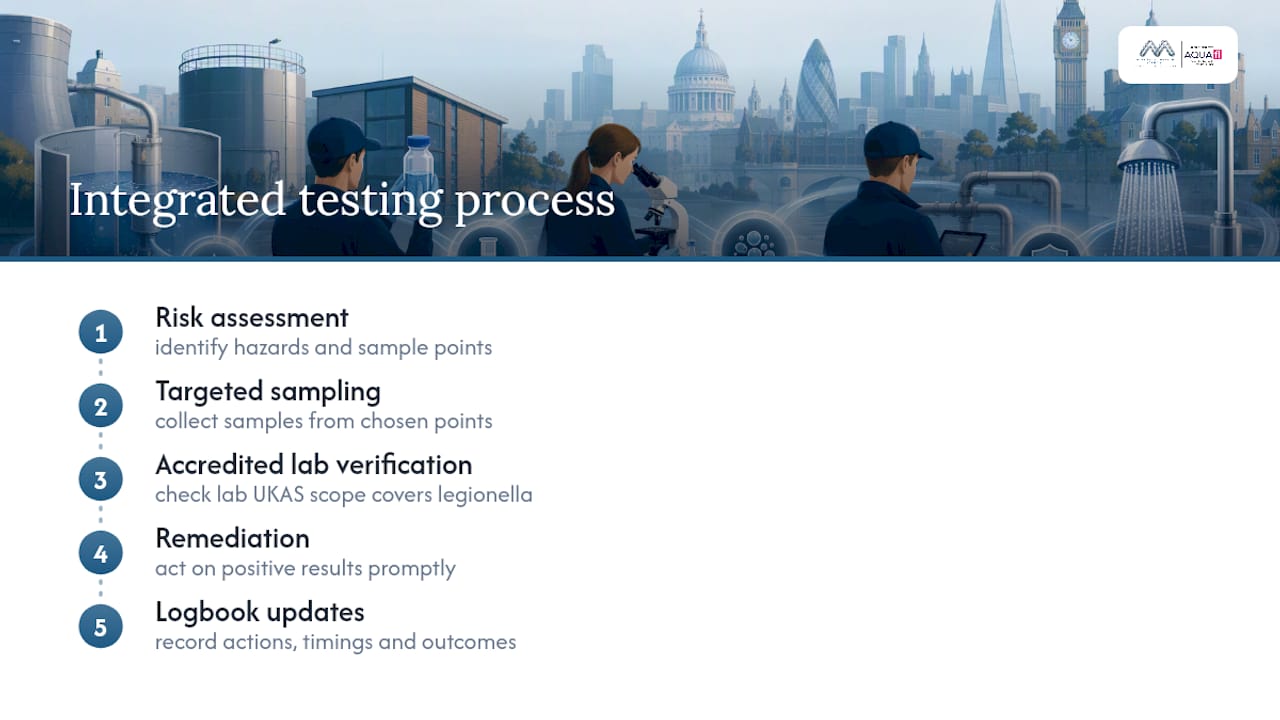
The failures we see most often in practice aren’t dramatic. They’re mundane: a sample sent to a lab whose Schedule doesn’t actually cover legionella, a courier delay that pushes a 48 hour window past 72, a positive result filed away with no note of what was done about it. Any one of these can undo months of otherwise good compliance work.
An integrated approach closes those gaps because the same team that wrote the risk assessment is choosing the sample points, checking the lab’s accreditation, and interpreting the result against your specific system, rather than three separate parties handing off paperwork. Risk assessment, targeted sampling, accredited lab verification, remediation and logbook updates work best as one continuous process, not four disconnected purchases.
— Sammi
How Bespoke Compliance Solutions can help with your legionella testing
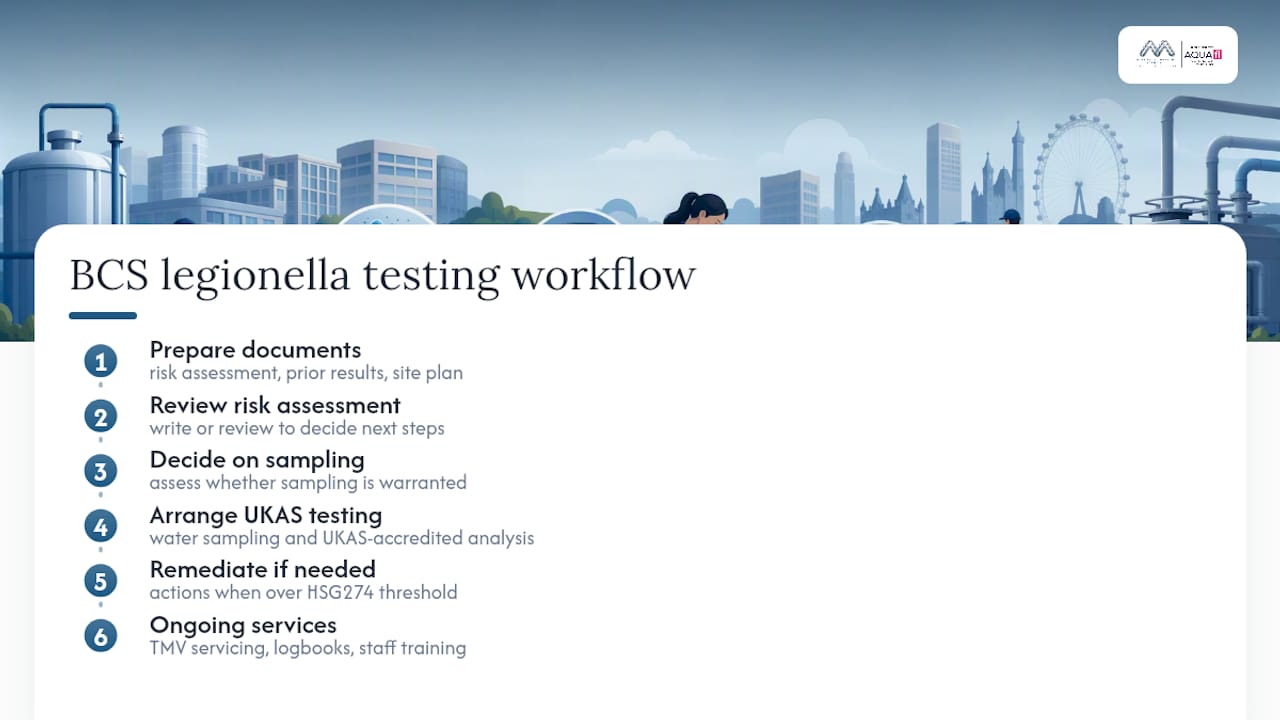
There’s no shortage of standalone labs and directory listings if you just want a sample analysed. But a result on its own doesn’t fix anything, it just tells you whether you have a problem. Bespoke Compliance Solutions runs the whole chain: writing or reviewing your risk assessment, deciding whether sampling is actually warranted, arranging water sampling and analysis through UKAS-accredited routes, and carrying out remediation if a result comes back over the HSG274 threshold.
[
To get started, have your most recent risk assessment and any prior sample results ready, along with a rough site plan showing outlets, tanks and calorifiers. That’s usually enough for an initial quote or to schedule a site visit. Alongside testing, the team also covers TMV servicing, bespoke logbook systems, and legionella awareness training so your on-site staff aren’t relying solely on external visits to stay compliant.
If you manage sites in and around Coventry, book a legionella risk assessment in Coventry or request a quote through the main testing service page to get the process moving.
Where to verify accreditation and standards yourself
Don’t take any lab’s word for its own accreditation. Check these directly:
UKAS register — search the lab’s accreditation number and open its Schedule of Accreditation to confirm “Legionella in water” is listed.
HSE HSG274 — the guidance underpinning ACoP L8, covering testing, monitoring and action levels.
BS EN ISO 11731 — the culture method standard labs should be working to.
UKAS technical bulletins — cover method currency and withdrawn standards.
LegionellaCheck — a neutral directory for comparing accredited labs by scope, price and turnaround.
Start with the UKAS Schedule. Everything else confirms context, but that document confirms the fact that actually matters.
Sources
FAQ
Is legionella testing a legal requirement in the UK?
There’s no blanket legal requirement to sample every water system, but duty holders must manage legionella risk under the Health and Safety at Work Act and ACoP L8, and specific regimes (cooling towers, spa pools, healthcare) do carry mandatory sampling frequencies.
What is the British standard for sampling for legionella?
The culture method used for regulatory compliance is BS EN ISO 11731, and laboratories must hold specific UKAS accreditation for “Legionella in water” under that method to produce results that satisfy HSE expectations.
How can I test for legionella in the UK?
Confirm sampling is warranted (via your risk assessment or a specific trigger like failed temperature control), verify a laboratory’s UKAS Schedule lists legionella under BS EN ISO 11731, then take samples using sterile thiosulphate bottles and get them to the lab within 24 to 48 hours.
Is legionella testing required for every building?
No. Most ordinary hot and cold water systems rely on temperature monitoring as the primary control, with laboratory sampling reserved for high-risk systems like cooling towers and spa pools, or triggered by a specific event such as a control failure.
What happens if a legionella result comes back high?
Anything above 1,000 cfu/L requires immediate remedial action, typically disinfection, followed by a review of controls and resampling to confirm the system is back under control before returning to normal monitoring.
Recommended
Comments