
UK Managers: Size, Sample and Maintain Softeners to Control Legionella
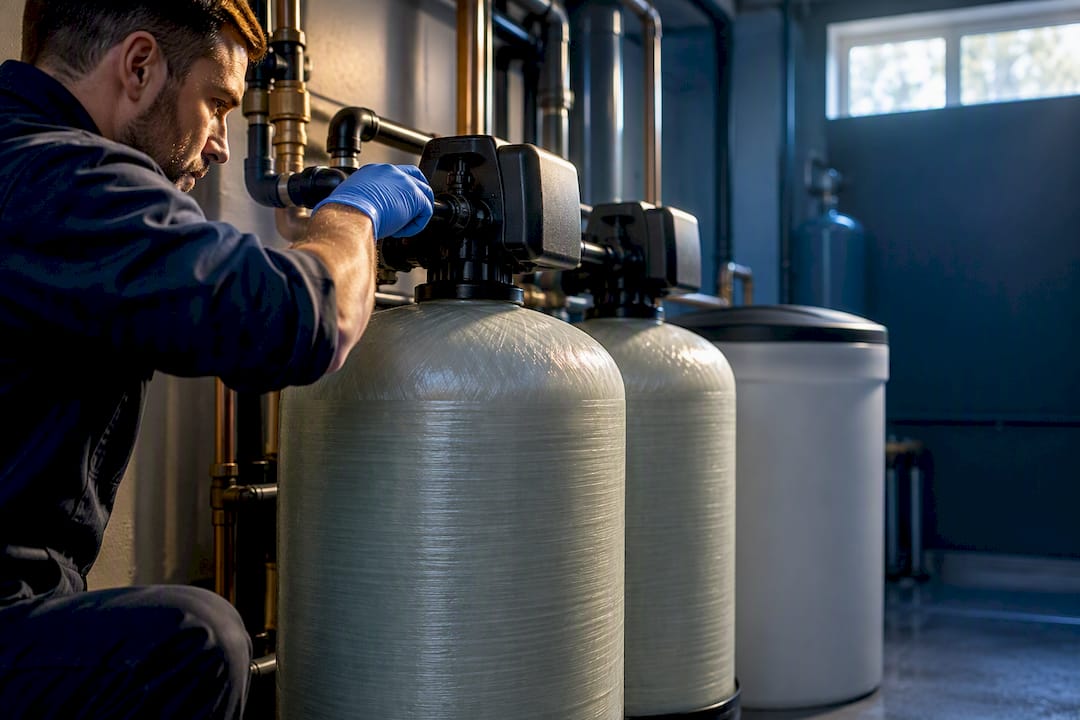
Water softeners are compatible with Legionella control, but only when they are treated as a distinct risk system, not a fit-and-forget appliance. The single non-negotiable requirement is correct sizing and regeneration frequency, backed by sample points fitted before and after the unit, so the softener never becomes a stagnant reservoir for bacteria. Get sizing, sampling and maintenance right, and softening sits comfortably inside a compliant water safety plan.
TL;DR:
Correct sizing and regeneration frequency are essential to prevent softeners from becoming bacterial reservoirs, with sample points before and after the unit required for routine testing.
Softening reduces scale buildup and biofilm growth, but increases pipe corrosion risk, requiring blending with hard water and careful monitoring of disinfectant residuals.
Phosphate-based softeners can promote Legionella growth, especially in low-phosphorus, high-organic carbon water supplies, making alternative methods more appropriate in sensitive situations.
Ongoing control depends on regular sampling, visual inspections, and maintaining detailed records of system changes, with immediate action needed if disinfectant levels drop or Legionella is detected.
Site assessments should verify proper softener sizing, sampling point placement, disinfectant compatibility, and proper documentation, starting from about £185 for initial risk evaluation.
Table of Contents
What do L8 and HSG274 say about water softener legionella control?
HSE’s L8 Approved Code of Practice puts the burden squarely on the dutyholder: identify every source of risk, prepare a written scheme, implement precautions, monitor them, and keep records that prove it. Temperature control remains the primary defence against Legionella, but any alternative measure, including softening, has to be demonstrably effective and documented in the same scheme.
HSG274 Part 2 goes further and names softeners directly. It recommends softening the cold-water feed to hot water distribution systems in hard water areas, particularly where calorifiers or heating coils run above 60°C and scale would otherwise build up fast. But the same guidance is explicit that softeners must be fitted before any biocide dosing point, and that sample points are required both before and after the unit for routine testing.
That guidance carries three practical obligations for anyone running a softener on a Legionella-relevant system:
Add the softener to the risk assessment as its own item, not a footnote under “water treatment”
Fit and label sample points upstream and downstream before commissioning
Update the written scheme, including maintenance intervals and the name of the competent person responsible for the unit
Skipping any of these three tends to be the first thing an auditor flags, because HSG274 treats softeners as risk systems in their own right, not passive plumbing.
How does softening actually change Legionella risk?
Removing hardness minerals cuts the scale that would otherwise coat calorifier bases and heating coils, and less scale means less biofilm surface for bacteria to colonise. That’s the upside. The downside is that very soft water is more aggressive towards metal pipework, and unmanaged corrosion introduces its own microbial and structural problems downstream.
HSG274 Part 1 is blunt about the trade-off: stripping out all hardness increases corrosivity, so blending a controlled proportion of hard water back into the softened supply is often the sensible fix, protecting both pipework and equipment warranties.
Phosphate chemistry is where the risk becomes sharper. A peer-reviewed study on phosphate-based softeners found that adding phosphates stimulated Legionella pneumophila growth in vitro, with average increases of roughly 1.19–1.28 log CFU/mL compared with untreated controls.
That’s not a rounding error. A log increase of that size represents the bacteria multiplying several-fold beyond the control samples under test conditions.
Three further mechanisms deserve attention:
Softening resin can strip disinfectant residual as water passes through, so chlorine or other biocide levels measured before the unit may not reflect what’s actually reaching taps and outlets afterwards
Resin beds and brine tanks that go uncleaned become biofilm habitats in their own right
Oversized units regenerate infrequently, leaving water standing in the resin bed for extended periods and giving any bacteria present time to establish
A Frontiers in Water case study documented exactly this: resin and adjacent expansion tanks tested positive for L. pneumophila, and Legionella counts fell only after the softener and tanks were replaced or remediated and the system flushed.
How should you specify and operate a softener to control Legionella?
Specification decisions made before installation do more to control risk than any amount of remedial work afterwards. Get these five things right at the design stage:
Size to typical demand, not peak capacity. A softener sized for occasional peak flow spends most of its life on standby, and long standby periods are exactly what let bacteria settle in. Twin-tank, demand-operated units that regenerate on actual usage tend to keep resin turnover higher than single-tank systems sized generously “to be safe.”
Fit and label sample points before and after the unit. These aren’t optional extras. HSG274 requires them, and without labelled access points, routine hardness checks and microbiological sampling both become guesswork.
Use manufacturer-approved, resin-safe disinfectants only. Generic biocides can degrade resin media or reduce its effective life, so check the manufacturer’s chemical compatibility list before choosing a disinfection product.
Site the unit away from heat sources and protect downstream pipework. Ambient warmth accelerates biological activity in standing water, and softened water’s corrosivity means downstream materials should be corrosion-resistant, or the softened output should be blended with a proportion of hard water to reduce aggressiveness.
Record every change in the written scheme. A new softener, a resin swap, or a change of disinfectant all need to be logged, and onsite staff need a short briefing so they know what’s changed and why.
Pro Tip: Keep a laminated card taped to the softener casing showing the last regeneration date, the disinfectant product in use, and the next scheduled resin inspection. It sounds basic, but it’s the single fastest way for a relief engineer or an external auditor to confirm the unit is under control without digging through a filing cabinet.
When should you avoid phosphate softening altogether?
Phosphate additives are the one softening chemistry that deserves genuine caution rather than routine use, particularly on drinking water systems. The Journal of Water and Health study behind the growth figures above flags that the risk becomes material specifically where mains water already carries low phosphorus and high organic carbon, because the added phosphate then becomes the limiting nutrient Legionella was waiting for.
Where a chemical analysis of raw water shows that combination, or where you simply can’t be certain, three alternatives are worth costing out:
Reverse osmosis for sensitive make-up water feeding closed systems, which strips minerals without adding a nutrient load
Non-phosphate scale inhibitors combined with side-stream filtration, which manage scale without feeding bacterial growth
Blending strategies that retain a controlled proportion of natural hardness rather than softening to zero
None of these are free. RO carries higher capital and running costs, non-phosphate inhibitors need more active monitoring to prove they’re working, and blending demands ongoing corrosion checks. But set against a positive Legionella result and the remedial costs that follow, the extra monitoring burden is usually the cheaper problem to have.
What ongoing monitoring keeps a softener under control?
A softener earns its place in a compliant system through what happens after commissioning, not the installation itself. Work through this sequence:
At commissioning: fit sample points, take baseline hardness and microbiological readings, and document the regeneration programme in the written scheme.
Daily: check the regeneration log and confirm the unit cycled as expected, visually inspecting for salt bridging or brine tank issues.
Weekly or biweekly: test disinfectant residual on both sides of the softener, using dip slides where continuous monitoring isn’t practical, to catch chlorine loss across the resin bed early.
Quarterly: take Legionella samples at the designated points, in line with the sampling frequency set out in your written scheme.
Annually: inspect the resin bed for fouling or compaction and review the softener’s continued suitability against current site usage.
Certain results should trigger immediate action rather than waiting for the next scheduled visit: a significant drop in disinfectant residual across the softener, an elevated heterotrophic plate count, any positive Legionella result, or evidence of prolonged stagnation. The response is the same each time, contain the affected section of the system, notify your competent person, and bring in specialist support for disinfection or remediation before the unit goes back into service.
Pro Tip: Photograph the resin bed at every annual inspection, not just when there’s a problem. A dated photo record makes it far easier to spot gradual fouling over several years, and it gives a compliance auditor something concrete to check against your written scheme rather than taking your word for it.
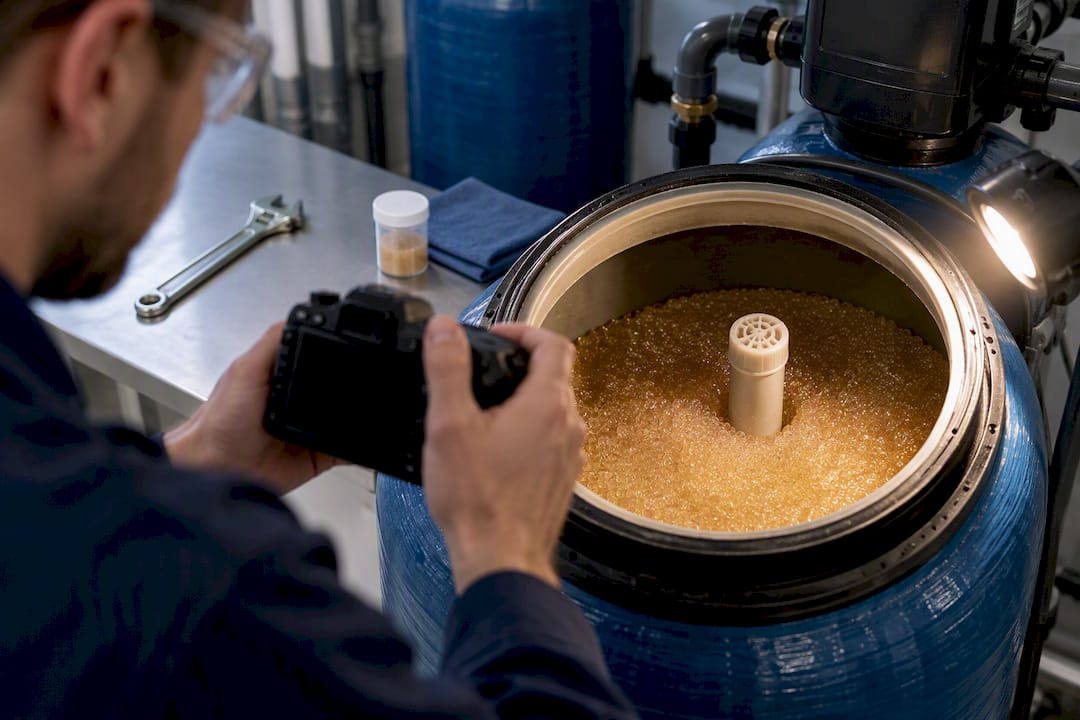
Keep every reading, log entry and inspection photo in one place, ideally the same file an assessor will ask for during a risk assessment review, because scattered records are one of the most common reasons a system that’s actually well managed still fails an audit.
Lessons from the field: what actually goes wrong
The faults that show up most often on site are strikingly consistent: softeners sized for a building’s peak demand rather than its real usage, no sample points fitted before or after the unit, disinfectants chosen without checking resin compatibility, and regeneration logs that simply don’t exist. None of these are exotic problems. They’re basic specification and record-keeping gaps that a proper risk assessment catches early, usually before they cost anything beyond the assessment fee itself.
The pattern holds across very different building types, which suggests it’s a specification and handover problem, not a sector-specific one. Fixing it rarely needs new equipment, just correct documentation, a briefed maintenance team, and softener checks written into the same scheme that governs the rest of the water system.
— Sammi
Get your water softener assessed for Legionella risk
A professional site review can check softener sizing, sample point placement, and disinfectant compatibility against HSE guidance before there’s a problem to fix.
[
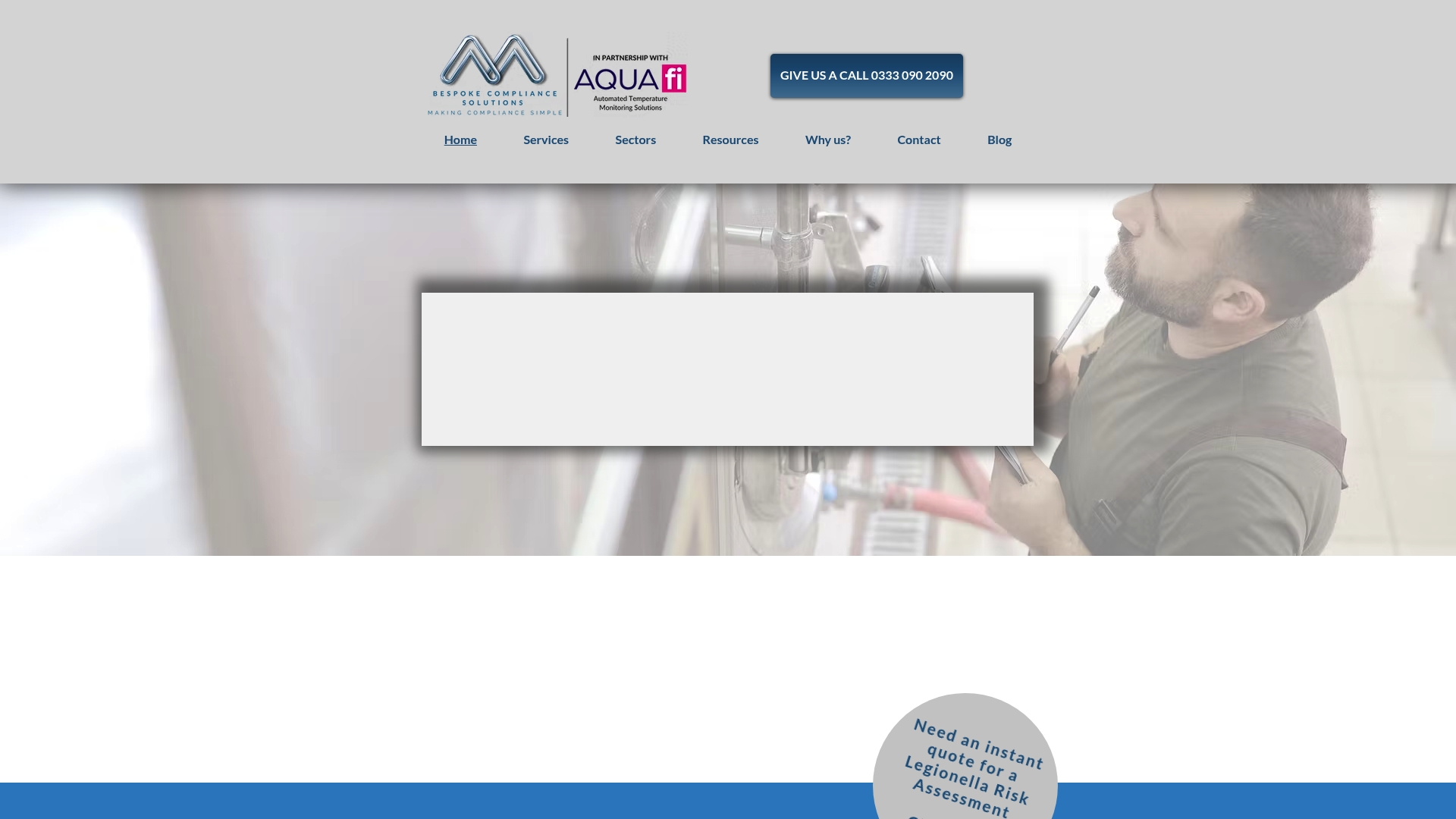
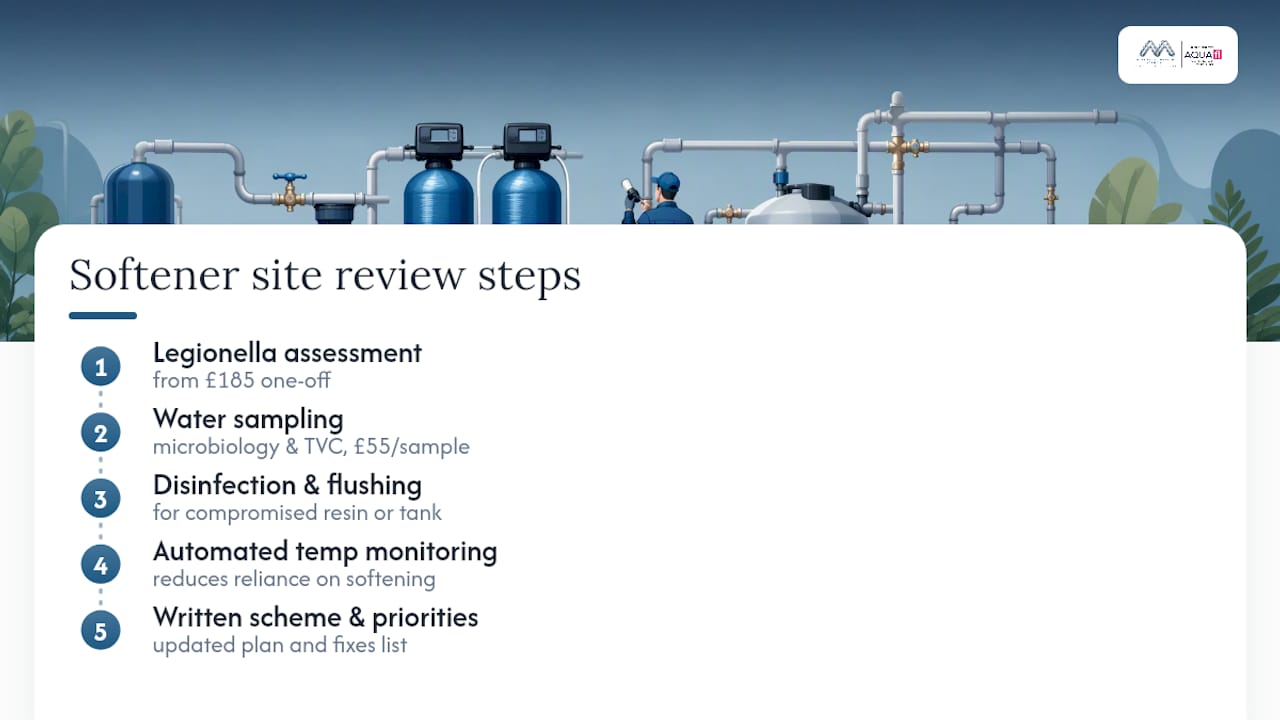
A typical review starts with a Legionella risk assessment that treats the softener as its own risk system rather than a footnote, priced from £185 one-off. Where sample points are missing or results are already in question, water sampling and analysis covering microbiological testing and TVC checks starts from £55 per sample. If the resin bed or expansion tank is already compromised, system disinfection and flushing resolves it directly, and automated water temperature monitoring reduces how much weight your scheme has to put on softening as a standalone control.
Every site review ends with an updated written scheme and a prioritised list of what needs fixing first. Book a review to find out where your softener stands.
This article is general information, not a substitute for advice from a qualified doctor. Consult a qualified healthcare professional about your own circumstances before acting on anything here.
Sources
FAQ
Can a water softener increase Legionella risk?
Yes, if it’s oversized, poorly maintained, or uses phosphate-based chemistry in the wrong water conditions. Long standby periods, disinfectant loss across the resin bed, and uncleaned brine tanks are the specific mechanisms, all of which are preventable with correct sizing and a maintenance schedule.
Do I need sample points before and after my softener?
Yes. HSG274 Part 2 requires sample points on both sides of the unit so hardness and microbiological results can be checked separately from the rest of the system.
Are phosphate softeners safe to use for Legionella control?
They need caution, not automatic rejection. Research found phosphate additives stimulated Legionella pneumophila growth by roughly 1.19–1.28 log CFU/mL in test conditions, particularly where mains water already carries low phosphorus and high organic carbon, so a raw water chemical analysis should guide the decision.
How often should a softener be sampled for Legionella?
Quarterly Legionella sampling at the designated points, alongside weekly or biweekly disinfectant residual checks, is a reasonable routine for most commercial systems, with the exact frequency set in the site’s written scheme. Annual resin inspection should sit alongside that sampling programme.
What does a Legionella risk assessment for a softener cost?
Bespokecompliancesolutions prices Legionella risk assessments from £185 one-off, covering the softener as a distinct risk system within the wider written scheme. Water sampling and analysis is priced separately, from £55 per sample.
Recommended
Comments