What is a compliance dashboard for water hygiene?
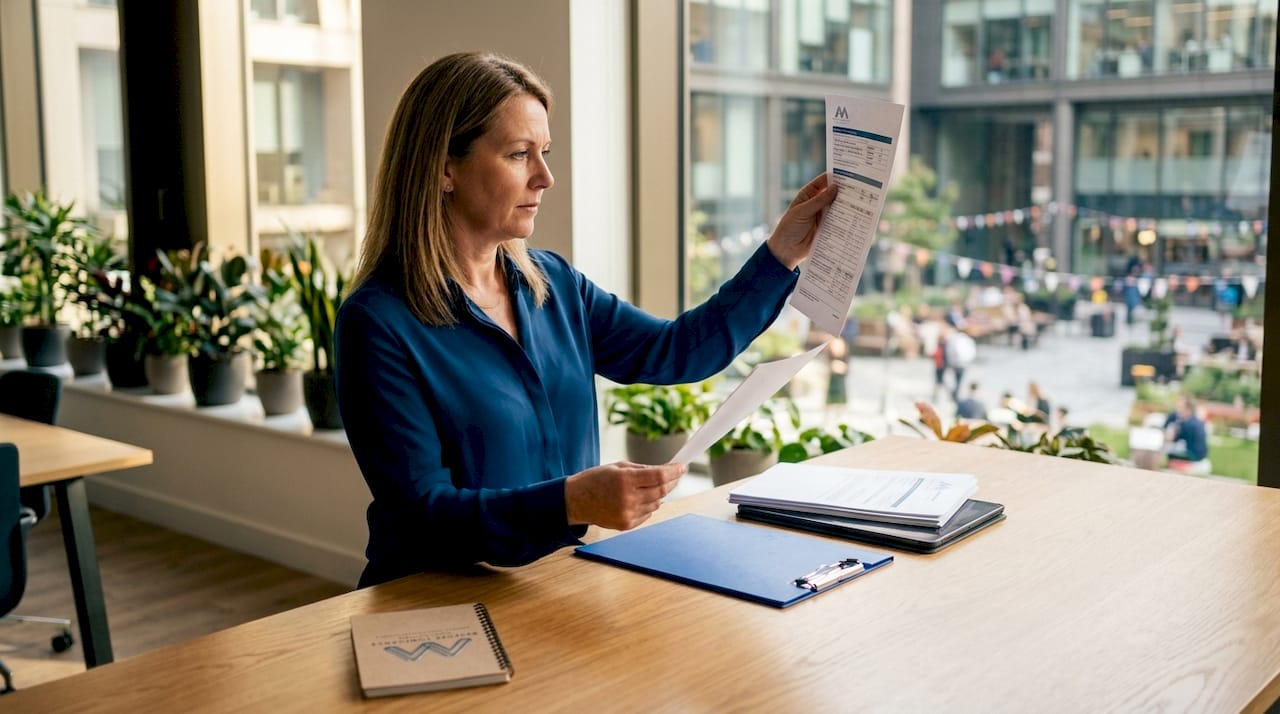
A water hygiene compliance dashboard is a digital platform that centralises, visualises, and automates the monitoring and management of all statutory water hygiene tasks across a facility or estate. For facility managers and compliance officers operating under ACoP L8 and HSG274, it replaces fragmented paper records and manual checklists with a single, real-time view of compliance status. Bespokecompliancesolutions works with organisations across the UK to implement these systems as part of a wider Legionella control programme. The result is faster audit response, fewer compliance gaps, and a defensible evidence trail that stands up to regulatory scrutiny.
What key features does a water hygiene compliance dashboard provide?
A water hygiene compliance dashboard delivers far more than a digital logbook. Its core function is active oversight: tracking tasks, flagging failures, and closing the loop on corrective actions without manual intervention.
The most operationally significant features include:
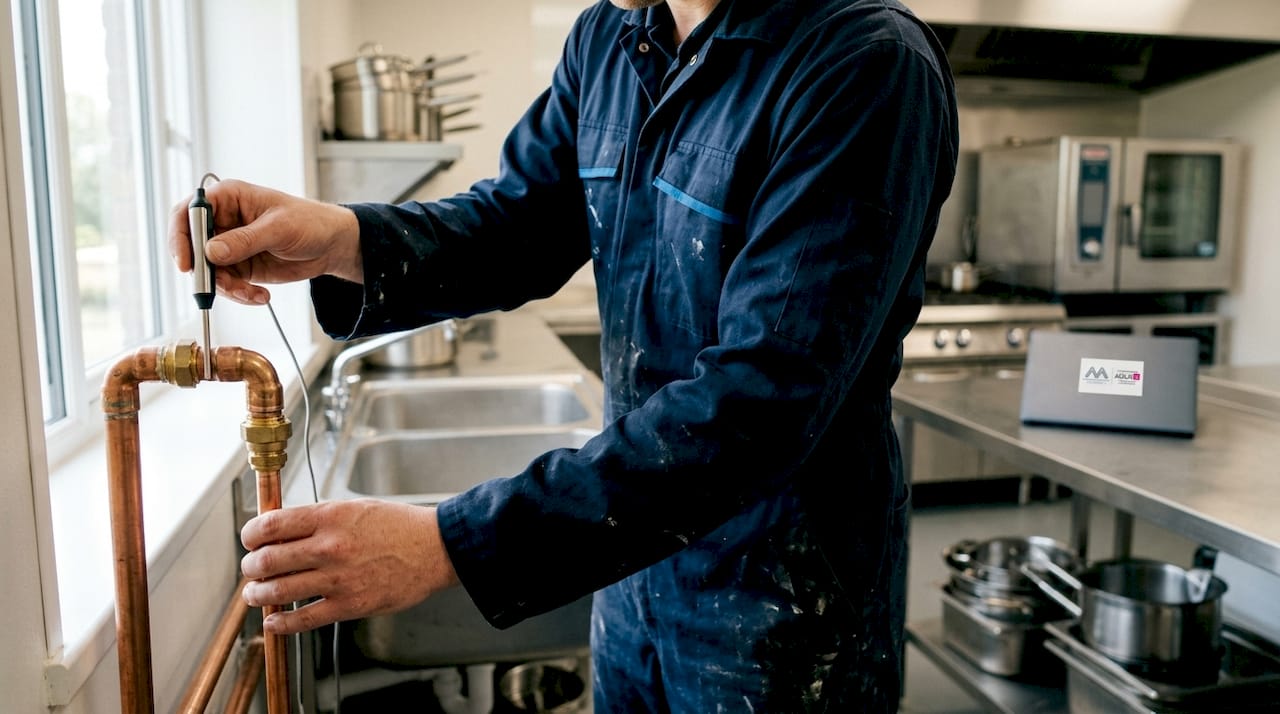
Real-time temperature monitoring. Legionella control requires hot water stored at 60°C or above and cold water below 20°C at outlets within two minutes. Dashboards display live readings and flag deviations immediately.
Automated scheduling and compliance calendars. Weekly outlet flushing, monthly temperature logging, quarterly descaling, and annual reviews are pre-loaded as recurring tasks. No task falls through the gap because someone forgot to check a spreadsheet.
Alerting and escalation workflows. When a temperature failure occurs, the dashboard generates corrective work orders automatically, not just an alert. This closes the loop on the compliance event rather than leaving it to chance.
Digital record keeping and audit trail management. Every reading, action, and sign-off is timestamped and stored. Digital audit packs combining sensor data, spot checks, and corrective actions can be generated in one click.
Mobile data entry with Bluetooth probe integration. Mobile-first data capture with Bluetooth-linked probes eliminates manual transcription errors, which are the leading cause of audit failures.
Pro Tip: Insist on Bluetooth probe integration when evaluating any water hygiene management software. Manual temperature entry introduces transcription errors that auditors will find and that you cannot easily correct after the fact.
The difference between a basic digital logbook and a true compliance dashboard is the escalation workflow. A logbook records what happened. A dashboard acts on what went wrong.
How do compliance dashboards integrate with compliance calendars and regulatory requirements?
A water hygiene compliance calendar is the foundational schedule that defines what tasks must be completed, at what frequency, and by whom. A compliance dashboard takes that calendar and turns it into an active management system.
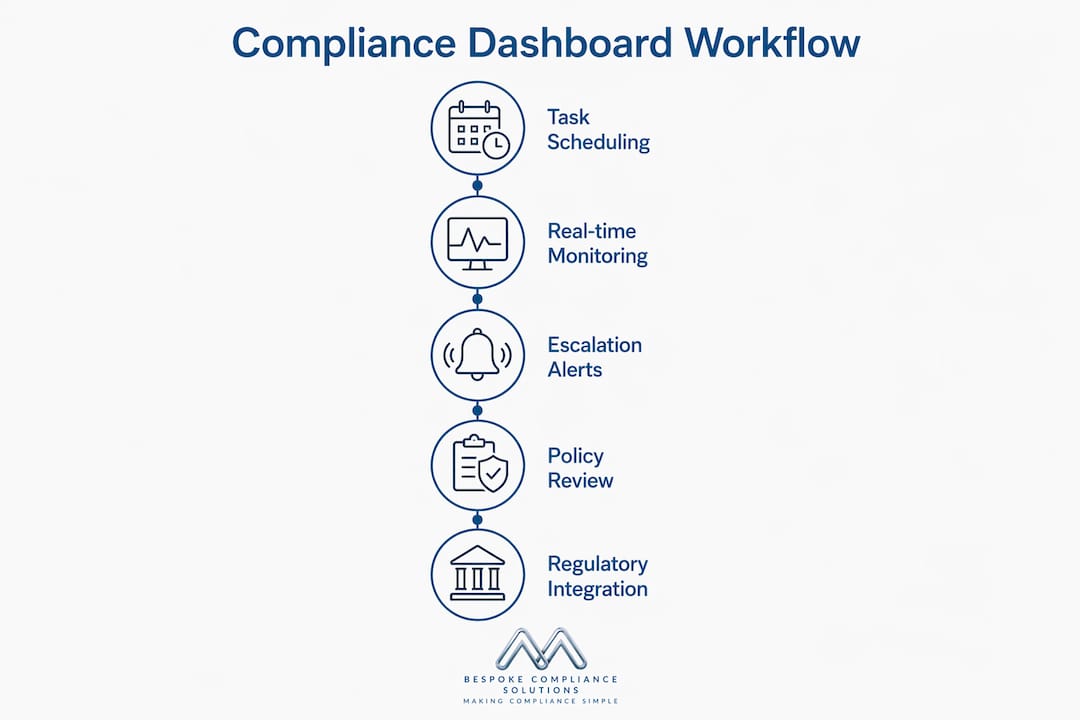
Under ACoP L8 and HSG274, the Responsible Person must implement a written scheme of control that covers all water systems on site. That scheme defines the task frequencies that feed directly into the compliance calendar. The dashboard then schedules those tasks, sends reminders, records completion, and escalates overdue items.
The standard statutory task frequencies are:
Task | Frequency | Dashboard function |
Flushing of infrequently used outlets | Weekly (unused 7+ days) | Auto-schedules and logs completion |
Hot and cold temperature checks | Monthly | Records readings against pass/fail thresholds |
Showerhead descaling and disinfection | Quarterly | Triggers work orders and tracks sign-off |
Full written scheme review | Annually | Flags review date and assigns Responsible Person |
The compliance calendar integrated into dashboards schedules these statutory duties automatically, removing the reliance on memory or manual notes. That matters because auditors do not simply check whether tasks were completed. They look for evidence that compliance routines are embedded and continuously applied, not merely recorded when convenient.
Dashboards also support the water hygiene policy review cycle by flagging when written schemes are due for update. This keeps the Responsible Person’s obligations current and legally defensible.
Pro Tip: Map your written scheme of control directly to your dashboard task library before go-live. Any task not in the scheme that appears in the dashboard creates confusion. Any task in the scheme that is missing from the dashboard creates a compliance gap.
What are the benefits of using a water hygiene compliance dashboard?
The operational benefits of a compliance dashboard extend well beyond tidy record keeping. For facility managers overseeing multiple sites, the visibility gain alone justifies implementation.
Prioritised workload management. Overdue tasks and temperature failures surface at the top of the dashboard view. Teams address the highest-risk items first rather than working through a static list.
Reduced compliance gaps. Relying on memory or old notes leads to fragmented records and failed audits. Automated scheduling removes that dependency entirely.
Lower administrative burden. Automated task generation and digital sign-off cut the time spent on paperwork significantly. Compliance officers spend less time chasing records and more time managing risk.
Improved health and safety outcomes. Maintaining temperature control within statutory limits is the primary defence against Legionella proliferation. Dashboards make it far harder for a temperature exceedance to go unnoticed and unresolved.
Instant evidence generation. When an auditor arrives, a compliant organisation produces a full evidence pack in minutes rather than hours. That capability is only possible with a digital system that has captured data consistently.
Trend analysis and continuous improvement. Over time, dashboards reveal patterns: outlets that repeatedly fail temperature checks, sites with high task overdue rates, or seasonal temperature drift. That data supports targeted remediation rather than reactive firefighting.
“Auditors look beyond raw data to confirm that compliance routines are embedded and continuously applied, not merely recorded. A dashboard that shows consistent, timestamped task completion across months tells a far stronger story than a paper logbook completed in a hurry before an inspection.”
The temperature monitoring checks that feed into a dashboard are only as reliable as the process behind them. A dashboard amplifies good practice. It cannot compensate for poor practice.
What should facility managers consider when selecting a compliance dashboard?
Selecting the right water hygiene management software requires more than comparing feature lists. The implementation decisions you make at the outset determine whether the system delivers genuine compliance improvement or simply digitises existing problems.
Evaluate core feature coverage. Confirm the platform handles task automation, real-time alerts, mobile data capture, and audit trail generation. A system missing any of these four capabilities will create manual workarounds that undermine the point of the tool.
Check compatibility with existing workflows. Some platforms centralise water hygiene, fire safety, and HVAC compliance in one system. If your organisation already uses a facilities management platform, assess whether integration is possible before committing to a standalone tool.
Require Bluetooth probe support. Accurate, tamper-proof temperature records depend on direct probe-to-device data transfer. Manual entry is a known audit risk and should not be accepted as a long-term solution.
Invest in user training. Success depends on implementation fidelity: dashboards only work if site teams consistently follow scheduled tasks. A well-configured system with undertrained staff produces incomplete records and missed escalations.
Address the alert-versus-action gap. The most common implementation failure is treating an alert as the end of the process. Alerts must trigger documented corrective actions. Build that expectation into your operating procedures from day one.
Pro Tip: Run a parallel operation period of four to six weeks when going live. Keep your existing records running alongside the new dashboard. This surfaces configuration errors before they create genuine compliance gaps in your audit trail.
Organisational culture matters as much as software capability. A compliance dashboard is an enabler for the commercial water hygiene audit process, not a substitute for the discipline that makes compliance real.
Key takeaways
A water hygiene compliance dashboard is the most effective tool available to facility managers for maintaining continuous, auditable compliance with ACoP L8 and HSG274 across complex estates.
Point | Details |
Definition and purpose | A compliance dashboard centralises real-time monitoring, task scheduling, and audit evidence for all water hygiene obligations. |
Regulatory alignment | Dashboards embed ACoP L8 and HSG274 task frequencies directly, keeping the Responsible Person’s duties current and documented. |
Automation over alerts | Effective dashboards generate corrective work orders automatically, not just notifications, closing the loop on compliance failures. |
Bluetooth probe data capture | Mobile entry with Bluetooth probes eliminates transcription errors, the leading cause of audit failures in water hygiene records. |
Implementation fidelity | Software alone does not deliver compliance. Consistent staff execution of scheduled tasks determines whether the dashboard works. |
The tool is only as good as the team behind it
I have worked with facility managers who implemented a compliance dashboard and genuinely believed the hard work was done. The system was configured, the tasks were loaded, and the alerts were live. Six months later, their audit revealed a pattern of overdue flushing tasks that had been acknowledged in the system but never physically completed. The dashboard had done its job. The team had not.
That experience shaped how I think about these tools. A compliance dashboard is the best instrument available for water hygiene management. It removes ambiguity, creates accountability, and generates the kind of evidence trail that satisfies even the most thorough auditor. But it operates within a human system, and human systems require culture, not just configuration.
The organisations that get the most from their dashboards treat the tool as a management discipline, not a technology project. They review overdue task reports in weekly team meetings. They investigate repeated temperature failures rather than simply logging them. They use trend data to make the case for capital investment in ageing water systems. That is where the real value sits.
The future direction is clear. Predictive analytics and integration with building management systems will make dashboards more proactive, flagging risk before a failure occurs rather than recording it afterwards. That shift will matter most to organisations that have already built the operational discipline to act on what their dashboard tells them.
— Sammi
Water hygiene compliance support from Bespokecompliancesolutions
Bespokecompliancesolutions provides specialist water hygiene and Legionella compliance services to commercial, healthcare, housing, and facilities management organisations across the UK. The team designs compliance programmes that are bespoke to your sites, not generic templates applied without context.
For organisations building or reviewing their compliance infrastructure, Bespokecompliancesolutions offers water tank cleaning and disinfection services that integrate directly with ongoing monitoring programmes. The team also provides automated temperature monitoring systems with dashboard integration, Legionella risk assessments, and bespoke logbook implementation. Contact Bespokecompliancesolutions to discuss a compliance solution built around your specific estate and regulatory obligations.
FAQ
What is a compliance dashboard for water hygiene?
A water hygiene compliance dashboard is a digital platform that centralises task scheduling, real-time temperature monitoring, and audit record keeping for all statutory water hygiene obligations. It replaces manual logbooks with automated workflows aligned to ACoP L8 and HSG274 requirements.
What is a compliance calendar for water hygiene?
A water hygiene compliance calendar is a structured schedule of statutory tasks, including weekly outlet flushing, monthly temperature checks, quarterly showerhead descaling, and annual written scheme reviews. Compliance dashboards embed this calendar and automate task assignment and escalation.
Why does water hygiene compliance matter for facilities?
Legionella bacteria proliferate in water systems where hot water falls below 60°C or cold water rises above 20°C. Failure to maintain these thresholds creates a direct health risk and exposes the Responsible Person to legal liability under the Health and Safety at Work Act 1974.
How do dashboards reduce audit risk?
Dashboards generate timestamped, tamper-proof records of every task completion, temperature reading, and corrective action. Auditors receive a complete evidence pack in minutes rather than hours, and the continuous record demonstrates embedded compliance rather than last-minute preparation.
What is the biggest implementation risk for compliance dashboards?
The most common failure is treating dashboard alerts as the end of the process rather than the start. Alerts must trigger documented corrective actions completed by named individuals. Without that discipline, the dashboard records failures without resolving them.
Recommended
Comments