
Why stagnant water causes Legionella: a facilities guide
- Jul 2
- 8 min read

Stagnant water is the primary environmental condition that enables Legionella bacteria to multiply to dangerous levels in building water systems. When water stops flowing, two things happen simultaneously: temperature drifts into the optimal growth range of 20°C to 45°C, and residual disinfectants degrade. The Health and Safety Executive (HSE) identifies stagnation as one of the most controllable risk factors in Legionella management. For facilities and property managers in commercial and healthcare settings, understanding exactly what happens inside a stagnant pipe is the foundation of effective compliance.
What conditions in stagnant water promote Legionella growth?
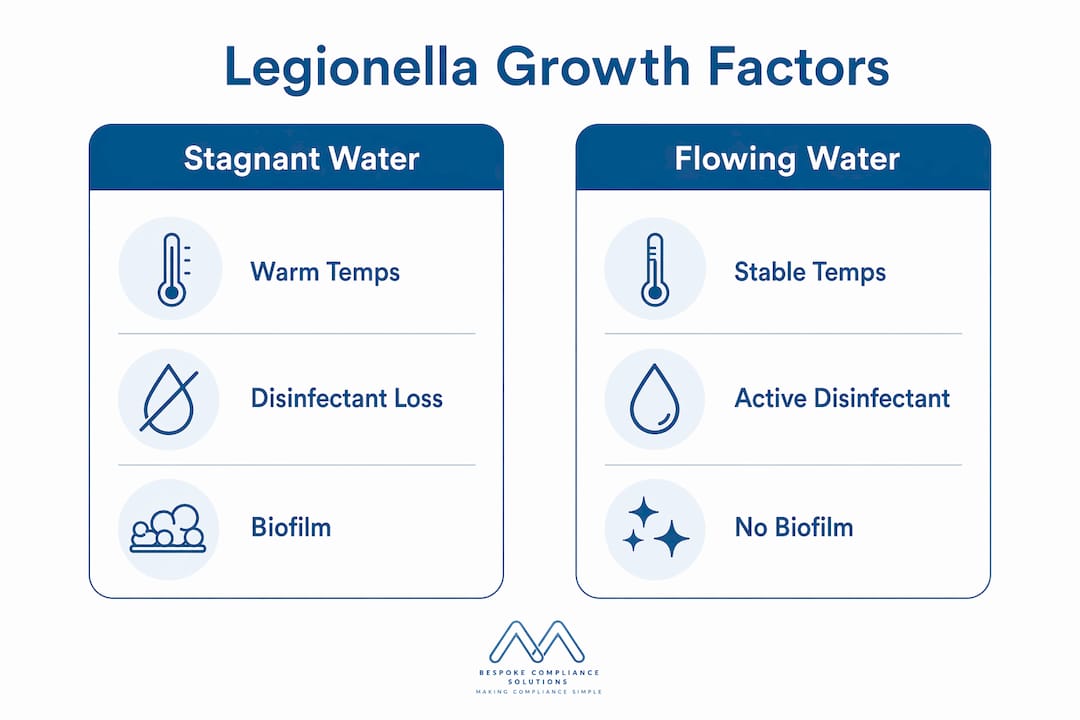
Legionella bacteria thrive when three conditions align: warm temperatures, absent disinfectant, and a physical surface to colonise. Stagnant water delivers all three.
Temperature: the critical window
Legionella doubles every 3–6 hours within the 25°C to 45°C range. Water in low-use pipework, dead-end sections, or infrequently flushed outlets quickly equilibrates to ambient building temperatures, which in most UK commercial and healthcare buildings falls squarely within this window. Cold water sitting in a warm plant room and hot water that has cooled in a long distribution run are both at risk. The HSE’s Approved Code of Practice L8 sets target temperatures precisely to keep water outside this range: cold water below 20°C and hot water above 50°C at outlets.
Disinfectant decay
Disinfectant levels drop substantially within 6 days without water flow. Chlorine, the most common residual disinfectant in UK mains water, dissipates rapidly when water is not moving. Once the residual falls below effective levels, bacterial populations are no longer suppressed. This is why a building that has been unoccupied over a bank holiday weekend can present a measurably higher Legionella risk than one in continuous use.
Biofilm formation
Biofilms protect bacteria from disinfectants and from routine water sampling. A biofilm is a thin layer of microorganisms that adheres to pipe walls and forms a protective matrix. Legionella shelters inside this matrix, making it resistant to both chlorine treatment and standard culture testing. Biofilms develop faster in stagnant zones because there is no hydraulic shear force to dislodge them.
Condition | Flowing water | Stagnant water |
Temperature control | Maintained by system design | Drifts to ambient, often 20°C–45°C |
Disinfectant residual | Replenished continuously | Depleted within days |
Biofilm development | Disrupted by flow | Accelerates unchecked |
Legionella multiplication | Suppressed | Rapid, doubling every 3–6 hours |
Pro Tip: Monitor outlet temperatures at least monthly. An outlet consistently returning water below 50°C on the hot side is a direct indicator of stagnation risk in that section of pipework.
What plumbing features create stagnant water and raise Legionella risk?
The physical design of a building’s water system determines where stagnation occurs. Certain features are almost guaranteed to produce standing water.
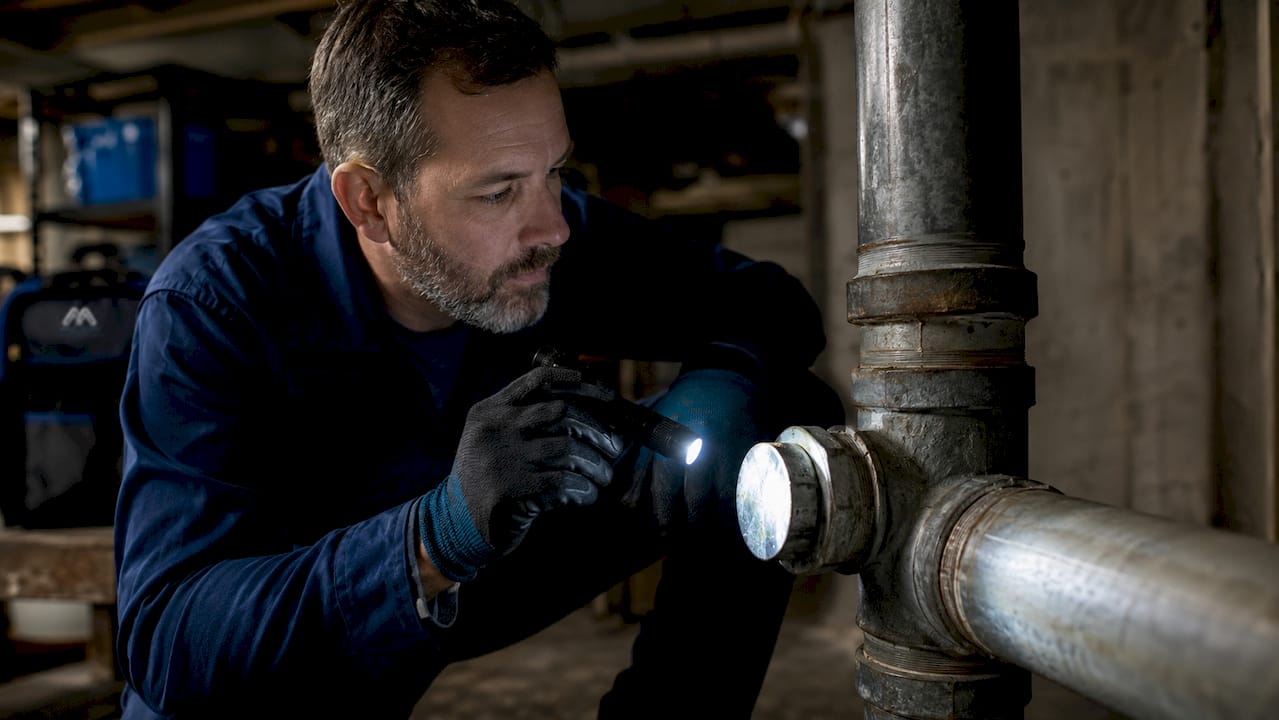
Dead legs, capped pipes, and infrequently used plumbing zones are the most common culprits. A dead leg is a section of pipework that branches off the main circulation loop but leads nowhere active. Water enters but never exits. In older commercial buildings and NHS estates, dead legs are frequently discovered during refurbishment work, having been capped off rather than removed when layouts changed.
Low-use fixtures present a subtler but equally serious risk. A guest room that has not been occupied for two weeks, a staff toilet on a rarely used floor, or a laboratory sink used only occasionally all create conditions where water sits undisturbed. Taking fixtures out of service exacerbates stagnation risks and can increase Legionella growth potential significantly. Best practice favours maintaining fixture use with scheduled flushing rather than deactivation.
Healthcare settings carry particular exposure. Unused ward areas, mothballed clinical rooms, and temporarily closed theatres all contain pipework that may not see flow for weeks. Hidden stagnant zones present a silent risk in complex plumbing systems, well beyond commonly recognised sources like cooling towers. Hotels face similar challenges in rooms that cycle between occupancy and vacancy without a flushing protocol in place.
Common stagnant water risk points in buildings include:
Dead legs and redundant pipework left in situ after refurbishment
Capped or blanked-off outlets not removed from the system
Infrequently used showers, taps, and hose points
Thermostatic mixing valves (TMVs) with low flow rates
Cold water storage tanks with poor turnover
Sections of pipework remote from the main circulation loop
Temporarily decommissioned wards, rooms, or facilities
Pro Tip: Schedule weekly flushing of all low-use outlets for a minimum of two minutes. Log every flush with a date, time, and outlet reference. This record is your first line of defence during an HSE inspection.
How does water stagnation connect to Legionnaires’ disease outbreaks?
Legionnaires’ disease is the severe pneumonia caused by inhaling water droplets contaminated with Legionella bacteria. Infection occurs by inhaling contaminated aerosols from showers, taps, cooling towers, and hot tubs where stagnant warm water supports bacterial growth. The bacteria do not spread person to person. Every outbreak traces back to a water source where stagnation allowed the bacteria to reach infectious concentrations.
Approximately 1 in 7 Legionnaires’ patients report staying in hotels or rental properties, and around 50% of travel-associated cases link to hot tubs with warm stagnant water. That figure illustrates how quickly a poorly managed water system in a hospitality setting can become a public health incident. 1 in 10 patients die from complications, making Legionnaires’ disease one of the most serious waterborne illnesses in the UK. For facilities managers, the legal and reputational consequences of an outbreak are severe, and the health safety priority status of Legionella under UK law reflects this.
Outbreak source | Stagnation mechanism | Risk level |
Hotel showers and taps | Low occupancy, infrequent flushing | High |
Hot tubs and spa pools | Warm standing water, poor turnover | Very high |
Unused hospital wards | Extended decommissioning without flushing | High |
Cooling towers | Water held at warm temperatures | Very high |
Domestic-style systems in commercial buildings | Low demand, long pipe runs | Moderate to high |
Healthcare facilities carry the highest consequence risk because their occupants include immunocompromised patients who face a far greater chance of severe illness if exposed. A single case in an NHS setting triggers mandatory investigation and can result in ward closures.
What are the best practices for preventing Legionella in water systems?
Preventing Legionella growth caused by stagnant water requires a structured, documented water management programme. The following practices align with HSE L8, the Health and Safety at Work etc. Act 1974, and guidance from the Chartered Institution of Building Services Engineers (CIBSE).
Implement a written water safety plan. Every commercial and healthcare building must have a documented plan identifying risk points, responsible persons, and control measures. A Legionella risk assessment is the starting point and must be reviewed whenever the system changes.
Maintain temperature control. Keep cold water below 20°C and hot water above 50°C at outlets. Insulate cold pipework away from heat sources. Trace hot water distribution to identify sections where temperature drops below the safe threshold.
Flush low-use outlets weekly. Run every infrequently used tap, shower, and hose point for at least two minutes each week. Record each flush. Where a building is partially occupied, increase flushing frequency for the unoccupied sections.
Remove dead legs and redundant pipework. Do not cap and leave. Remove the section entirely and restore the main circuit. This is a one-time engineering cost that eliminates a permanent risk.
Clean and descale regularly. Limescale and sediment accelerate biofilm formation. Showerheads, TMVs, and storage tanks require periodic cleaning and inspection. TMV servicing should follow manufacturer schedules and be logged.
Conduct regular water sampling and analysis. Water testing confirms whether control measures are working. Sampling alone is not a control measure, but it validates the programme and identifies failures before they become outbreaks.
Train your responsible persons. The person designated to manage water safety must understand the risks, the control measures, and the legal duties. Legionella awareness training aligned with HSE L8 requirements gives your team the knowledge to act correctly.
Professional standards confirm that maintaining water flow and usage, alongside active water management plans, is more effective than deactivating fixtures. Deactivation increases stagnation risk and should only occur as a last resort with a documented recommissioning plan in place.
Key takeaways
Stagnant water causes Legionella growth by combining three conditions: temperatures in the 20°C to 45°C range, depleted disinfectant residuals, and biofilm formation in undisturbed pipework.
Point | Details |
Temperature drives growth | Legionella doubles every 3–6 hours between 25°C and 45°C, the range stagnant water commonly reaches. |
Disinfectant depletes fast | Chlorine residuals fall to ineffective levels within 6 days without water flow, removing bacterial suppression. |
Biofilms shelter bacteria | Biofilms in stagnant zones protect Legionella from disinfectants and make routine sampling unreliable. |
Dead legs are high risk | Redundant pipework and capped outlets create permanent stagnant zones that must be removed, not just capped. |
Flushing and records are non-negotiable | Weekly flushing of low-use outlets, with dated logs, is the minimum standard for compliance and outbreak prevention. |
Stagnation is a management problem, not a water quality problem
I have reviewed water systems in commercial buildings where the mains supply was perfectly clean and the incoming water quality was excellent. The Legionella risk was entirely self-created, inside the building, through poor system design and absent maintenance routines. That distinction matters enormously. Facilities managers sometimes assume that good incoming water quality means low risk. It does not.
Stagnation is a control failure reflecting inadequate system maintenance rather than initial contamination. The bacteria are often present at low, harmless levels in any water system. Stagnation is what tips the balance from background presence to outbreak-level concentration. The most common mistake I see is treating flushing as an optional extra rather than a core maintenance task. Buildings that have been partially closed, refurbished, or had sections mothballed are at the highest risk, precisely because the stagnation risk is invisible until someone falls ill.
The other misconception worth addressing is that Legionella risk assessment is a one-time exercise. Systems change. Occupancy patterns change. A risk assessment completed before a refurbishment is not valid after it. Integrating water management reviews with your wider compliance audit calendar is the only way to keep pace with a building’s actual risk profile. If your current programme does not include documented flushing records, temperature logs, and a schedule for dead leg removal, those are the three areas to address first.
— Sammi
Legionella risk management support from Bespokecompliancesolutions
Bespokecompliancesolutions works with commercial and healthcare facilities across the UK to identify and control the exact risks described in this article.
Whether your building has known dead legs, a history of low occupancy, or a water management plan that has not been reviewed recently, the team at Bespokecompliancesolutions provides bespoke Legionella risk assessments tailored to your site. Services include water sampling and analysis, TMV servicing, disinfection programmes, and ongoing consultancy. Facilities managers in Coventry and the surrounding area can access risk assessments in Binley and risk assessments in Caludon with site-specific reporting and compliance support built in.
FAQ
Why does stagnant water cause Legionella to multiply?
Stagnant water creates the ideal conditions for Legionella growth: temperatures drift into the 20°C to 45°C range, residual disinfectants deplete within days, and biofilms form on pipe walls to shelter the bacteria from treatment.
How quickly does stagnant water become a Legionella risk?
Disinfectant levels drop substantially within 6 days without flow, at which point bacterial populations can begin to increase significantly. Buildings left unoccupied over a long weekend require flushing before normal use resumes.
Which building types carry the highest stagnant water risk?
Healthcare facilities, hotels, and commercial buildings with partially occupied floors carry the highest risk because low fixture use and variable occupancy create extended periods of stagnation in pipework.
What is the legal duty for managing Legionella in the UK?
The HSE’s Approved Code of Practice L8 and the Health and Safety at Work etc. Act 1974 require duty holders to assess and control Legionella risks. A written water safety plan and documented control measures are mandatory for most commercial and healthcare premises.
Does flushing outlets actually prevent Legionella growth?
Yes. Regular flushing replenishes disinfectant residuals, removes stagnant water, and disrupts biofilm development. Weekly flushing of low-use outlets for a minimum of two minutes is the standard recommended by HSE and industry guidance.
Recommended
Comments