
Why water hygiene matters commercially: 2026 guide
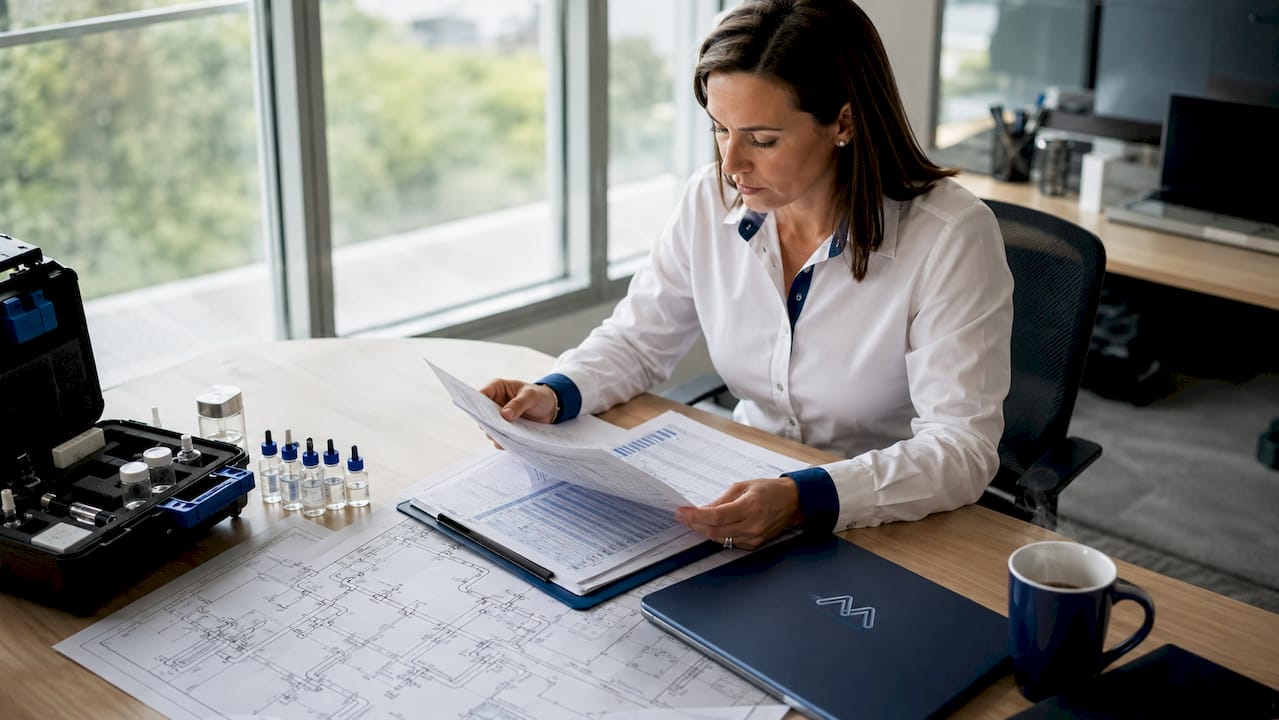
Commercial water hygiene is defined as the systematic management of all water systems within business premises to prevent health risks, legal liability, and operational disruption. Under the Health and Safety Executive’s Approved Code of Practice L8, every business operating a water system is a duty holder. That status carries real criminal liability, not just administrative inconvenience. Legionella pneumophila is the most serious waterborne threat in commercial settings, and understanding why water hygiene matters commercially starts with recognising that the consequences of failure reach far beyond a failed inspection.
Why water hygiene matters commercially: the core health and safety risks
Poor water hygiene in commercial premises creates conditions where dangerous pathogens thrive. The two most significant threats are Legionella pneumophila and coliform bacteria, both of which can colonise water systems that are poorly maintained, infrequently flushed, or operating at unsafe temperatures.
Legionella spreads through aerosols produced by cooling towers, showers, taps, and spa pools. Once inhaled, it causes Legionnaires’ disease, a severe form of pneumonia. Legionella fatality rate sits at approximately 1 in 10 infected individuals. That figure means a single outbreak at your premises carries a serious probability of a fatality, and with it, corporate manslaughter proceedings.
“Water hygiene is a duty holder obligation with potential criminal liability. Treating it as a delegated maintenance task is one of the most dangerous assumptions a business can make.”
Coliform bacteria, including E. coli, enter water systems through cross-contamination or inadequate treatment. Their presence signals a breakdown in basic sanitation controls. In food production, hospitality, and healthcare settings, a positive coliform result triggers immediate regulatory scrutiny and, in many cases, a production shutdown.
The commercial impact of a single health incident extends well beyond the immediate crisis. Businesses face civil claims, regulatory enforcement, reputational damage, and in serious cases, criminal prosecution of named directors. The risk is not theoretical. It is documented, recurring, and entirely preventable with the right controls in place.
How do regulatory standards govern commercial water hygiene?
The primary legal framework for commercial water hygiene in the UK is the HSE’s ACoP L8, which sets out the duties of employers and building owners to assess and control Legionella risk. Compliance is not optional. Failure to follow ACoP L8 guidance is treated as evidence of negligence in enforcement proceedings.
Food and beverage businesses face an additional layer of certification requirements. Standards including BRC Global Standard for Food Safety, SQF, and IFS all mandate documented water treatment programmes with verifiable monitoring records. Failing to document a water treatment programme risks losing retail contracts within 90 days under these standards. That is a direct commercial consequence, not a distant regulatory risk.
Testing frequency varies by facility type and risk level:
High-risk facilities such as hospitals, care homes, and large cooling tower installations require water testing monthly or quarterly.
Medium-risk commercial premises including hotels, gyms, and offices with complex water systems require testing at least every six months.
Standard commercial drinking water systems require testing at a minimum annually, though more frequent testing is advisable where systems are infrequently used.
Calibrated monitoring infrastructure is a legal requirement for audit defensibility, not simply good practice. Calibration-traceable monitoring systems for food safety certification can cost between £16,000 and £64,000 to install correctly. That investment is significant, but it is far smaller than the cost of a failed audit or a product recall.
Pro Tip: Keep a dedicated water hygiene logbook that records every test result, corrective action, and engineer visit. Auditors look for evidence of response, not just evidence of monitoring.
What operational and financial impacts come from poor water management?
The financial case for commercial water safety is straightforward. Proper water treatment in a food and beverage plant processing 500 m³ per day can save between £48,000 and £96,000 annually, while a microbial failure in the same facility can cost between £400,000 and £1.6 million in the first year alone. The arithmetic is not complicated.
Beyond catastrophic failure events, poor water hygiene creates a steady drain on operational budgets through hidden costs:
Scale and biofilm buildup in pipework and heat exchangers reduces energy efficiency and increases maintenance frequency.
Clean-in-place system failures caused by water quality failures trigger biofilm formation and costly product recalls in food production environments.
Unplanned production downtime from water-related stoppages consistently exceeds the cost of preventive water treatment programmes.
Insurance and liability costs rise sharply after a documented water hygiene incident, even when no prosecution follows.
Reputational damage is harder to quantify but no less real. A single press report linking a business to a Legionella outbreak or a food safety recall can destroy years of customer trust. Hotels, care homes, and food manufacturers are particularly exposed because their customers make purchasing decisions based on perceived safety.
The correct response is a shift from reactive to preventive management. Businesses that treat water hygiene as a scheduled operational function, rather than an emergency response, consistently avoid the most costly outcomes. Staff training plays a direct role in sustaining that preventive culture between formal inspections.
What are the best practices for maintaining commercial water hygiene?
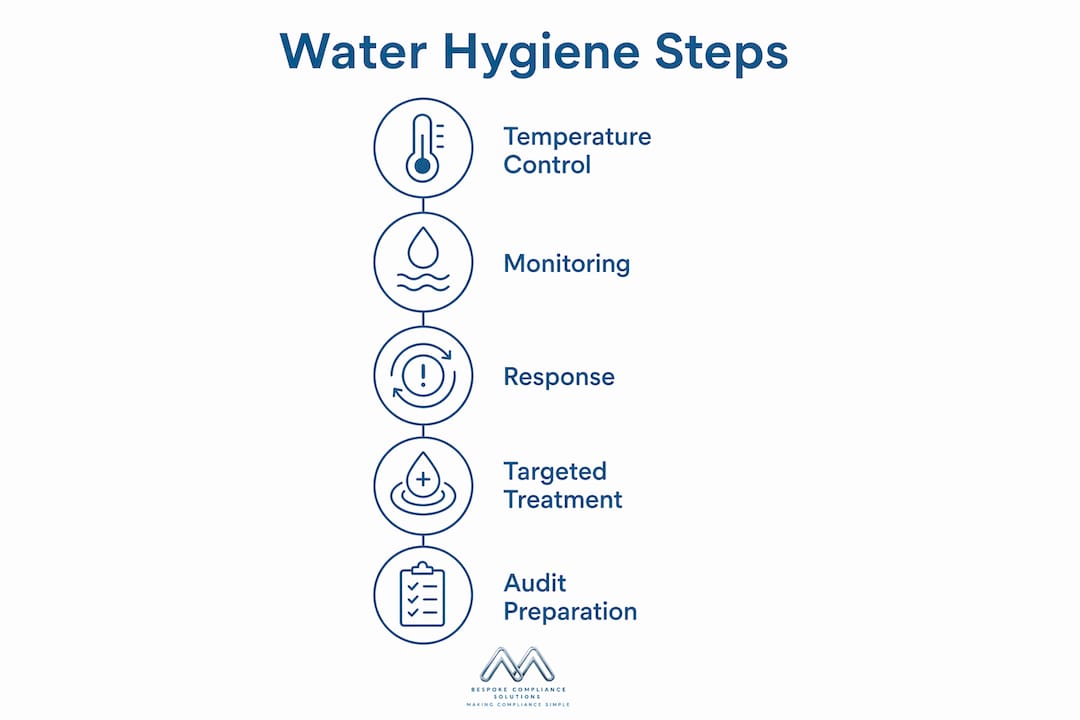
Effective commercial water hygiene rests on three pillars: temperature control, monitoring with defined response protocols, and targeted treatment matched to your specific site risks.
Temperature control
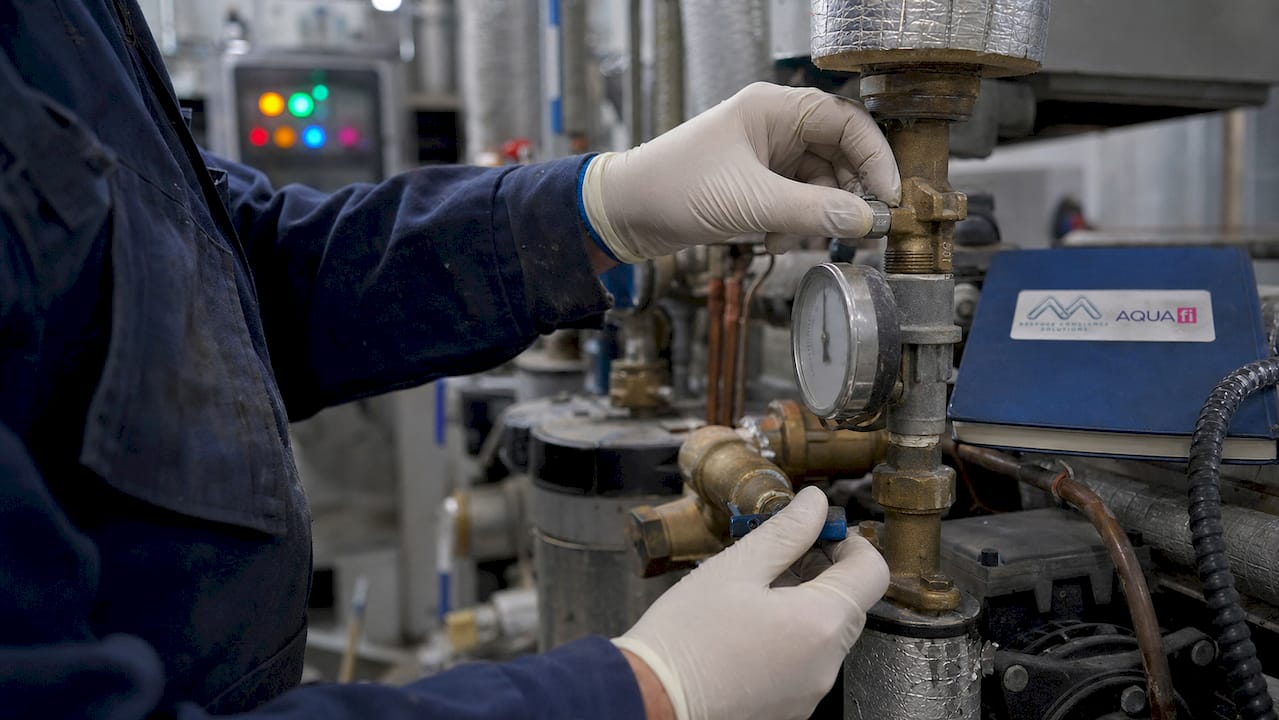
Proper temperature control of hot and cold water systems is the single most effective measure against Legionella colonisation. Hot water should be stored at 60°C and distributed at 50°C or above. Cold water should be kept below 20°C throughout the system. Dead legs, infrequently used outlets, and poorly insulated pipework are the most common failure points.
Monitoring and response protocols
Monitoring without defined response actions is a compliance gap that frequently goes undetected until an audit or an incident forces the issue. Every out-of-specification result must trigger a documented corrective action within a defined timeframe. The action, the person responsible, and the outcome must all be recorded.
Automated temperature monitoring removes the human error risk from routine checks. Bespokecompliancesolutions offers automated temperature monitoring systems that log data continuously and flag exceedances in real time, giving duty holders defensible evidence for audits.
Targeted treatment
A targeted water treatment approach is more cost-effective than a universal system. Identifying your site’s specific problems, whether scale, chlorine reduction, or microbial control, and applying treatment accordingly produces better results at lower cost than a catch-all installation.
Flushing regimes for infrequently used outlets, regular thermostatic mixing valve (TMV) servicing, and periodic disinfection of storage tanks and pipework complete a well-rounded control programme. Bespokecompliancesolutions designs bespoke control programmes that address each of these elements for commercial premises across the UK.
How should businesses prepare for water hygiene audits?
A water hygiene audit examines three things: the quality of your risk assessment, the integrity of your monitoring data, and the evidence of corrective action. Businesses that fail audits almost always fail on the third point.
Preparing effectively means maintaining the following:
A current Legionella risk assessment reviewed at least every two years, or immediately following any significant change to the water system or building use.
Calibrated monitoring records with traceable evidence that sensors and test equipment are within specification.
A complete corrective action log showing that every out-of-specification result triggered a documented response.
Schematic drawings of the water system, including all outlets, storage vessels, and dead legs identified during the risk assessment.
Contractor records confirming that any external water hygiene work was carried out by a competent person.
Losing a BRC, SQF, or IFS certification through a failed audit costs far more than the certification fee. Retail contracts tied to those certifications can be suspended within 90 days of a non-compliance finding. The commercial water hygiene audit checklist published by Bespokecompliancesolutions provides a practical framework for audit readiness across commercial building types.
Key takeaways
Commercial water hygiene is a legal duty, a financial safeguard, and an operational necessity. Businesses that treat it as a core management function consistently avoid the most serious health, legal, and financial consequences.
Point | Details |
Legal duty holder status | Every business with a water system is a duty holder under ACoP L8, with criminal liability for failures. |
Legionella fatality risk | Approximately 1 in 10 people infected with Legionella die, making outbreak prevention a board-level priority. |
Financial cost of failure | Microbial failures in commercial water systems can cost between £400,000 and £1.6 million in the first year. |
Temperature control is critical | Hot water stored at 60°C and cold water kept below 20°C are the primary controls against Legionella growth. |
Documentation drives audit outcomes | Corrective action records, calibrated monitoring data, and current risk assessments determine audit success or failure. |
Water hygiene is a board-level risk, not a facilities task
I have worked with businesses across sectors that treat water hygiene as something that happens in the background, managed by a facilities coordinator and reviewed once a year when the risk assessment renewal lands in the inbox. That approach is how organisations end up in front of a coroner’s court.
The pattern I see most often is fragmented management. Facilities maintenance and water safety are treated as two separate functions, with no single person accountable for the full picture. Dead pipe legs get missed. Infrequently used outlets go unflushed for months. Monitoring data sits in a spreadsheet with no one checking whether the results are within specification. The system looks compliant on paper until something goes wrong.
What changes outcomes is treating water hygiene data the same way you treat financial or production KPIs. If your temperature monitoring shows a cold water system creeping above 20°C, that is an operational alert, not a maintenance note. It needs a response, a record, and a review of root cause. Businesses that build that discipline into their management culture stop reacting to water hygiene problems and start preventing them.
The criminal liability dimension is real and personal. Directors and named responsible persons can face prosecution under the Health and Safety at Work Act 1974 and the Corporate Manslaughter and Corporate Homicide Act 2007. Delegation does not remove liability. Documented, competent management does.
— Sammi
How Bespokecompliancesolutions supports your water hygiene compliance
Water hygiene compliance does not need to be complicated, but it does need to be done correctly. Bespokecompliancesolutions works with commercial premises across the UK to deliver Legionella compliance for offices and commercial buildings, from initial risk assessments through to ongoing monitoring, disinfection, and TMV servicing.
Every service is tailored to your site, your risk profile, and your sector’s certification requirements. Whether you need a first-time Legionella risk assessment, a bespoke logbook system, or water testing and analysis to support an upcoming audit, Bespokecompliancesolutions provides the expertise and documentation to keep your business compliant and your people safe. Contact the team today to discuss your site’s specific requirements.
FAQ
What is commercial water hygiene?
Commercial water hygiene is the management of all water systems in business premises to prevent waterborne pathogens, meet legal obligations, and protect occupants. It covers drinking water, hot and cold water services, cooling towers, and any system that produces water aerosols.
How often should commercial water systems be tested?
High-risk facilities require testing monthly or quarterly, while standard commercial drinking water systems require testing at least annually. Testing frequency depends on facility type, system complexity, and the risk level identified in the Legionella risk assessment.
What are the legal consequences of poor water hygiene?
Businesses that fail to manage water hygiene as duty holders under ACoP L8 face enforcement action, civil liability, and criminal prosecution. Directors can be personally liable under the Corporate Manslaughter and Corporate Homicide Act 2007.
Can poor water hygiene affect food safety certification?
Failing to maintain a documented water treatment programme risks losing BRC, SQF, or IFS certification, with retail contracts potentially suspended within 90 days of a non-compliance finding.
What is the most effective control against Legionella in commercial buildings?
Temperature control is the most effective measure. Hot water stored at 60°C and cold water kept below 20°C throughout the system prevents Legionella colonisation at the most critical points in the water network.
Recommended
Comments