
Point-of-use filters for Legionella: when and how to deploy them
- 10 minutes ago
- 9 min read
A point-of-use filter is a temporary terminal barrier: fitted at a single tap or shower to give immediate protection to the person using it, not a fix for the system behind the wall. HSE L8, NIPCM and DVGW guidance all treat filters this way, recommending them for vulnerable users during outbreaks or remediation. Fit them under a documented plan, with a clear expiry and removal date, or they become a liability rather than a control.
Key Takeaways
POU filters work as a temporary terminal barrier when they are validated, labelled, logged, and removed under a documented exit strategy within the Water Safety Plan.
Point | Details |
Filters are supplementary, not primary | Temperature control remains the main strategy; filters protect specific outlets during incidents or remediation. |
Cover every aerosol-generating outlet | Fit showers, mixer taps and aerating kitchen taps together, not just the outlet that tested positive. |
Validate before you buy | Demand ASTM F838-20 test data, pressure/temperature tolerances and in-use fouling evidence from manufacturers. |
Log and track every unit | Record serial number, install date, rated life and due-for-change date in a digital registry. |
Get professional support | Bespokecompliancesolutions can run the risk assessment, procurement checks and logbook system as one coordinated service. |
This article is general information, not a substitute for advice from a qualified doctor. Consult a qualified healthcare professional about your own circumstances before acting on anything here.
Table of Contents
What are point of use filters and how do they control legionella?
What limits should you expect, and how much maintenance is realistic?
How do point of use filters fit into your Water Safety Plan?
What is the right approach to point of use legionella control?
A facilities manager’s view on where filter programmes go wrong
How Bespoke Compliance Solutions supports your filter programme
What are point of use filters and how do they control legionella?
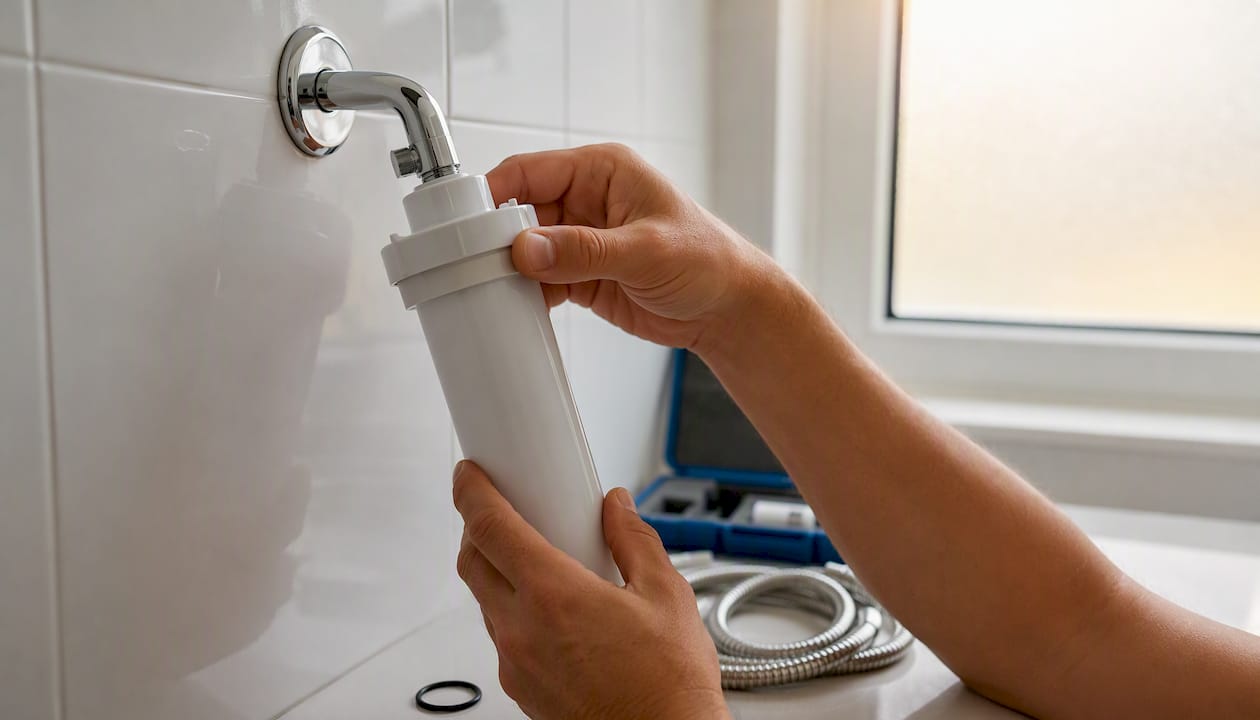
A point-of-use (POU) filter screws onto a tap or shower outlet and physically blocks bacteria before the water reaches the user. Most use a sterilising-grade membrane rated at 0.2 microns, fine enough to retain Legionella pneumophila and similar organisms as water passes through.
They earn their place in a water safety plan in fairly specific circumstances:
Outbreak or incident response, where an outlet has tested positive and needs immediate protection while the cause is investigated
Augmented-care areas such as haematology wards, transplant units or neonatal units, where even low-level exposure carries real risk
Temporary cover during remediation works, such as pipe replacement, tank cleaning or a system flush programme
Pro Tip: A filter does nothing to the water system upstream of the tap. Biofilm, dead legs and stagnant branches stay exactly as they are, so treat the filter as protection for a person, not treatment for a building.
How do point of use filters actually work?
Inside most cartridges sits a pleated or hollow-fibre membrane offering a large surface area in a compact housing, which keeps flow rates workable while still achieving sterile-grade retention. The 0.2 micron pore size is the industry benchmark, and the CDC’s potable water control toolkit specifically recommends filters at or below this rating that comply with ASTM F838.
Before you sign off any product, ask the manufacturer for these figures rather than taking marketing claims at face value:
Absolute versus nominal pore rating (absolute retention is the meaningful figure for Legionella control)
Validated pressure and temperature range, and whether it covers your actual mains and hot water conditions
Chemical compatibility, particularly with any disinfectant you might use for a subsequent shock dose
Independent test data against ASTM F838-20 or an equivalent recognised method
Peer-reviewed work backs the mechanism itself. Sheffer et al. found complete removal of Legionella pneumophila from hot water using POU filters, though the same studies flag fouling and short service life as the practical trade-off. Newer experimental membranes using electrically heatable carbon nanotube composites have shown removal rates above 99.99% under laboratory ohmic heating, which is promising but still proof-of-concept rather than something you can buy today.
When should you deploy point of use filters on site?
Run through a short decision checklist before fitting anything. Deploy filters where you have a confirmed outbreak or a positive Legionella result awaiting remediation, where occupants are immunocompromised or otherwise clinically vulnerable, where contamination has been identified but the fix will take weeks rather than days, or where an outlet cannot be repaired or replaced immediately and needs interim cover.
Once you’ve decided filters are justified, coverage has to be complete rather than partial. DVGW guidance is explicit that every outlet capable of producing an aerosol needs a filter, not just the ones that tested positive:
Showers and shower heads, which generate the finest and most inhalable aerosol
Bath and shower mixer taps, especially where a TMV blends hot and cold before delivery
Kitchen taps with aerating nozzles, which produce more spray than a plain outlet
Clinical wash-hand basins and any point-of-care outlet used near vulnerable patients
Selection criteria matter as much as coverage. Check the rated life against your actual flow patterns, confirm compatibility with any thermostatic mixing valve already fitted (our TMV servicing guidance covers how blended water affects downstream risk), and favour products with clear labelling systems over ones that rely on staff memory for change dates.
Installing and managing filters: the operational checklist
Getting a filter onto a tap is the easy part. Managing it correctly for weeks or months afterwards is where sites usually fall down. Follow this sequence:
Confirm the outlet decision with whoever owns the water safety plan, and record the reason for fitting.
Procure filters against validated specifications, not just price, and check stock against your expected replacement rate.
Install using trained staff only, following the manufacturer’s fitting instructions exactly.
Label the housing immediately with the installation date and the due-for-change date.
Run a post-installation flow check to confirm the filter hasn’t restricted pressure below usable levels.
Every filter needs a logbook entry, ideally in a digital registry rather than a paper file that can go missing. Record the outlet location, the filter’s serial number, who installed it, the installation date, the manufacturer’s rated life, the calculated due-for-change date and the reason it was fitted in the first place. NIPCM’s daily checklist is a solid template if you don’t already have one.
Build in daily and weekly checks too: watch for reduced flow (an early fouling signal), visible damage to the housing, and any sign the cartridge is approaching its rated life. One point that catches people out: filters must usually come off before any upstream chemical disinfection, since some disinfectants can damage the membrane or void the manufacturer’s warranty. Check the compatibility data before you schedule a shock dose, and decide in advance whether filters get replaced or reinstalled once the disinfection cycle finishes.
What limits should you expect, and how much maintenance is realistic?
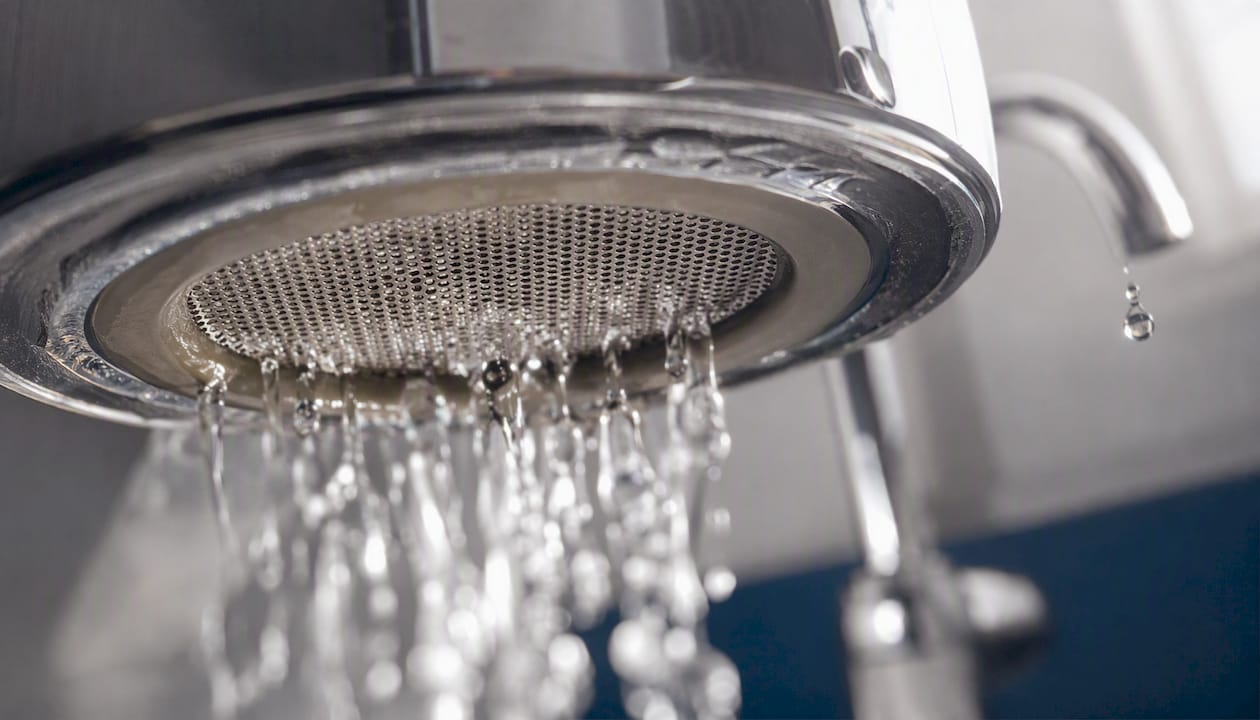
Filters fail in fairly predictable ways, and knowing the pattern helps you catch problems before they become incidents. Membrane fouling is the most common: sediment and biofilm particles gradually block pores and reduce flow, which is usually the first visible sign something needs attention. Retrograde contamination can occur on the upstream face of the membrane if the filter sits well past its rated life. Chemical damage happens when disinfectants are run through a filter not rated to withstand them. Pressure or temperature spikes outside the validated range can rupture or bypass the membrane entirely. And the simplest failure of all is an expired cartridge nobody removed on schedule.
Rated service life varies more than most managers expect, and product choice and water quality both drive the range. Manufacturer data and published studies put typical rated lives anywhere from around two weeks up to roughly 90 days, which is why the DVGW technical guidance insists on serial numbers and labelling for every unit fitted.
Pro Tip: Track flow rate and pressure drop as leading indicators. A filter that’s noticeably slower than it was a week ago is telling you it’s fouling, and scheduling a proactive change beats waiting for a resident to complain about weak water pressure.
What should you demand from manufacturers before you buy?
Treat procurement as a compliance exercise, not just a purchasing decision. Ask every supplier for independent test reports against ASTM F838-20 or an equivalent recognised standard, evidence of in-use validation rather than lab-only figures, confirmed temperature and pressure tolerances for your site’s conditions, serialisation and traceability markings on each unit, evidence of a recognised quality management certification, and clear end-of-life handling instructions.
A study on POU filter performance verification makes the point plainly: not all filters perform equally under real-world pressure drop, temperature and fouling conditions, so validated data specific to your water supply matters more than a general manufacturer claim.
Keep the following in the water safety plan and procurement folder together: test certificates, manufacturer instructions, installation records, and the expiry schedule for every filter currently in service. Where the incident is serious enough, or where the water safety plan requires it, retain a sample filter for independent testing or arrange microbiological verification once filters are in place to confirm they’re doing their job.
How do point of use filters fit into your Water Safety Plan?
Your written scheme of control under HSE’s ACOP L8 has to name every measure in use, including filters, and HSE’s own position is that temperature control remains the primary strategy, with filters as a supplementary layer. NIPCM’s guidance for healthcare settings and DVGW’s technical position both reinforce the same hierarchy: filters buy time, they don’t replace the underlying control regime.
When you deploy filters, update the water safety plan to record the reason for fitting, the specific outlets covered, who is responsible for management and changes, the replacement schedule, how you’ll verify effectiveness, and the exit strategy for removal once remediation is complete. Confirm with your local health protection team or competent authority whether they require microbiological sampling to sign off the filters’ removal, particularly in healthcare or high-risk commercial settings.
What is the right approach to point of use legionella control?
Use POU filters as a managed, temporary barrier inside a documented water safety plan while you pursue proper upstream remediation. Validate the product, log every installation, and fix a removal date before you fit the first one.
A facilities manager’s view on where filter programmes go wrong
The failures I see repeated across sites aren’t technical. They’re administrative: filters left in place months past their rated life, one shower missed out of a ward’s coverage plan, or a logbook that stopped being updated after the second week of a busy incident.
Two things fix most of it. Set digital reminders tied to each filter’s serial number rather than relying on a spreadsheet someone has to remember to check, and fold filter inspection into the daily walk-round rather than treating it as a separate task nobody owns.
How Bespoke Compliance Solutions supports your filter programme
Bespokecompliancesolutions is the option for sites that need filter deployment done properly the first time, rather than discovered as a gap during an inspection. Where a generic supplier will sell you cartridges and leave the paperwork to you, we build the risk assessment, procurement checks and logbook system into one coordinated piece of work.
[
Our services cover the full sequence: a bespoke Legionella risk assessment to confirm exactly which outlets need protection, procurement support to validate manufacturer claims before you spend money, installation oversight, a proper logbook system for tracking every serial number and expiry date, and verification sampling once filters are in place. If your team needs to build in-house capability, our Legionella awareness training covers exactly the responsibilities filter management demands.
If you’re unsure whether your site needs filters at all, or which outlets to prioritise, book a scoped risk assessment with us and get a clear answer written into your water safety plan.
Sources
Temporary use of point-of-use filters in microbially contaminated potable water installations
Point of Use (POU) Water — NIPCM POU filter guide and resources
Legionnaires’ disease: The control of legionella bacteria in water systems (ACOP L8)
Point-of-Use Water Filters for Legionella Control — CDC potable water control toolkit
Efficacy of new point-of-use water filter for preventing … (Sheffer et al., 2005)
FAQ
Is there a filter that removes Legionella from water?
Yes. Sterilising-grade filters rated at 0.2 microns or less, validated against ASTM F838, physically retain Legionella pneumophila at the point it leaves the tap or shower, as confirmed by CDC guidance.
What exactly is a point-of-use filter?
A point-of-use filter is a cartridge fitted directly onto a tap or shower outlet that blocks bacteria and particulates from reaching the user, acting as a terminal barrier rather than treating the wider water system.
What is the British standard for Legionella sampling?
Legionella water sampling in the UK is carried out under methods aligned with recognised standards, alongside the risk assessment and monitoring requirements set out in HSE’s ACOP L8.
How often should little-used outlets be flushed to prevent Legionella risk?
Guidance generally recommends flushing infrequently used outlets weekly, running water through for several minutes to clear stagnant water where bacteria can multiply. Bespokecompliancesolutions can build a flushing schedule into your wider water safety plan alongside any POU filter programme.
Can Bespoke Compliance Solutions help fit and manage POU filters?
Yes. Bespokecompliancesolutions provides risk assessment, procurement validation, installation oversight and logbook systems to manage POU filter programmes from installation through to a documented exit strategy.
Recommended
Comments