
Rainwater harvesting and Legionella: the risks explained
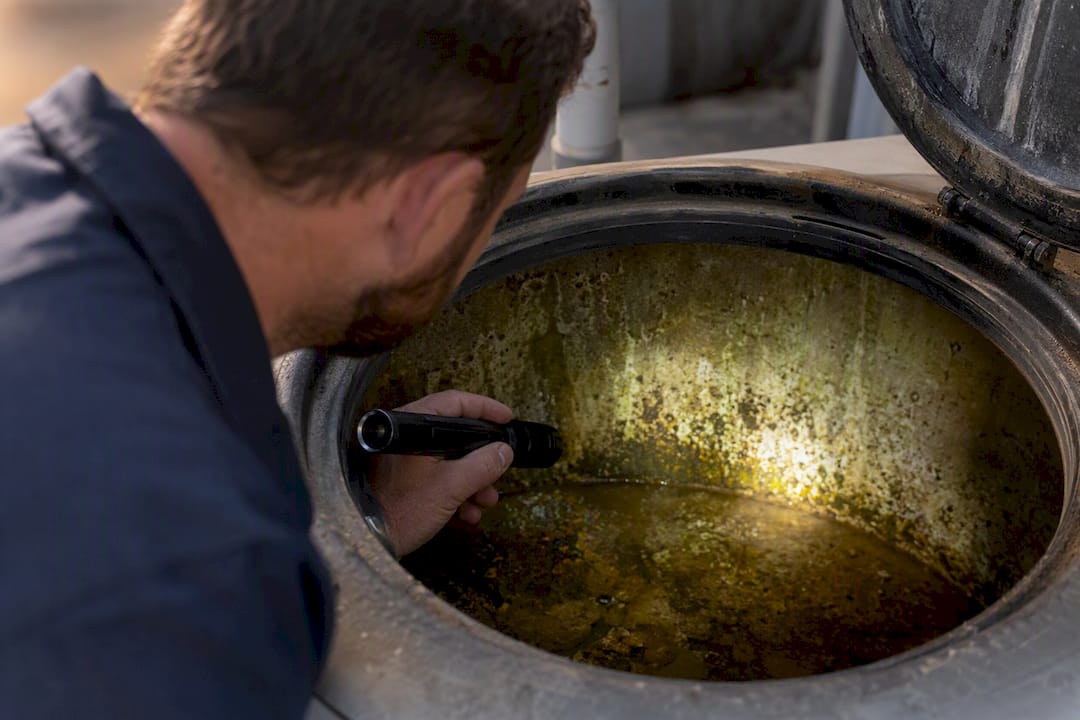
Rainwater harvesting can create a genuine Legionella risk once stored water sits between 20°C and 45°C and reaches an outlet capable of producing a fine spray or mist. If your system feeds anything that aerosolises water, whether a toilet, an irrigation sprinkler or a pressure washer, check your risk assessment today. If none exists, or it doesn’t mention the rainwater system specifically, treat that as your first action and follow HSE L8/HSG274 and BS7592 sampling guidance.
TL;DR:
Systems feeding aerosolising outlets like sprinkler heads or misting equipment pose a higher Legionella risk, especially if stored water warms into the bacteria’s growth range.
Regular inspection for sediment, biofilm, and temperature conditions, along with targeted sampling using proper standards, is crucial for early detection and risk management.
Treating rainwater systems as an extension of the wider water network with a specific risk assessment is mandatory, regardless of their perceived low profile.
Designing with materials and configurations that prevent stagnation and biofilm buildup significantly reduces long-term contamination potential.
Immediate isolation, targeted cleaning, and retesting are essential following any positive Legionella detection to prevent outbreaks and prove ongoing control.
Table of Contents
Same-day checklist: triaging your rainwater harvesting Legionella risk
Sampling and testing: standards and what results actually mean
How a specialist supports ongoing rainwater system compliance
Legionella infection: symptoms and why exposure route matters
What outbreak investigations have revealed about harvested water systems
Why rainwater harvesting Legionella risk gets underestimated
Same-day checklist: triaging your rainwater harvesting Legionella risk
Before anything else, work out whether your system can actually generate the conditions Legionella needs. That means tracing where the water goes, not just where it’s stored.
Start by mapping the whole system, from roof collection through to final use. A rainwater harvesting installation that only tops up a pond poses a very different risk profile to one feeding toilet cisterns, garden irrigation or vehicle wash bays. The outlet matters more than the tank.
Check these points today:
Does the system supply any outlet that produces a spray, mist or fine droplet, such as toilet flush valves, hosepipe sprayers, irrigation heads, or pressure washers?
Is any part of the storage tank exposed to direct sunlight or sited near a heat source, such as a plant room wall or roof void?
Are there sections of pipework that see little or no flow, sometimes called deadlegs, particularly on branches feeding rarely used outlets?
Is the tank vented and covered securely, with no gaps that let insects, debris or light into the water?
Has anyone inspected the tank base for sediment, sludge or a slimy film on internal surfaces, which usually signals biofilm?
Is there a documented risk assessment that specifically covers the rainwater harvesting system, rather than just the mains-fed hot and cold networks?
Where you find stored water feeding an aerosolising outlet, or visible sediment and biofilm, mitigate immediately rather than waiting for a full survey. Isolate or bypass the aerosolising outlet if the building can function without it in the short term. Increase flushing frequency on any outlet that sees infrequent use, and make sure tank covers and vents are properly seated and free of damage.
Pro Tip: Don’t assume a “closed” system is automatically low risk. A sealed tank with a poorly fitted inspection hatch or a cracked vent cowl still lets in warmth, light and organic debris, all of which feed biofilm regardless of what the tank drawing says.
If your triage turns up anything ambiguous, get a competent water-hygiene adviser involved rather than guessing. A bespoke Legionella risk assessment that specifically covers the rainwater system will tell you whether you’re dealing with a genuine exposure pathway or a low-risk storage arrangement that just needs routine monitoring.
How rainwater systems become a Legionella source
Legionella bacteria are naturally present in soil and freshwater environments, and they wash into rainwater harvesting systems along with dust, leaf litter, bird droppings and other organic material collected from roofs and gutters. That’s not unusual or alarming on its own. What turns background presence into a genuine hazard is what happens to the water after it’s collected.
The critical factor is temperature. Legionella bacteria multiply most readily in water at temperatures suitable for their growth, and outdoor or poorly insulated storage tanks can frequently enter this temperature range across a typical UK summer. A tank positioned against a south-facing wall, or one buried in ground that retains heat, can sit in the growth range for weeks at a stretch. HSE’s guidance on hot and cold water systems sets out why temperature control is the primary defence in conventional systems, and the same physics applies to rainwater storage.
Biofilm compounds the problem. Tank walls, pipe interiors and valve seats develop a thin bacterial and mineral film over time, and this film gives Legionella a protected niche to colonise even when the bulk water tests clean. A single “clear” water sample doesn’t mean the system is free of risk if biofilm is present on internal surfaces, because bacteria embedded in biofilm can shed into the water intermittently rather than continuously.
Sediment behaves similarly. Any tank collecting untreated rainwater accumulates organic debris at the base over months, and that sludge layer becomes a long-term nutrient source. Practitioners who inspect rainwater tanks regularly report that this sediment build-up is consistently underestimated, precisely because it sits out of sight and doesn’t show up in a routine tap sample.
None of this matters clinically until aerosols enter the picture. Legionella causes disease through inhalation of fine water droplets, not through drinking or skin contact, which is why the outlet matters as much as the tank. A toilet flush, a garden sprinkler, an irrigation mister or a pressure washer can all turn contaminated water into breathable droplets small enough to reach the lower lung.
Peer-reviewed and public-health research backs this up directly. Studies cited in UKHSA’s review of Legionella species in collected rainwater have detected the bacteria in harvested rainwater samples and demonstrated aerosolisation during activities like toilet flushing and irrigation. That’s a meaningfully different finding to simply confirming Legionella exists in the environment, because it connects presence in storage to a plausible exposure route.
It’s worth being precise about what this evidence does and doesn’t establish. Detecting Legionella in a water sample doesn’t automatically mean anyone will fall ill. Infection requires:
A sufficient concentration of the bacteria in the aerosolised droplets
Droplets small enough and numerous enough to be inhaled deep into the lungs
A person in the aerosol plume, typically standing close to or downwind of the source
Some degree of individual susceptibility, since smokers, older adults and people with weakened immune systems face substantially higher risk
That last point matters enormously in commercial and institutional settings. A rainwater-fed irrigation system in a public park carries different risk to the same system in a care home car park, purely because of who’s likely to be nearby. Risk assessment has to account for who uses the site, not just what the system does.
Legal duties: what a compliant risk assessment must cover
Dutyholders in the UK have a clear legal obligation. Under the Health and Safety at Work etc. Act 1974 and the Control of Substances Hazardous to Health Regulations, anyone responsible for premises must assess any water system that could create a reasonably foreseeable risk of Legionella exposure. HSE guidance is explicit that this duty extends beyond conventional hot and cold water networks to cover other risk systems, and a rainwater harvesting installation that stores and potentially aerosolises water falls squarely within that scope.
This surprises some facilities teams, because rainwater systems are often installed and signed off as part of a sustainability or drainage strategy, with little thought given to water hygiene at the design stage. The legal duty doesn’t care how the system was procured. If it stores water and that water could become airborne, it needs assessing.
HSG274, the supporting technical guidance to the Approved Code of Practice L8, specifically addresses “other risk systems” beyond the traditional cooling towers and hot water cylinders most people associate with Legionella compliance. It sets out the risk factors that a competent assessment must weigh: storage conditions, thermal gain potential, aerosol release mechanisms and maintenance regime, and it recommends a written control scheme wherever the risk is judged foreseeable.
A risk assessment for a rainwater harvesting system that meets this standard needs to work through several distinct elements:
Source and collection review. Where does the water come from, what’s the catchment area (roof material, surrounding vegetation, bird activity), and how is it filtered or screened before storage?
Temperature profiling. What’s the realistic temperature range the stored water experiences across a full year, accounting for tank location, insulation and exposure to direct sun?
Aerosolisation potential. Does any part of the distribution network feed an outlet capable of producing fine droplets, and if so, how close do people routinely get to that outlet?
Susceptible populations. Who uses the site, and does that include groups at elevated risk, such as older residents, patients, or anyone with a compromised immune system?
Maintenance and materials history. How old is the system, what materials were used in construction, and has it had any period of stagnation, such as during a building closure or seasonal shutdown?
Existing controls. What temperature, flushing or filtration measures are already in place, and how effective have they proven against inspection or sampling results?
Where the assessment concludes that a foreseeable risk exists, and for most commercial rainwater harvesting systems feeding any aerosolising outlet, it will, the duty doesn’t stop at the paperwork. HSE requires a written control scheme setting out the specific measures in place, the monitoring regime, and named responsibility for each task.
That control scheme should include, at minimum:
A schedule of monitoring and inspection tasks, with defined frequency for each
Named individuals responsible for carrying out and reviewing checks
A record-keeping system that captures results, remedial actions and dates
A review trigger, such as a change of use, a positive test result, or a period of extended stagnation
Documentation matters as much as the physical controls themselves, so following an established hospital vending machine maintenance checklist for facility managers can serve as a useful example for maintaining small ancillary equipment systematically. If an inspector or an environmental health officer ever asks to see evidence of control, a folder of dated records showing consistent monitoring carries far more weight than a verbal assurance that “someone checks it.” A logbook system that captures this evidence as you go removes the scramble to reconstruct a history after the fact.
What to check on site: tanks, pipework and outlets
A desk-based risk assessment only gets you so far. The real risk factors show up on a physical walkthrough, and the components worth examining fall into four categories.
Storage tanks deserve the closest scrutiny, because this is where thermal gain and sediment accumulate. Check whether the tank is open or sealed, and if sealed, whether the inspection hatch and vent are intact and properly fitted. Look for evidence of biofilm on internal surfaces during any access opportunity, a slimy or discoloured film on tank walls above the waterline is a reliable indicator. Confirm the overflow arrangement discharges safely and doesn’t create a standing pool nearby, and check that any inspection access is actually usable rather than sealed shut by previous contractors.
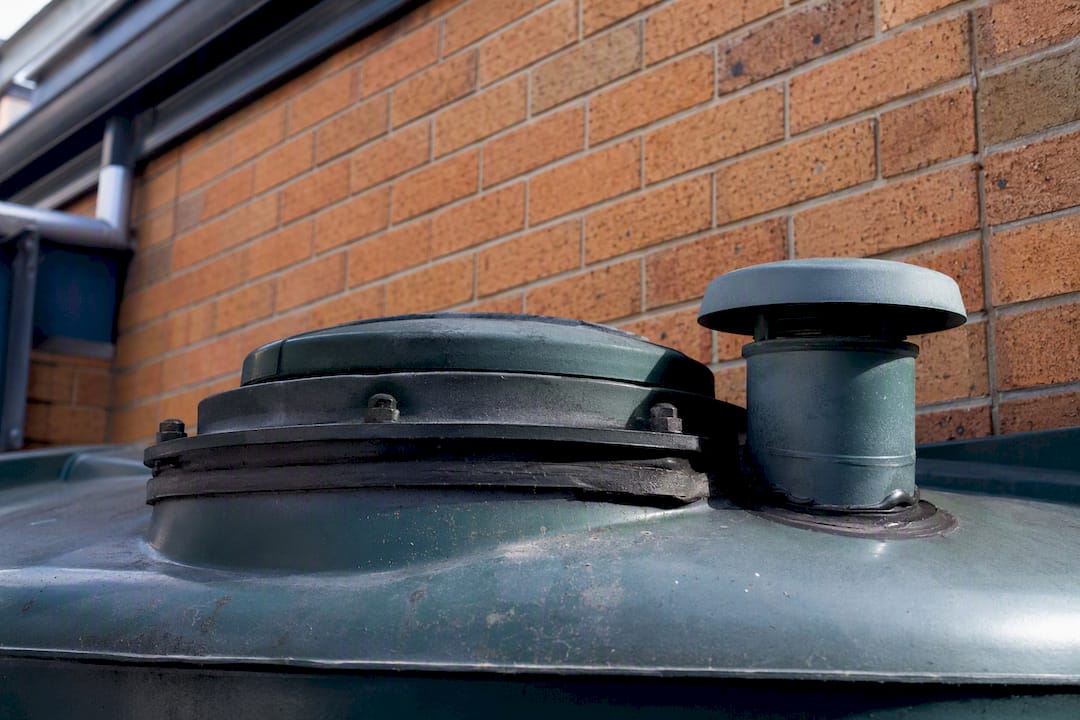
Pipework hides some of the most persistent risk factors. Deadlegs, sections of pipe that no longer see regular flow because a branch was capped off or an outlet removed, allow water to stagnate and warm undisturbed. Bypass arrangements installed during previous repairs sometimes create similar dead zones if nobody removes them once the original fault is fixed. Check backflow prevention devices are fitted and functioning where the rainwater system interfaces with mains supply, and confirm any break tanks in the network don’t sit permanently full without turnover.
Aerosolising endpoints are where risk assessment meets consequence, so identify every one of them explicitly:
Toilet cisterns and flush valves fed by harvested rainwater, particularly older flush mechanisms that generate more spray than modern low-flush designs
Garden and landscape irrigation systems, especially fine-mist or rotary sprinkler heads rather than drip-line systems
Pressure washers used for vehicle or hard-surface cleaning, which generate substantial fine droplet clouds
Any atomising or misting equipment, including cooling misters sometimes installed in outdoor seating areas
Environmental exposures round out the inspection. Tanks positioned on south or west-facing elevations without shading will run consistently warmer than shaded or below-ground alternatives. Proximity to plant room heat sources, boiler flues, or compressor units can push tank temperature into the growth range even in winter. Insulation failures, whether missing cladding on exposed pipework or a damaged tank jacket, remove what little thermal protection the system had.
Pro Tip: Photograph every tank interior you can safely access, even when nothing looks obviously wrong. A dated photo record makes it far easier to spot gradual biofilm build-up over successive inspections than relying on memory or written notes alone.
Sampling and testing: standards and what results actually mean
Monitoring only tells you something useful if it’s done to a recognised standard and interpreted correctly. For rainwater harvesting systems, which fall outside the traditional hot and cold water categories, BS7592 sets out the sampling technique for non-hot/cold systems, covering sample point selection, volume, handling and chain of custody.
Getting the sampling technique right matters more than people assume. A sample taken from the wrong point, say, straight from a tap rather than representative of standing water in the tank, can produce a false sense of security. Equally, poor handling between collection and laboratory delivery can affect viable counts. This is why HSE’s guidance insists on using a UKAS-accredited laboratory that participates in a recognised proficiency testing scheme, rather than any lab willing to run a culture test.
Understanding detection limits changes how you read a result. Standard culture methods for Legionella typically carry a theoretical detection limit in the region of 100 colony-forming units per litre, meaning lower-level presence can go undetected even when the organism is genuinely there. A “not detected” result should be read as “below the method’s detection threshold” rather than “definitely absent.” This distinction matters when you’re deciding whether a clean result justifies relaxing controls, it usually doesn’t, particularly if biofilm or sediment is visibly present.
Rapid on-site tests, typically antigen or PCR-based kits, offer same-day results and have their place for quick triage after a suspected incident. They’re considerably faster than the 10 to 14 days a full culture test can take. But they don’t replace culture testing for formal compliance monitoring, because they can’t reliably distinguish live, culturable bacteria from dead cells or fragments, and regulatory bodies still expect culture-based confirmation for record-keeping purposes.
Monitoring frequency isn’t a fixed number, it’s set by the risk assessment itself, and that’s a deliberate feature of the guidance rather than a gap. A few practical benchmarks help:
High-risk systems with active aerosolisation and vulnerable populations nearby may warrant quarterly sampling, similar to the regime HSE describes for cooling towers
Lower-risk storage feeding only non-aerosolising uses might justify annual or biannual checks, provided visual inspections happen more frequently
Any period of extended stagnation, a shutdown, a seasonal closure, a maintenance outage, should trigger additional sampling before the system returns to normal use
A positive result at any point resets the clock and requires more frequent monitoring until consecutive clear results demonstrate control
One point worth stressing to anyone tempted to treat a clean test as the finish line: a single Legionella-free result is not, on its own, robust evidence of ongoing control. Water systems change week to week with temperature, usage patterns and seasonal debris, so a defensible compliance programme integrates scheduled sampling with maintenance records and, where practical, automated temperature monitoring to build a continuous picture rather than a single snapshot.
Controlling the risk: design, operation and maintenance
Reducing Legionella risk in a rainwater harvesting system works best as a layered strategy, starting with design decisions and running through daily operational habits to periodic maintenance and, where necessary, active disinfection.
Design comes first, because it’s the most permanent fix. HSE guidance recommends considering system redesign wherever reasonably practicable, specifically favouring dry alternatives over wet systems that generate aerosols. If a rainwater harvesting system currently feeds a misting or spray application that could plausibly run on a drip-fed or non-aerosolising alternative instead, that redesign removes the exposure pathway entirely rather than managing it indefinitely.
Tank management forms the next layer. Secure, well-fitted covers keep out light, debris and insects that feed biofilm formation. Inlet filters or first-flush diverters reduce the organic load entering storage in the first place, cutting down the nutrient supply available to bacteria. Scheduled desludging, removing accumulated sediment from the tank base, needs to happen on a defined cycle rather than reactively, because sediment builds gradually and rarely announces itself through a routine water sample.
Operational controls address the water while it’s moving through the system:
Set up automatic night purges or scheduled flushing on outlets that see irregular use, keeping water moving rather than stagnant.
Establish a sentinel outlet flushing schedule, running the outlets furthest from the tank regularly even when they’re not in day-to-day demand.
Physically remove or cut back any deadlegs identified during inspection, rather than simply noting them and moving on.
Isolate outlets that see genuinely minimal use if they can’t be brought into a regular flushing routine, since an isolated outlet carries far less risk than a stagnant one left connected.
Temperature management deserves specific attention for rainwater systems, because unlike mains-fed hot and cold networks, there’s no simple “keep it hot” or “keep it cold” rule to apply uniformly. HSE’s temperature guidance for conventional systems recommends keeping cold water below 20°C where practicable, and the same principle applies to rainwater storage: shading, burial, insulation and tank siting all influence whether a tank sits safely below that threshold or drifts into the growth range through the summer months.
Where testing confirms contamination, or where risk factors are severe enough to warrant pre-emptive action, chemical or thermal disinfection becomes necessary. Chlorine-based dosing is common for tank and pipework disinfection, but it demands proper handling, correct dilution and adequate contact time, along with personal protective equipment for anyone administering it. Thermal disinfection, flushing the system with water above 60°C, offers an alternative where chemical dosing isn’t practical, though it carries its own scalding risk that needs managing alongside the biological one.
Pro Tip: Don’t treat disinfection as a one-off fix. Unless you address the underlying cause, whether that’s a persistent thermal gain problem, an uncleaned deadleg, or ongoing sediment build-up, contamination will return. Disinfection buys you a clean result; it doesn’t buy you a solved problem.
Given the health and safety complexity of biocide handling, most commercial and institutional dutyholders bring in a specialist for disinfection work rather than attempting it with in-house maintenance teams. A professional tank cleaning and disinfection service also provides the documented evidence of remedial action that a subsequent audit or inspection will expect to see.
What to do after a positive Legionella result
A positive result demands a structured response, not a single reactive fix. The sequence matters, both for effectively controlling the contamination and for demonstrating due diligence afterwards.
Act immediately on the affected outlets. Restrict or isolate any aerosolising outlet connected to the contaminated part of the system until remedial work is complete. Notify the responsible person named in your written control scheme and log the date, time and result of the positive test.
Identify the likely cause before cleaning. A rushed clean without understanding why contamination occurred, whether that’s a thermal gain issue, a deadleg, or sediment build-up, risks the same result recurring within weeks.
Carry out targeted remediation. This typically means a full tank clean and desludge, removing sediment and biofilm from all accessible surfaces, followed by chemical or thermal disinfection of the tank and downstream pipework.
Address the underlying design or maintenance gap. If the root cause was a deadleg, remove it. If it was thermal gain, look at shading, insulation or tank relocation. Disinfection without fixing the cause is a temporary reprieve, not a solution.
Retest on a defined schedule. Most competent advisers recommend resampling within a set window after remediation, then again at a follow-up interval to confirm the result holds before returning to standard monitoring frequency.
Document everything. Keep dated records of the positive result, the remedial actions taken, the retest results and any design changes made. This record becomes essential if an environmental health officer or HSE inspector asks for evidence of control.
Consider RIDDOR obligations. Where a positive result coincides with a suspected or confirmed case of Legionnaires’ disease linked to the system, dutyholders have reporting obligations under RIDDOR, and public health authorities should be informed promptly.
Keeping this sequence documented in a structured logbook system turns a stressful incident into a defensible paper trail, which matters considerably more than most facilities teams expect until they actually need it.
How a specialist supports ongoing rainwater system compliance
Managing Legionella risk in a rainwater harvesting system isn’t a one-off task you complete and file away. It needs continuous oversight, particularly because rainwater systems change with the seasons in ways mains-fed networks generally don’t.
Bespokecompliancesolutions works with commercial, healthcare, housing association, retail and facilities management clients across the UK to build that ongoing oversight into something manageable. That starts with a site-specific risk assessment that actually covers the rainwater system rather than treating it as an afterthought to the mains hot and cold survey, and continues through water sampling with liaison direct to UKAS-accredited laboratories, so results come with a proper chain of custody and defensible interpretation.
Where remediation is needed, that includes tank cleaning and disinfection, TMV servicing, and implementation of automated temperature monitoring systems that flag thermal gain before it becomes a compliance problem rather than after. Training matters too: Legionella awareness training for on-site staff means the people actually walking past the tank every day know what a biofilm indicator looks like and when to raise a flag.
Any competent contractor working on a rainwater harvesting system should be delivering, at minimum, a written control scheme specific to that system, a sampling plan with defined frequency and rationale, documented UKAS chain of custody for every sample submitted, and a follow-up record showing what happened after each result. If a contractor can’t produce those four things, that’s worth questioning before signing anything.
Legionella infection: symptoms and why exposure route matters
Legionella causes two distinct illnesses, and the distinction matters for how seriously a facilities team should treat any positive result. Legionnaires’ disease is the severe form, a type of pneumonia with symptoms including high fever, chills, a persistent cough, breathlessness, muscle aches and sometimes confusion. It typically develops between two and ten days after exposure and requires hospital treatment in most confirmed cases. Pontiac fever is milder, presenting more like a flu with fever and muscle pain that clears on its own within a few days.
Neither illness spreads person to person. Infection happens exclusively through inhaling contaminated water droplets fine enough to reach the lower airways, which is precisely why the aerosolising outlet matters so much more than the storage tank itself in a rainwater harvesting context. Someone could stand next to a heavily contaminated tank all day without risk, provided the water never becomes airborne near them.
This exposure mechanism explains why irrigation sprinklers, toilet flush mist and pressure washer spray sit at the centre of rainwater harvesting risk assessments, while a sealed underground tank feeding only a non-aerosolising drip system poses comparatively little concern even with the same bacterial presence. Risk assessment has to follow the water to its final point of use, not stop at the tank.
Age, smoking history and immune status all raise individual susceptibility substantially, which is why the population using or working near a rainwater-fed outlet forms a core part of any compliant assessment under HSE guidance.
Connecting rainwater systems to your wider water network
Most commercial rainwater harvesting installations don’t operate in isolation. They tie into an existing water network, whether that’s a mains backup connection for dry periods, a shared distribution system feeding both mains and harvested water to the same outlets, or a combined system serving irrigation, toilet flushing and vehicle washing from one tank.
Every connection point is a place where risk can transfer between systems, and it works in both directions. A backflow prevention failure at the interface between rainwater storage and mains supply could theoretically allow contaminated water to move into the potable network, which is why backflow devices need checking as part of any rainwater system inspection, not treated as a separate mains-only concern.
Shared pipework raises a subtler issue: if a rainwater harvesting system and a mains-fed network share any distribution pipework downstream of the point where they combine, the whole shared section inherits the higher risk profile of whichever source is less controlled. A well-maintained mains supply doesn’t protect a shared pipe run if the rainwater side introduces biofilm or intermittent flow patterns upstream of it.
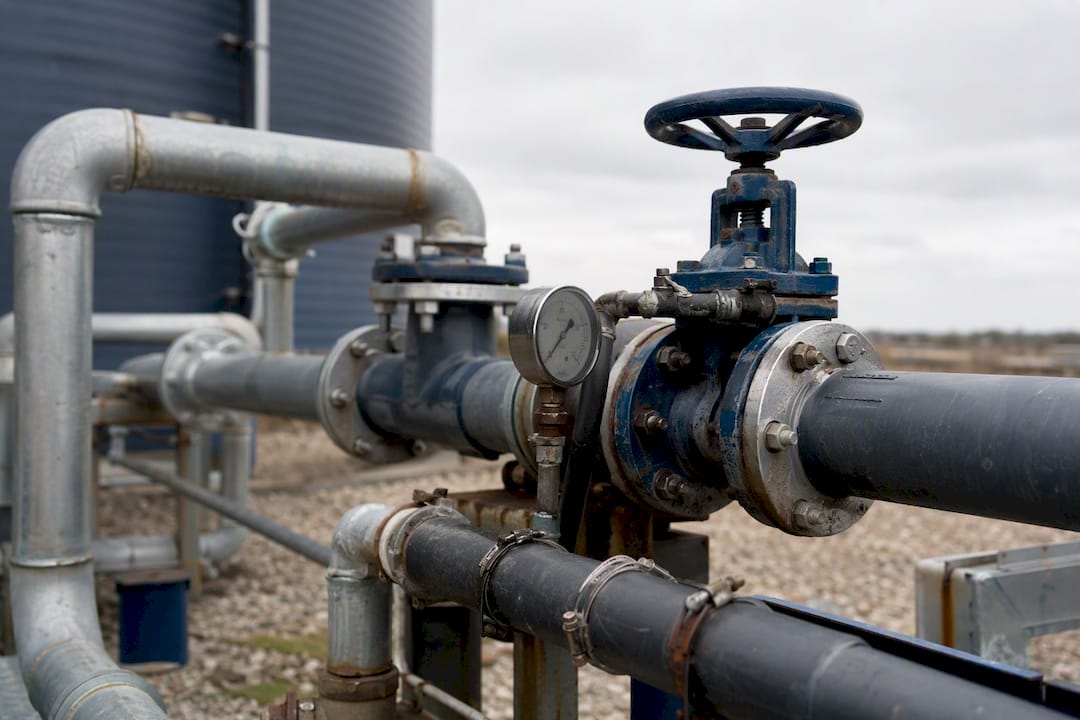
Integration also affects usage patterns in ways that influence risk. A building that switches between mains and harvested water depending on rainfall and storage levels can inadvertently create stagnation in whichever source sees less use during a given season, turning what should be a resilience feature into a dormant risk pocket. The practical answer is treating the combined network as a single system for risk assessment purposes, mapping every connection, valve and shared run, rather than assessing the rainwater and mains sides separately and assuming the join doesn’t matter.
What outbreak investigations have revealed about harvested water systems
Legionella outbreaks linked directly and conclusively to rainwater harvesting systems remain uncommon in published UK investigation records, largely because most confirmed community and healthcare outbreaks trace back to cooling towers, hot water systems, or spa pools rather than harvested rainwater specifically. That relative rarity shouldn’t be read as an absence of risk, though. It more likely reflects that rainwater harvesting for aerosolising uses is a newer and less widespread practice than conventional water systems, and investigation resources have historically focused where outbreak patterns are already well established.
What the available evidence does show is more indirect but still instructive. Research reviewed by UKHSA on Legionella species in collected rainwater has confirmed both the presence of the bacteria in harvested water and its capacity to aerosolise during common activities like toilet flushing and garden irrigation. That establishes the mechanism, even where a large-scale confirmed outbreak specifically attributed to rainwater harvesting hasn’t yet made it into UK public records in the way cooling tower outbreaks have.
Facilities managers shouldn’t take reassurance from the absence of a headline outbreak. Legionnaires’ disease cases are frequently investigated without ever identifying a definitive source, and sporadic cases, as opposed to clustered outbreaks, rarely generate the kind of detailed public investigation report that would name a rainwater system specifically. The sensible working assumption, backed by the mechanism research that does exist, is that any rainwater system feeding an aerosolising outlet carries a real, if currently under-documented, risk that justifies the same rigour as any other other risk system under HSG274.
Materials and design choices that limit biofilm growth
The materials used in a rainwater harvesting system’s construction influence how readily biofilm establishes itself, and getting this right at design or refurbishment stage saves considerably more effort than fighting biofilm after the fact.
Smooth-bore pipework in materials like uPVC or stainless steel resists biofilm formation far better than rougher or more porous alternatives, because bacterial colonies need surface irregularities to anchor onto. Older galvanised steel tanks and pipework, by contrast, tend to corrode over time, and that corrosion creates exactly the pitted surface texture biofilm favours.
Tank material matters just as much as pipework. Opaque, UV-resistant polyethylene or GRP (glass-reinforced plastic) tanks limit light penetration, which restricts algal growth that can otherwise provide an additional nutrient source for bacterial colonisation. Fully sealed tank designs with proper vented access outperform open or poorly sealed alternatives, since light and airborne debris both encourage biofilm and sediment build-up.
Design choices around water movement matter too. Systems designed to avoid stagnant zones, minimising deadlegs, ensuring adequate turnover, and avoiding oversized tanks relative to actual demand, keep water moving through the growth-favourable temperature range rather than sitting static within it for extended periods. Inlet filtration or first-flush diverters that remove organic debris before it enters storage reduce the nutrient load available to any bacteria present, cutting off the biofilm problem at its source rather than managing it downstream.
Key HSE guidance and standards to keep on file
Every dutyholder managing a rainwater harvesting system should have direct, permanent access to a small set of core documents, not just a summary someone once emailed round.
L8/HSG274 remains the foundational technical guidance, with Part 3 specifically addressing other risk systems beyond conventional hot and cold networks. This is the document to cite when justifying why a rainwater harvesting system falls within scope.
BS7592 governs sampling methodology for non-hot/cold systems and should sit alongside your monitoring plan as the technical standard your sampling procedure follows. Any laboratory or contractor carrying out sampling on your behalf should reference this standard explicitly in their reporting.
INDG458, HSE’s concise dutyholder guide, offers a faster reference for checking basic control principles without wading through the full technical guidance every time.
The UKHSA research on Legionella in collected rainwater provides the evidence base for why rainwater systems specifically warrant this level of scrutiny, useful when explaining the rationale to colleagues or budget holders who need more than “HSE says so.”
Keep all four accessible to whoever holds day-to-day responsibility for your system, not filed away with a compliance officer nobody can reach on short notice.
Why rainwater harvesting Legionella risk gets underestimated
The conventional advice on Legionella compliance has a blind spot, and it’s a structural one rather than a matter of ignorance. Most guidance, training and even risk assessment templates were built around cooling towers, hot water cylinders and spa pools, the systems responsible for the outbreak history everyone cites. Rainwater harvesting arrived later, usually bolted onto a building for sustainability credentials, and compliance thinking hasn’t fully caught up with it.
That gap matters because rainwater systems fail differently. They don’t have a boiler to monitor or a cooling tower drift eliminator to inspect. Their risk sits in less visible places: a tank that catches afternoon sun nobody accounted for at design stage, a sediment layer nobody’s looked at since installation, an irrigation head someone added two summers after the original risk assessment was filed.
If there’s one thing worth prioritising above everything else in this guide, it’s tracing every outlet back to source before assuming a rainwater system is low risk simply because it’s “just for irrigation” or “just for flushing.” The mechanism, aerosol plus temperature plus biofilm, doesn’t care what the water was originally installed for.
— Sammi
This article is general information, not a substitute for advice from a qualified doctor. Consult a qualified healthcare professional about your own circumstances before acting on anything here.
Sources
FAQ
How long should you run taps to avoid Legionella?
Running an infrequently used outlet for several minutes helps flush stagnant water and reduce bacterial concentration, though the exact duration should follow your risk assessment rather than a fixed rule, since tank distance and pipe volume vary between sites.
Can showering every day expose you to Legionella?
Showering can expose you to Legionella if the water supply is contaminated and the shower head produces fine aerosol droplets, but properly maintained systems with correct temperature control and regular descaling carry very low risk for routine daily use.
What is the most common source of Legionella?
Cooling towers, hot water systems and spa pools account for most documented UK outbreaks, though HSG274 recognises other risk systems, including rainwater harvesting, as capable of the same storage, thermal gain and aerosol conditions.
How can you tell if Legionella is in your water?
You can’t detect Legionella by sight, taste or smell; confirming its presence requires sampling to BS7592 standards and culture testing at a UKAS-accredited laboratory, since standard culture methods carry a theoretical detection limit around 100 colony-forming units per litre.
Does a rainwater harvesting system need its own risk assessment?
Yes. Under HSE guidance, any system that could create a foreseeable risk of Legionella exposure needs assessing specifically, and a mains-only risk assessment that doesn’t examine the rainwater system separately doesn’t meet that duty.
Recommended
Comments