
Signs water system legionella risk: key indicators
Legionella bacteria rarely announce themselves. There is no alarm, no obvious smell, no colour change to warn you that conditions in your water system have shifted into dangerous territory. For facility managers and compliance officers in commercial and healthcare settings, recognising the signs water system legionella risk presents requires understanding operational and environmental indicators rather than waiting for something visible to go wrong. This article gives you a practical checklist of the most important warning signs to monitor, how to prioritise them, and what to do when you spot them.
Table of Contents
Key takeaways
Point | Details |
Temperature is your primary signal | Hot water below 50°C at outlets and cold water above 20°C are the clearest early indicators of legionella risk. |
Stagnation creates hidden risk | Infrequently used outlets and dead legs in pipework create the conditions legionella thrives in without any visible warning. |
Construction events are overlooked triggers | Renovation, water outages, and pipe disturbance can dislodge biofilm and introduce contamination requiring immediate flushing and testing. |
Documentation failures equal compliance failures | Missing flushing logs and temperature records are a risk in their own right, regardless of how well the physical system is managed. |
Prioritise aerosol-generating devices | Showers, cooling towers, and spa facilities carry the highest transmission risk and must be treated as sentinel inspection points. |
Signs water system legionella risk: the core conditions to understand
Before you can recognise individual warning signs, you need to understand the environmental conditions that allow legionella to flourish. This gives you a mental model for interpreting what you observe.
Legionella bacteria grow most aggressively in water held between 20°C and 45°C. The HSE temperature thresholds are unambiguous: hot water must be stored above 60°C and distributed at above 50°C, while cold water must be stored and distributed below 20°C. Any system operating outside these ranges is already in risk territory.
Stagnation is the second core condition. Water sitting in pipework, dead legs, or low-use branches provides exactly the warm, undisturbed environment legionella needs. Biofilm, a thin layer of microbial material that coats pipe walls, acts as a protective reservoir for the bacteria and reduces the effectiveness of disinfectants. Without regular flow and adequate disinfectant residuals, biofilm establishes itself quickly.
Temperatures outside HSE thresholds at any monitored outlet
Evidence of scale, sediment, or visible deposits in fittings
Known dead legs or pipework that has not been actively decommissioned
Low or absent chlorine residuals in the system
Pro Tip: Biofilm does not need to be visible to be present. If you have outlets that sit unused for more than seven days, treat them as high-risk regardless of how clean the pipework appears.
Aerosol-generating devices such as showers, cooling towers, and hydrotherapy equipment represent the highest transmission risk because inhaled droplets, not ingested water, are the route of legionella exposure. These points must always sit at the top of your inspection list.
1. Temperature exceedances at sentinel outlets
Sentinel outlets are the furthest and nearest points from a storage tank, and monthly temperature checks at these points are your primary early warning tool. If hot water fails to reach 50°C within one minute, or cold water exceeds 20°C within two minutes, the system is operating outside safe parameters.
This single sign has more diagnostic value than almost anything else. A cold water outlet creeping above 20°C in summer, for example, may indicate insufficient insulation or proximity to a heat source. A hot water outlet that takes longer than a minute to reach temperature may point to a problem with the calorifier or with pipework layout.
2. Presence of dead legs or infrequently used pipework
Dead legs are sections of pipework that branch off the main circulation loop but lead nowhere, or lead to outlets that are never used. Water in these sections stagnates, cools or warms to ambient temperature, and becomes a breeding ground for legionella.
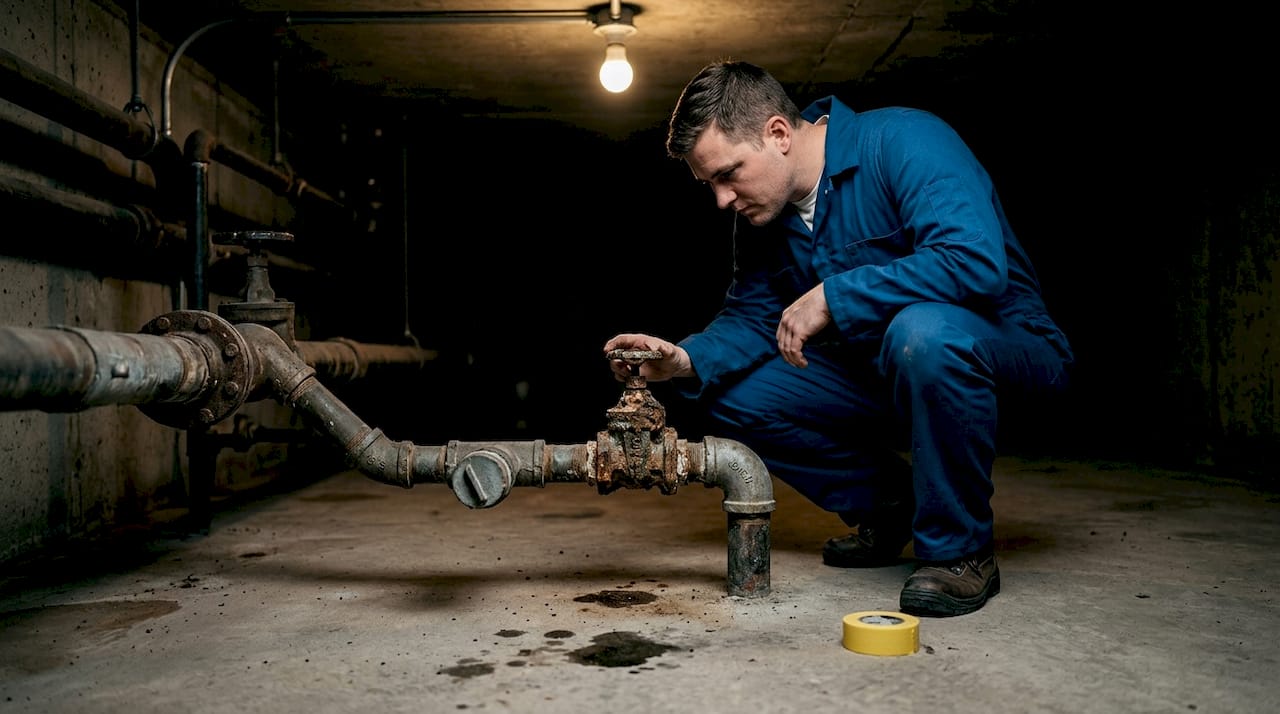
In healthcare and commercial buildings that have undergone changes in use or refurbishment, dead legs are remarkably common. If your schematic drawings do not reflect the current physical layout of the system, you almost certainly have undocumented dead legs.
3. Infrequent or undocumented outlet flushing
Weekly flushing of low-use outlets is a baseline control measure, not an optional extra. If your flushing records show gaps, if flushing is being done irregularly, or if it is not being logged at all, that absence of documentation is itself a risk indicator.
Flushing unused outlets with cold water for at least two minutes followed by hot water displaces stagnant water and restores thermal and chemical conditions that inhibit bacterial growth. Without this, low-use outlets become reservoirs.
Pro Tip: During partial building closures, such as holiday periods or phased occupancy, flushing compliance is most likely to lapse. Build a specific closure protocol into your written control scheme before the facility empties.
4. Visible scale, sediment, or biofilm deposits
Scale on showerheads, sediment in tank bases, or visible slime on fittings are physical signs that maintenance has fallen behind. While you cannot see legionella itself, these deposits confirm the conditions it requires. Quarterly descaling and cleaning of showerheads is a minimum standard, not a stretch target.
Sediment at the base of a cold water storage tank is particularly significant. It creates a nutrient source for biofilm, reduces the effectiveness of any biocidal treatment, and points to a tank that needs inspection and cleaning.
5. Unusual water discolouration, taste, or odour
Discoloured water, a metallic or sulphurous smell, or an unusual taste are sensory indicators of water system contamination signs that should trigger immediate investigation. These are not conclusive evidence of legionella, but they indicate microbiological or chemical instability in the system.
Discolouration after a period of low use may indicate iron bacteria or pipe corrosion. Odour changes can signal anaerobic conditions in stagnant sections. Neither should be dismissed or attributed to a temporary blip without follow-up.
6. Recent construction, renovation, or water system outages
Post-construction or post-outage risk is one of the most consistently underestimated signs of legionella exposure potential. Pipe disturbance during building work dislodges established biofilm, releasing bacteria into the wider system. Pressure changes during outages can pull in untreated water or create conditions where stagnant water mixes with the main supply.
Any time the water system has been physically disturbed or has sat dormant, flushing and testing before reoccupation is not optional. It is a control measure with direct legal implications under HSE guidance.
7. Inadequate disinfectant residuals
Chlorine residuals that fall below recommended levels remove one of the key barriers to legionella growth. This sign is invisible without testing, which is precisely why water sampling and chemical monitoring must be part of your routine programme rather than a reactive measure.
Low residuals often indicate a system design issue, high demand, or a dosing failure. The sign itself matters less than understanding what caused it, because the underlying condition will persist until it is corrected.
8. Cooling tower or evaporative condenser anomalies
Cooling towers are among the highest-risk water systems for legionella transmission because they generate aerosols by design. Unusual readings, drift eliminator damage, scale build-up, or inconsistent biocide dosing logs are all legionella bacteria indicators that require immediate attention.
Cooling towers must have a specific risk assessment, a written scheme of control, and documented inspection records. Any gap in those records, or any physical anomaly observed during routine inspection, should trigger a formal review.
9. Failures in temperature monitoring records
Monitoring frequency and record integrity are distinct from the physical condition of the system. A facility where temperature checks have been missed, recorded incorrectly, or not reviewed by a responsible person has a compliance failure regardless of the actual water temperatures.
Monthly checks at sentinel outlets are the baseline, with records retained for a minimum of five years. Gaps in those records are audit findings. More significantly, they mean you have periods where risk conditions may have existed and gone undetected.
10. Missed cleaning and descaling schedules
Showerheads and spray taps accumulate scale and debris that harbour biofilm. When cleaning and descaling schedules are missed or not recorded, you lose both the physical control measure and the audit trail that demonstrates you are managing the risk. The written scheme requirements under HSE guidance include quarterly cleaning of these fittings as a documented, scheduled activity.
Prioritising signs: from immediate hazard to long-term risk
Not every sign carries equal urgency. Understanding the difference between an immediate hazard and a condition that requires scheduled remediation helps you allocate resource and response time appropriately.
Sign | Risk level | Recommended action |
Temperature failure at sentinel outlet | High, immediate | Investigate cause, retest, check calorifier and circulation |
Cooling tower anomaly or drift eliminator damage | High, immediate | Take out of service, inspect, disinfect before restarting |
Post-construction or post-outage system not flushed | High, immediate | Flush to drain, temperature check, consider sampling |
Infrequent outlet flushing with gaps in records | Medium, urgent | Reinstate flushing schedule, review written scheme |
Visible scale or sediment in fittings | Medium, scheduled | Clean and descale, inspect tank, update logbook |
Missing or incomplete monitoring records | Medium, compliance | Audit records, retrain responsible person, update logbook |
Low disinfectant residuals | High, investigate | Test system, check dosing equipment, review design |
Discolouration or odour at outlet | Medium, investigate | Flush, sample, assess for corrosion or microbiological cause |
When lab sampling results indicate exceedances, the response must be proportional and targeted rather than a blanket system shutdown. Identifying which sign or combination of signs led to the sampling trigger tells you where the underlying control failure sits.
Multiple signs appearing together is a strong indicator of systemic control failure rather than an isolated issue. A facility showing temperature exceedances, missed flushing records, and scale deposits simultaneously is not dealing with three separate problems. It is dealing with one: a control programme that has broken down.
Practical steps once you have identified risk signs
Identifying legionella risk indicators is only useful if it feeds directly into corrective action and updated documentation. Here is how to translate what you observe into a structured response:
Review your written control scheme. Every corrective action you take should be traceable to a documented control measure. If the sign you have identified is not covered in your existing scheme, update it immediately.
Implement corrective flushing and temperature checks. For temperature failures and stagnation-related signs, corrective flushing followed by a temperature recheck is the first practical step. For temperature monitoring protocols, follow the sentinel outlet procedure and record every result.
Escalate to laboratory sampling where warranted. Temperature monitoring is your primary control tool, not sampling. But where multiple signs coincide, or where a high-risk device such as a cooling tower is involved, risk-based sampling is the appropriate next step.
Update your logbook before the day ends. Audit readiness depends on contemporaneous records. Retroactively completing logs undermines both compliance and your ability to identify patterns over time.
Select sentinel outlets that reflect actual system risk. The furthest point from the tank and the nearest point give you the most diagnostic information. If your sentinel outlets have not been reviewed since your last formal risk assessment, confirm they still represent the highest-risk points in the current system layout.
For facilities with legionella compliance responsibilities across multiple sites, a centralised logbook system and consistent reporting structure is what separates proactive management from firefighting.
My perspective: what the textbook does not tell you
I have worked across enough facilities to say with confidence that the most dangerous situation is not a system with obvious problems. It is a system that looks fine on paper.
I have seen facilities where temperature logs were completed religiously, but the person carrying out the checks had never been properly trained on how to identify a sentinel outlet. The records were immaculate. The risk was real and undetected. Inconsistent temperature monitoring is not always about neglect. Sometimes it is about a gap between having a procedure and understanding why it exists.
The other pattern I see repeatedly is the partial closure problem. A building empties for two weeks over Christmas, flushing stops, and when staff return nobody thinks to check whether the water system needs attention before it goes back into full use. That gap, two weeks of stagnation across low-use outlets in a warm building, is exactly where legionella gets its foothold.
My honest view is this: reactive fixes after a positive sample are far more disruptive, costly, and reputationally damaging than the consistent application of a well-designed control programme. The signs are there if you know what to look for. The question is whether your monitoring programme is structured to catch them before they become incidents.
— Sammi
How Bespokecompliancesolutions can help you act on what you find
If this article has surfaced gaps in your current monitoring or control programme, the next step is a structured assessment by specialists who understand the specific demands of commercial and healthcare water systems.
Bespokecompliancesolutions provides bespoke legionella risk assessments, system disinfection and flushing services, and automated temperature monitoring solutions designed to give you continuous visibility over the conditions that matter most. Whether you have identified one warning sign or several, our team works with you to establish a control programme that fits your facility, your occupancy patterns, and your compliance obligations. We also supply bespoke logbook systems and ongoing consultancy to keep your records audit-ready and your team confident in the controls they are managing.
Contact Bespokecompliancesolutions to discuss a tailored approach to your site.
FAQ
What are the main signs of legionella risk in a water system?
The key signs include temperature failures at sentinel outlets, water stagnation in dead legs or infrequently used pipes, missing flushing records, visible scale or sediment in fittings, and anomalies in cooling tower operation. Multiple signs appearing together suggest a systemic control failure.
How often should temperature checks be carried out?
Monthly checks at sentinel outlets are the HSE baseline requirement, with hot water needing to reach 50°C within one minute and cold water staying below 20°C within two minutes. Records must be retained for a minimum of five years.
When should laboratory water sampling be carried out?
Sampling is risk-based, not routine. It is most appropriate following construction events, water outages, temperature exceedances, or where cooling towers and other aerosol-generating devices are involved. Temperature monitoring remains the primary day-to-day control measure.
Why is water stagnation such a significant risk indicator?
Stagnant water sits at temperatures that allow legionella to multiply, removes the protective effect of disinfectant residuals, and allows biofilm to establish on pipe walls. Weekly flushing of low-use outlets directly addresses this risk.
What should I do immediately after identifying a legionella risk sign?
Carry out corrective flushing and temperature checks, update your logbook with the date, findings, and action taken, and review whether your written control scheme covers the identified risk. Escalate to laboratory sampling or specialist assessment if multiple signs coincide or a high-risk device is involved.
Recommended
Comments