
Types of water outlets: Legionella risk guide
- May 27
- 10 min read
Not all water outlets carry equal risk, and understanding those differences is the foundation of effective Legionella compliance. Legionella thrives between 20°C and 45°C and can cause Legionnaires’ disease, a potentially fatal form of pneumonia. The types of water outlets legionella risk varies significantly across depends on temperature, aerosol generation, and how frequently the outlet is used. For facility and compliance managers in commercial and healthcare settings, knowing which outlets demand urgent attention and which carry manageable risk is not optional. It is the difference between a well-controlled system and a serious incident.
Table of Contents
Key takeaways
Point | Details |
Risk varies by outlet type | Showers and spray taps carry the highest Legionella risk due to aerosol generation and temperature range. |
Temperature control is foundational | Cold water below 20°C and hot water stored at 60°C or above are the primary controls for suppressing bacterial growth. |
Stagnation multiplies risk | Seldom used outlets and dead legs allow water to reach growth temperatures and support biofilm development. |
Flushing alone is not enough | Regular flushing without maintaining disinfectant residuals and temperature can redistribute rather than eliminate Legionella. |
Monitoring must be outlet-specific | A risk-prioritised approach, with sentinel outlets and scheduled checks, is required to maintain compliance. |
Types of water outlets and Legionella risk: the criteria that matter
Before categorising specific outlet types, you need a consistent framework for evaluating risk. Legionella risk is highest where favourable temperatures, stagnation, nutrient availability, and aerosol generation coincide. Remove one of those conditions and risk drops. Remove several and it becomes manageable.
The core criteria to apply to any outlet are:
Water temperature at the outlet. Cold water should remain below 20°C; hot water should be delivered above 50°C at point of use. Anything sitting in the growth range for extended periods is a concern.
Aerosol generation. Outlets that atomise water into fine droplets create an inhalation pathway. This is the mechanism by which Legionella reaches the lungs.
Frequency of use. Rarely used outlets allow water to stagnate, warm to growth temperatures, and support biofilm formation without the regular disturbance that keeps systems cleaner.
System design. Dead legs, redundant pipework, and long spur lines hold water out of circulation. Complex fittings like TMVs behind access panels present additional maintenance challenges.
Disinfectant residual. Where chlorine or other biocides are present in the distribution system, residual levels must be sufficient to reach all outlets. Low-flow areas are frequently under-dosed.
Pro Tip: When reviewing any outlet for Legionella risk, ask three questions in sequence: does it generate aerosols, is it used daily, and can you verify the outlet temperature? If the answer to the first is yes and to the second two is no, that outlet belongs at the top of your monitoring schedule.
1. Showers and rainfall shower heads
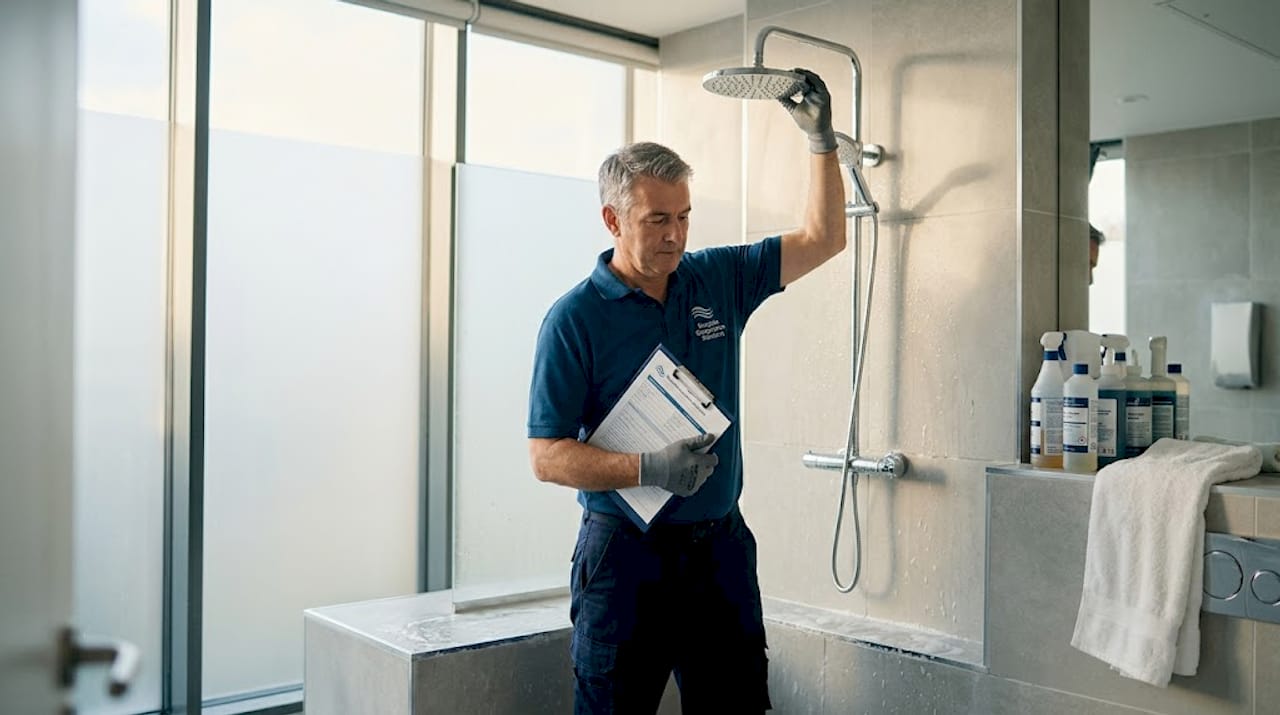
Showers are consistently the highest-risk water outlet type in any facility. The reason is straightforward. Aerosol-generating outlets such as showers produce fine droplets that are directly inhaled, giving Legionella a direct respiratory transmission route. Rainfall shower heads compound this by generating larger volumes of fine spray across a wider area.
Temperature at shower outlets frequently falls within the Legionella growth window, particularly where thermostatic mixing valves are not set correctly or have drifted over time. Complex shower installations with extended pipework runs, multiple heads, or infrequent use in guest rooms or staff facilities are especially concerning.
Control measures for showers should include:
Monthly temperature checks at sentinel outlets, particularly in healthcare settings
Weekly flushing of any shower not used within seven days
Regular descaling of shower heads, since scale provides a surface for biofilm attachment
Point-of-use filters in immunocompromised patient areas or where systemic contamination is suspected
Pro Tip: In healthcare settings, do not rely on PoU filters as a permanent solution. They protect users while you address the root cause, but filters require regular maintenance and frequent clogging may signal biofilm problems deeper in the system.
2. Spray taps and aerating tap fittings
Spray taps and aerator fittings sit in the mid-to-high risk category. They generate smaller aerosol volumes than showers, but the mechanism is similar. The critical difference is that tap use is often brief, meaning water may sit in the fitting between uses and cool or warm toward the growth range before the next person activates it.
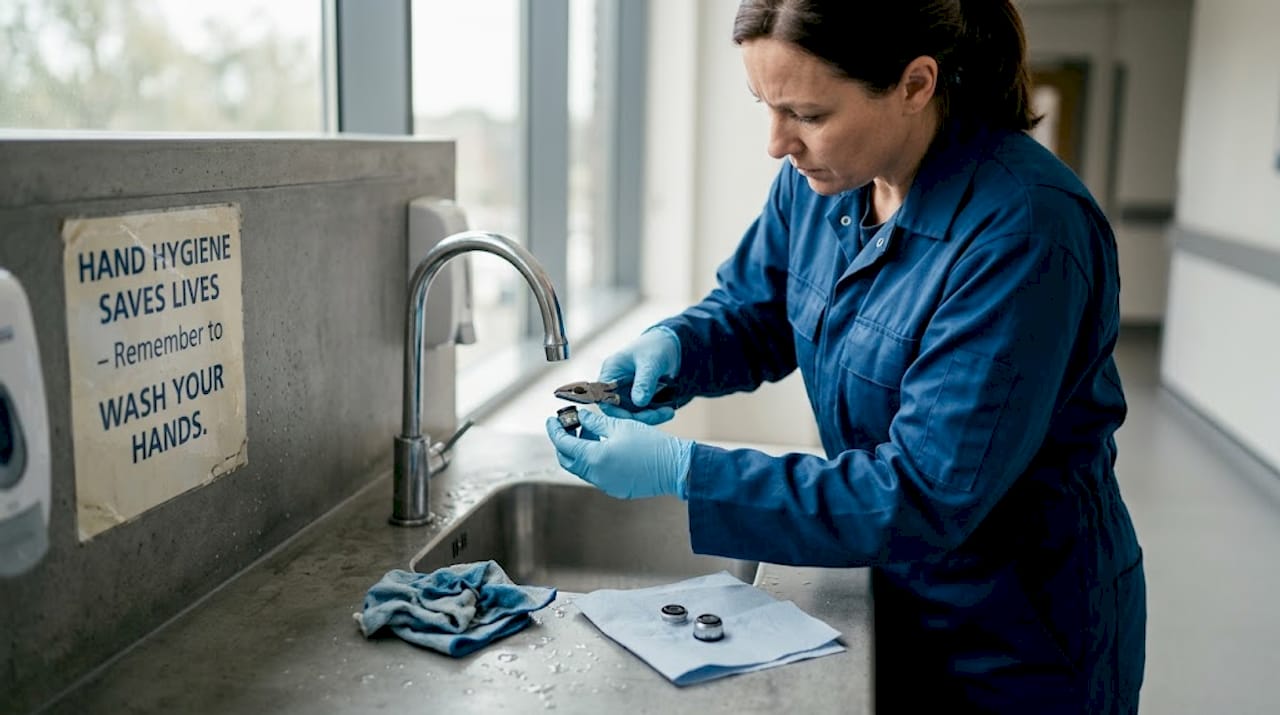
In healthcare environments, spray taps near patient-facing hand wash basins carry particular risk. Commercial settings with heavily used facilities may see less stagnation, but temperature control remains the core issue. Aerator fittings on standard taps are frequently overlooked during cleaning schedules despite being a documented Legionella source in hospital outbreaks.
Control measures should include regular removal and disinfection of aerator inserts, verification that hot water arrives at the outlet above 50°C, and replacement of spray fittings at scheduled intervals. Where temperature cannot be reliably controlled, consider removing aerator inserts and fitting simple flow straighteners instead.
3. Decorative fountains and water features
Decorative water features and fountains are a category that facility managers sometimes underestimate. They share the aerosol generation characteristic of showers but are often located in reception areas, atria, or outdoor spaces where they interact with high footfall, including vulnerable visitors or patients in healthcare buildings.
Water in decorative features is frequently recirculated, which allows Legionella concentrations to build if biocide levels or temperature control lapses. Poorly maintained features in commercial lobbies have been linked to community-acquired Legionnaires’ disease in several documented cases.
Managing these outlets requires:
Regular biocide dosing and monitoring of disinfectant residuals
Temperature logging for recirculating systems
Scheduled drain-down, cleaning, and refilling rather than perpetual top-up
Consideration of whether the feature is genuinely necessary in its current form and location
4. Standard taps and hand basin fittings
Standard taps without spray or aerating fittings present moderate Legionella risk. Cold water taps are generally lower risk provided the supply temperature remains below 20°C, but in buildings with long distribution runs or poor insulation, cold water can warm significantly by the time it reaches peripheral outlets.
Hot water taps carry meaningful risk if stored or distributed below 60°C. Cold water stored below 20°C and hot water at 60°C or above are the parameters required to suppress growth. Outlets that are seldom used are the greatest concern, regardless of fitting type, because stagnation allows water to reach growth temperatures.
For standard taps, the priority controls are:
Weekly flushing of any outlet unused for seven or more days
Temperature checks at representative outlets to verify system performance
Removal or reconfiguration of dead legs and redundant spur lines, which removing dead legs is often the single most impactful physical intervention available
5. Thermostatic mixing valves and blending units
TMVs warrant a dedicated section because they are both a control measure and a risk point. When working correctly, they blend hot and cold water to a safe outlet temperature, typically 38°C to 43°C, reducing scald risk. The problem is that the blend temperature sits squarely within the Legionella growth range.
TMVs installed behind access panels or within ceiling voids are particularly problematic. Hidden TMVs can be prime incubators for Legionella when not regularly serviced, descaled, and verified. In healthcare settings, this is a compliance issue with direct patient safety implications. Specialised inspection protocols are required beyond standard flushing and temperature checks.
Annual TMV servicing should include disassembly, descaling, and verification that thermal disinfection temperatures can be achieved. Document every service visit and retain records as part of your water management logbook.
6. Eyewash stations, hose reels, and emergency equipment
These outlets are easy to overlook precisely because they are designed for emergency use and therefore sit idle most of the time. Stagnation is the primary risk driver here. Water in a hose reel or eyewash station that has not been activated for weeks will have warmed, potentially developed biofilm, and will deliver directly to a person’s face or eyes at the moment of an emergency.
For eyewash stations, weekly activation and flushing is the standard recommendation. Hose reels in plant rooms or maintenance areas should be included in flushing schedules. Sprinkler systems present low Legionella risk in practice because water delivery is brief and not typically inhaled, but the water quality within standing pipework should be considered in the broader risk assessment.
7. Toilets and low-risk cold water outlets
Toilets generally pose low Legionella risk due to minimal aerosol generation and the use of cold water. This does not mean they are entirely without risk. Toilet bowl aerosols do exist during flushing, but the transmission pathway for Legionella via this route is not significant compared to shower or spray tap exposure.
Drinking fountains and chilled water dispensers can present elevated risk if poorly maintained. Water sitting in delivery tubing at ambient temperature, particularly in units that are infrequently used, can support growth. These should be included in routine outlet assessments, with particular attention to any unit that serves vulnerable building users.
Legionella risk summary by outlet type
The table below provides a quick reference for prioritising your monitoring and control programme.
Outlet type | Aerosol risk | Stagnation risk | Typical risk level | Key control measure |
Showers and rainfall heads | High | Moderate to high | High | Weekly flushing, temperature checks, descaling |
Spray taps and aerators | Moderate | Moderate | Moderate to high | Aerator removal/disinfection, temperature monitoring |
Decorative water features | High | High | High | Biocide dosing, scheduled drain-down and clean |
Standard taps (hot) | Low | Moderate | Moderate | Temperature monitoring, flushing unused outlets |
Standard taps (cold) | Low | Low to moderate | Low to moderate | Verify supply temperature below 20°C |
TMVs and blending units | Low direct | High internal | Moderate to high | Annual service, descaling, disinfection |
Eyewash stations and hose reels | Low | High | Moderate | Weekly activation and flushing |
Toilets | Very low | Low | Low | No routine action unless system-wide concern |
Practical control recommendations for compliance managers
A robust Legionella control programme is built on prioritisation, not uniform treatment of every outlet. These steps translate the risk categories above into a workable management approach.
Produce a written water management plan that lists every outlet type on site, assigns a risk rating, and documents the control measures and monitoring frequency for each category.
Implement outlet-specific flushing protocols. Any outlet unused for seven or more days must be flushed before use. Flushing without verified temperature consistency and biocidal contact time can redistribute rather than remove Legionella, so verify your method.
Designate sentinel outlets for monthly temperature checks in healthcare settings. These representative outlets confirm system performance across the distribution network. For detailed guidance, see temperature monitoring for compliance.
Audit for dead legs and redundant pipework at every review cycle. Removing or capping redundant spurs is a direct, lasting risk reduction.
Deploy PoU filters strategically in immunocompromised care areas or where remediation is underway, understanding that they are a bridge, not a solution. Frequent filter clogging is a diagnostic signal that the system needs remediation.
Schedule TMV servicing annually and maintain records. If TMVs are concealed, create an access schedule so they are physically inspected rather than assumed compliant.
Train responsible persons and relevant staff to recognise risk indicators, complete records accurately, and escalate concerns. Review how staff training reduces Legionella risk to structure your internal programme.
Pro Tip: When you inherit a site with an existing water management plan, do not simply continue following it. Commission a fresh Legionella risk assessment review to verify that the outlet inventory is current, the risk ratings are accurate, and the controls reflect actual system conditions.
My perspective: what I’ve learned managing Legionella risks by outlet type
I’ve worked across enough commercial and healthcare sites to say with confidence that the most common failure is not ignorance of the risk categories. It is misplaced confidence in simple interventions.
Flushing is the most misunderstood control measure in the industry. Facility managers treat it as a cure-all when the evidence shows it can actually spread Legionella downstream if the protocol is not correctly verified. I’ve seen sites where weekly flushing logs were perfect on paper and the system was still colonised because disinfectant residuals were not being maintained and a dead leg had never been identified.
The outlets that catch people out are almost always the unglamorous ones. Not showers in occupied patient rooms, which get daily attention, but the eyewash station in the plant room, the shower in the staff changing room used twice a week, or the TMV concealed behind a wall panel that has not been serviced in three years. Those are where incidents originate.
My honest advice: stop treating Legionella control as a tick-box exercise at the outlet level and start treating your water system as a living infrastructure asset. That shift in thinking changes how you schedule, how you document, and how you prioritise when resources are constrained.
— Sammi
How Bespokecompliancesolutions can help you manage Legionella compliance
Managing Legionella risk across complex water systems requires more than generic advice. Bespokecompliancesolutions provides specialist risk assessments in Coventry and across the UK, covering every water outlet type with outlet-specific risk ratings and tailored control recommendations. Services also include Legionella water testing, flushing programme design, TMV servicing, and implementation of bespoke logbook systems.
Whether you manage a healthcare site, commercial building, or mixed-use estate, Bespokecompliancesolutions designs programmes around your actual system, not a template. Local assessments are also available in Binley and Caludon for clients requiring site-specific support. Contact Bespokecompliancesolutions to discuss a programme that genuinely reflects the risks in your building.
FAQ
Which water outlets carry the highest Legionella risk?
Showers, spray taps, and decorative water features carry the highest risk because they generate aerosols that can be inhaled, combined with water temperatures that frequently fall within the Legionella growth range of 20°C to 45°C.
How often should seldom-used outlets be flushed?
Any outlet unused for seven or more days should be flushed before the next use. Flushing must be combined with verified temperature control and disinfectant residuals to be effective.
Are toilets a significant Legionella risk?
Toilets are generally low risk due to minimal aerosol generation and cold water use. Control resources should focus on aerosol-producing outlets rather than toilets in routine monitoring programmes.
What makes TMVs a Legionella concern?
TMVs blend water to temperatures within the Legionella growth range and can harbour bacteria internally, particularly when concealed behind panels and not serviced annually. Regular descaling and disinfection are required.
Are point-of-use filters a permanent solution for high-risk outlets?
No. PoU filters are an effective temporary control, particularly in healthcare settings, but should not replace a water management programme that addresses biofilm, dead legs, and temperature control at a system level.
Recommended
Comments