
Water hygiene corrective action process: a UK guide
- 1 day ago
- 6 min read
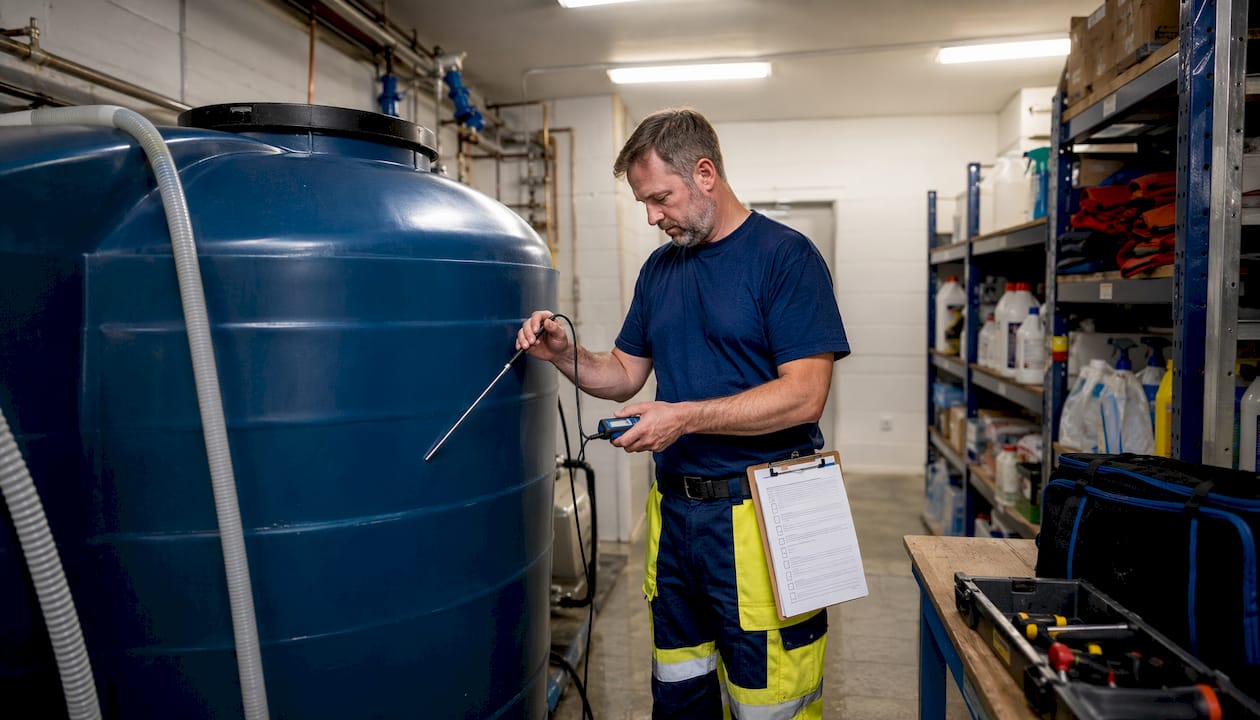
A water hygiene corrective action is a formal, documented response to a failure in a water system control measure. It covers everything from the moment a fault is identified through to verified resolution, and it must be planned in advance, not improvised under pressure. The process has five core elements: identifying the defect, making immediate operational adjustments, assigning personnel responsibilities, notifying relevant parties, and conducting follow-up monitoring to confirm the action worked. UK facilities operating under HSE guidance and the Health and Safety at Work Act 1974 must have these procedures documented within their water risk management plan before a failure occurs.
Defect identification: detect the control failure through operational monitoring or inspection
Immediate action: adjust temperatures, restrict supply, or increase flushing as required
Responsibilities: assign named personnel with clear authority to act
Notification: alert key contacts including contractors and, where relevant, occupants
Follow-up: verify effectiveness through increased monitoring and root cause analysis
How do you assess a water system to identify hygiene risks?
A thorough system survey is the foundation of any corrective action. Facilities managers need to map every water source, storage vessel, distribution pipe, and outlet, then evaluate each against thermal and microbial risk criteria specific to UK building types and usage patterns.
Survey hot and cold water systems for temperature deviations, dead legs, and infrequently used outlets
Assess microbial risk factors including biofilm potential, sediment accumulation, and Legionella growth conditions
Review maintenance history, recent repairs, and any changes to system configuration
Confirm that WRC-approved products are used throughout, particularly for pipework, fittings, and treatment chemicals
Use qualified engineers or plumbers with demonstrable water hygiene competency to conduct the survey
Carry out a dynamic evaluation during any repair or modification, not just at the initial assessment stage
Pro Tip: Prioritise corrective actions by risk severity, not convenience. A cold water tank running above 20°C in a healthcare setting demands faster intervention than a minor temperature deviation in a low-occupancy storage room.
How should you schedule and implement corrective actions?
Once the assessment identifies a failure, the corrective action schedule must be activated without delay. The schedule distinguishes between actions requiring immediate response and those that can be planned as short-term interventions.
Raise hot water storage to 60°C and verify that taps reach 50°C within one minute; cold water must remain below 20°C
Increase flushing frequency on affected outlets, particularly those that have been stagnant
Assign named, qualified personnel to each task with documented authority and timescales
For restricted operations such as mains repairs or system modifications, only personnel holding a valid water hygiene training card under an approved scheme may legally carry out the work
Document every adjustment made, including the time, operative, and outcome
Where emergency repairs cannot be completed within the initial response window, agree a formal corrective action schedule with documented interim measures
Stagnant water is one of the most common triggers for corrective action, and flushing alone is rarely sufficient without addressing the underlying cause.
What does post-corrective action monitoring involve?
Monitoring after corrective action is not optional. Verification requires increased monitoring of operational parameters until the system demonstrates sustained compliance, and the frequency should remain elevated until at least two consecutive satisfactory results are recorded.
Monitor temperatures at sentinel outlets more frequently than the standard programme requires
Check for secondary effects: flushing can disturb sediment and alter chlorine residuals, both of which create new compliance risks
Conduct root cause analysis to understand why the failure occurred, then update the risk management plan accordingly
Record all inspection findings with dates, operative names, and measured values
Use experienced personnel for post-corrective inspections; a missed reading or misinterpreted result at this stage can mask a recurring problem
Temperature monitoring checks carried out consistently before and after corrective action give you the clearest picture of whether the system has genuinely recovered.
Which water treatment methods apply during corrective actions?
Treatment during corrective action goes beyond a single flush. The method chosen depends on the nature of the failure, the system type, and the risk level of the facility.
Raise hot water system temperature to 60°C for a sustained period and flush all hot water outlets to kill bacteria; this thermal disinfection approach is the primary Legionella control method under HSE guidance
Apply chlorination or other chemical disinfectants using WRC-approved products at correct dosing rates
Mechanically clean and descale showerheads, tank interiors, and pipework where biofilm or scale has accumulated
When flushing showerheads, place the head into the base of the shower tray or bath to prevent aerosol dispersal of potentially contaminated water
Flush infrequently used outlets, including secondary bathrooms and little-used basins, running both hot and cold supplies for at least five minutes
Adjust chemical dosing rates and feed points where disinfectant residuals have fallen outside critical limits
Showerhead disinfection technique matters more than most facilities managers realise. Placing the head in a tray during flushing protects both the operative and building occupants from inhaling aerosolised bacteria.
What are the notification and response steps during corrective action?
Notification procedures must be documented in the water risk management plan before a failure occurs. When a corrective action is triggered, the right people need to know immediately.
Identify and contact key personnel: the responsible person, facilities manager, and any external maintenance contractors such as plumbers
Assess whether the water supply can continue or must be restricted; in high-risk areas such as clinical or immunocompromised patient environments, consider alternative water provision
Notify building occupants where there is any risk to health, particularly in healthcare, hospitality, or residential settings
Assess whether high-risk patients need to be moved or given alternative water sources
Implement follow-up monitoring with increased frequency and document every result
Record all notifications, decisions, and actions taken for audit purposes; this documentation forms part of your legal compliance record
For broader water risk management across your site, having pre-agreed communication protocols cuts response time significantly when a failure occurs.
Best practices for water hygiene corrective actions in UK facilities
Effective corrective action in UK facilities depends on preparation, competency, and a culture of continuous improvement. Reactive fixes without a pre-planned framework consistently produce slower responses and poorer outcomes.
All personnel conducting restricted operations must hold a current water hygiene training card and have undergone the required medical assessment under the National Water Hygiene Scheme
Adopt the WHO water safety plan model, where corrective actions are predefined as safety nets within a risk-based framework rather than improvised responses
Train all relevant staff on their specific responsibilities within the corrective action procedure; staff training directly reduces the likelihood of human error, which remains one of the most common contamination sources
Maintain a stock of spare parts for critical system components so that emergency repairs are not delayed by procurement
Communicate with the HSE or local authority environmental health team where a failure poses a wider public health risk
Partner with a specialist such as Bespokecompliancesolutions to develop bespoke risk management plans and corrective action frameworks tailored to your specific sites
Pro Tip: After every corrective action, run a formal lessons-learned review. Feed the root cause findings back into your risk assessment. Systems that repeat the same failure twice usually do so because the first corrective action fixed the symptom, not the cause.
Bespokecompliancesolutions: specialist water hygiene compliance support

When a water hygiene failure occurs, the difference between a swift, compliant resolution and a prolonged risk to occupants often comes down to whether you had the right framework in place beforehand.
Bespokecompliancesolutions works with facilities managers across commercial, healthcare, housing, and hospitality sectors to build corrective action frameworks that are specific to each site, not generic templates. From bespoke Legionella risk assessments and water sampling through to TMV servicing, disinfections, and ongoing consultancy, the team of qualified engineers uses WRC-approved products and works to the professional standards your compliance records demand. If your current water risk management plan lacks a documented corrective action procedure, or if a recent failure has exposed gaps in your process, contact Bespokecompliancesolutions to arrange a site-specific assessment.
Key takeaways
A documented, pre-planned water hygiene corrective action process is the only reliable way to restore system control quickly and demonstrate regulatory compliance in UK facilities.
Point | Details |
Pre-plan before failure occurs | Corrective action procedures must be documented in your water risk management plan in advance, not written after a failure. |
Temperature thresholds are fixed | Hot water must be stored at 60°C and reach 50°C at taps within one minute to prevent Legionella; cold water must be kept below 20°C. |
Restricted operations require certification | Personnel carrying out mains repairs or system modifications must hold a valid water hygiene training card under an approved scheme. |
Post-action monitoring is mandatory | Increase monitoring frequency after every corrective action and conduct root cause analysis to prevent recurrence. |
Bespokecompliancesolutions provides site-specific support | Bespokecompliancesolutions delivers bespoke risk assessments, disinfections, and ongoing consultancy tailored to UK facilities across all sectors. |
Recommended
Comments