
Why Legionella is a health safety priority
- May 28
- 9 min read
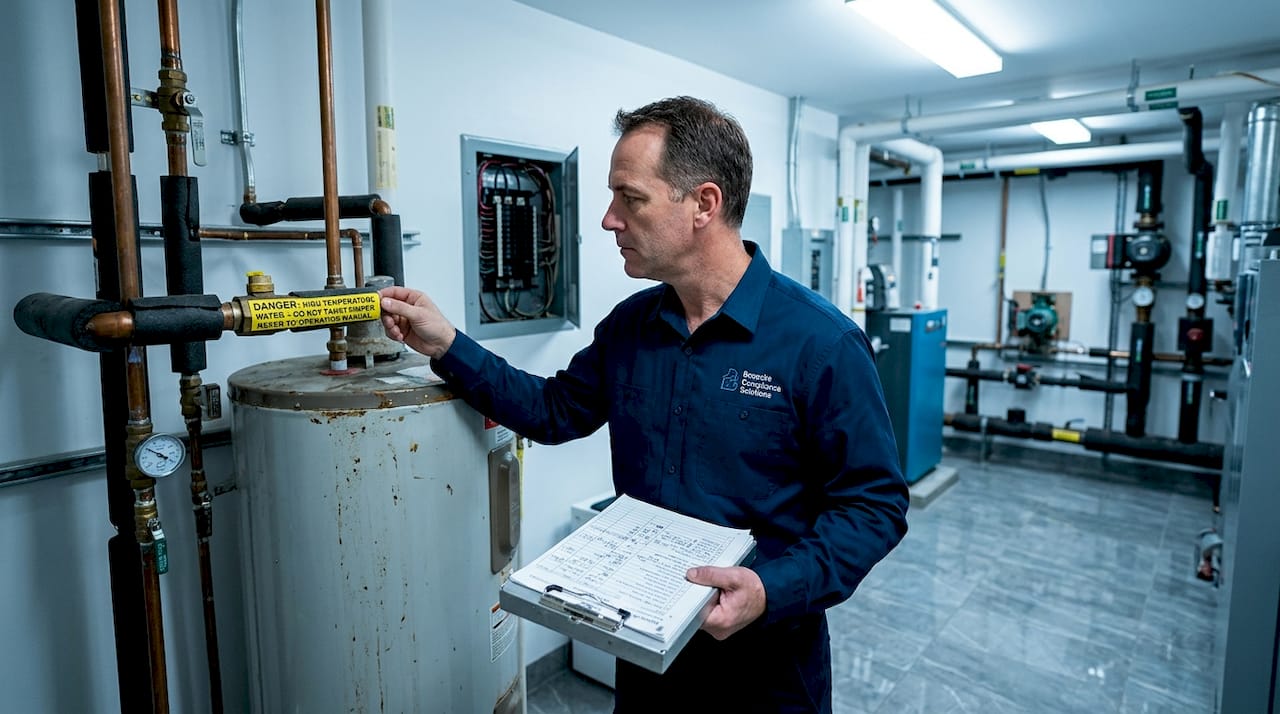
Legionella is one of the most misunderstood risks in building management. Many facility professionals assume it originates from the municipal water supply, when in reality, amplification occurs inside buildings due to temperature failures, stagnation, and biofilm accumulation. Understanding why Legionella is a health safety priority goes far beyond ticking compliance boxes. It directly affects the health of building occupants, the legal standing of your organisation, and your ability to maintain operational continuity when an incident occurs.
Table of Contents
Key takeaways
Point | Details |
Legionella is an in-building problem | Amplification happens within your water systems, not in the municipal supply. |
Temperature control is the primary defence | Hot water stored at ≥60°C and cold water kept below 20°C prevents bacterial growth. |
Legal duty applies to all duty holders | Failure to manage Legionella risk carries serious regulatory and reputational consequences. |
Testing informs but does not replace management | High counts indicate system conditions that need correction, not automatic health emergencies. |
Proactive control protects people and organisations | Documented water management programmes reduce risk, support compliance, and demonstrate duty of care. |
Why Legionella is a health safety priority in buildings
Legionella pneumophila is not a theoretical threat. It is a gram-negative bacterium found naturally in freshwater environments, but it becomes dangerous when it colonises man-made water systems where conditions support its growth. Legionella thrives between 20°C and 45°C, with growth accelerating rapidly above 25°C. In building water systems, this temperature range is far too easy to achieve accidentally, particularly in underused pipework, poorly insulated storage tanks, or systems that have not been properly balanced.
Two conditions define the clinical risk. Legionnaires’ disease is the severe pneumonia form, with a mortality rate of approximately 10% overall, rising sharply to 25% in healthcare-acquired cases. Pontiac fever is the milder, flu-like illness that is self-limiting but still causes significant disruption. Legionella pneumophila serogroup 1, the most clinically significant strain, carries a reported mortality between 5% and 15%. These are not rare edge-case figures. They represent real outcomes in buildings where water management failed.
Transmission occurs through inhaling aerosolised water droplets containing viable bacteria. Showers, taps, cooling towers, spa pools, and decorative fountains are all documented sources. Research confirms that individuals within 0.6 miles of contaminated cooling towers face the highest infection risk, demonstrating how quickly a localised water system problem becomes a public health event. The Legionella health risks are heightened for older adults, smokers, those with chronic lung conditions, and immunocompromised individuals. In mixed-occupancy buildings such as hotels or offices, you may have no visibility of who in your building sits within that vulnerable category.
Legionella in building water systems
The persistent misconception that Legionella is primarily a problem originating from the public water supply is one of the most operationally dangerous misunderstandings a facility manager can hold. Municipal water is treated with disinfectant residuals and maintained at safe temperatures. The moment that water enters your building’s distribution system, the conditions that inhibit bacterial growth can begin to break down.
Several factors drive Legionella proliferation inside buildings:
Temperature drift in storage tanks or pipework where heating or cooling systems are poorly maintained or inconsistently monitored.
Water stagnation in sections of pipework that see infrequent use, such as guest rooms in hotels with low occupancy or seldom-used toilets in office blocks.
Dead legs created by outdated pipework design where water sits static, allowing colonisation to establish without interruption.
Biofilm accumulation on the internal surfaces of pipes, tanks, and fittings, providing both a habitat and a protective layer for Legionella bacteria.
Scale and sediment in water heaters and storage vessels that reduce the effectiveness of temperature-based disinfection.
Building type and occupancy pattern matter enormously. Healthcare facilities for complex premises carry elevated Legionella risk because of vulnerable patient populations, complex water distribution systems, and the fact that water outlets may go unused for extended periods during ward reconfigurations or refurbishments. Similarly, Legionella risk in schools spikes significantly during long holiday closures when water throughout the building stagnates undetected.
Ageing infrastructure creates a compounding problem. Buildings with older pipework materials, oversized storage tanks relative to actual demand, and systems that were designed for higher occupancy than current use are all high-risk environments. Climate factors are also relevant. Warmer ambient temperatures reduce the margin between safe cold water storage and the growth range, requiring more active monitoring during summer months.
Pro Tip: If your building has been subject to reduced occupancy for any period, whether from seasonal closure, refurbishment, or a shift to hybrid working, treat it as a change in risk profile. Your water management plan should be reviewed and a flushing programme implemented before normal use resumes.
Core Legionella control measures
Effective Legionella control is built on a small number of well-understood physical and chemical principles, applied consistently and documented rigorously.
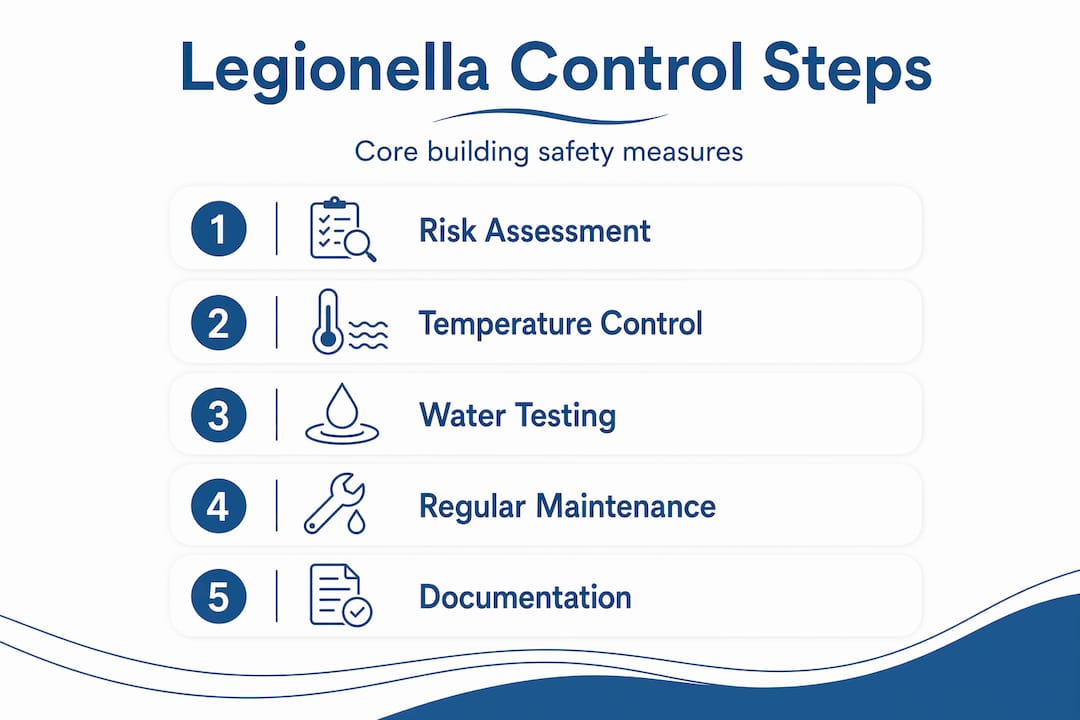
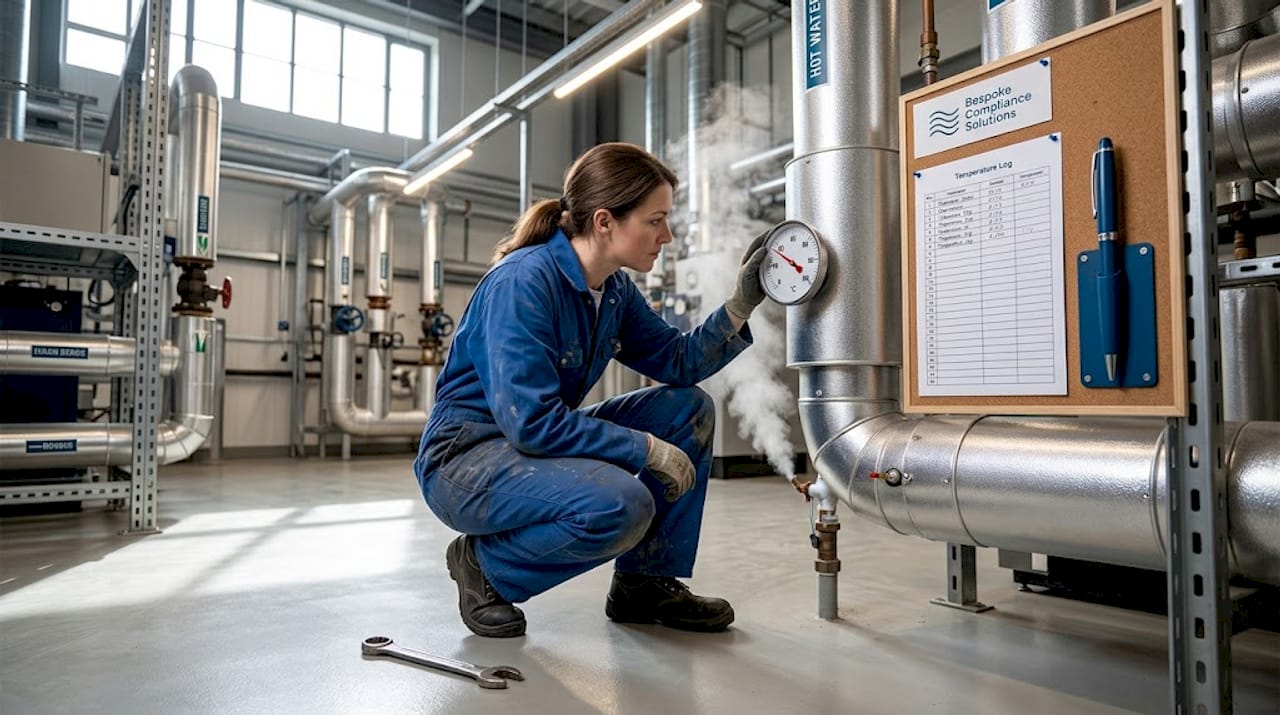
Temperature control is the most powerful tool available. Hot water must be stored at ≥60°C and delivered at ≥50°C at the point of use within one minute. Cold water must be maintained below 20°C throughout the system. These are not guidelines to aspire to. They are the baseline conditions under which Legionella cannot proliferate at a clinically significant rate. Automated water temperature monitoring provides continuous oversight where manual checks cannot practically cover the full system.
Thermostatic mixing valves (TMVs) are a necessary complication. They protect users from scald risk by blending hot and cold water at the point of use, but they also create a zone of mixed-temperature water that sits directly within Legionella’s growth range. TMVs must be serviced regularly, checked for correct operation, and inspected for internal biofilm. Balancing scald risk control with Legionella temperature control is a system design and maintenance challenge that requires a competent person to manage.
The table below summarises the key control measures and their operational purpose:
Control measure | Purpose | Key requirement |
Hot water temperature ≥60°C storage | Inhibits Legionella growth in storage | Regular thermal checks at calorifier |
Cold water below 20°C | Prevents cold-side colonisation | Monthly temperature monitoring |
TMV servicing | Manages scald risk without compromising control | Scheduled inspection and cleaning |
Flushing of infrequently used outlets | Eliminates stagnant water | Weekly flushing of low-use outlets |
Water sampling and analysis | Monitors system performance and identifies issues | water testing at defined intervals |
Point of use (PoU) filters | Interim protection at high-risk outlets | Correct installation and timely replacement |
PoU filters are effective interim controls that break the infection pathway at the point of delivery. They do not address the underlying system problem, but they protect users while remediation takes place, provided they are installed correctly and replaced on schedule.
On testing methodology: qPCR molecular methods now offer significantly faster results than traditional culture, with greater sensitivity. The trade-off is that qPCR can detect DNA from dead cells, potentially overstating viable bacterial counts without appropriate reagents. Knowing which method is appropriate for your situation is something a competent water hygiene specialist can advise on.
Pro Tip: A Legionella risk assessment is not a one-time event. If you have made physical changes to your water system, altered occupancy, or experienced a supply interruption, the risk profile of your building has changed. Review your assessment accordingly.
Operational challenges for facility managers
Managing Legionella in a live operational building is considerably more complex than the underlying science suggests.
Maintaining temperature without scald risk. TMVs resolve the point-of-use conflict, but the hot water supply feeding them must remain above 60°C. If a site uses automated temperature monitoring without understanding what the readings mean, alerts are either ignored or trigger unnecessary alarm.
Outlets taken out of service. Removing outlets from use increases stagnation, which is the opposite of what most facility managers intend. Keeping outlets active, or implementing a formal flushing programme for those that cannot remain in normal use, is the correct approach.
Interpreting test results accurately. High Legionella counts indicate system conditions needing correction, not necessarily an immediate health crisis. Over-reaction leads to unnecessary and costly remediation. Under-reaction leads to genuine risk.
Staff training gaps. The people conducting daily flushing checks, temperature monitoring, and logbook entries are often the first line of defence. Well-trained staff who understand what they are doing and why it matters are a critical prevention layer that no amount of third-party specialist support can fully replace.
Documentation readiness. In the event of an investigation or enforcement inspection, your logbook and maintenance records are your evidence of compliance. Gaps in documentation create liability even where the physical management was adequate.
Pro Tip: Do not wait for an HSE inspection to review your Legionella logbook. Conduct internal audits quarterly to identify gaps before they become findings.
Legal consequences of Legionella control failures
The duty to manage Legionella risk is not discretionary. Under the Health and Safety at Work etc. Act 1974, the Control of Substances Hazardous to Health Regulations 2002, and the Approved Code of Practice ACoP L8, duty holders must assess and actively manage the risk of exposure to Legionella in their premises. Failure is not simply a compliance gap. It is a breach of legal duty.
The consequences of a Legionella outbreak are severe and multi-directional:
Human cost. Given that healthcare-acquired cases carry 25% mortality, the direct harm to building occupants and the public is the primary concern. No compliance framework exists that makes that acceptable.
Reputational damage. Outbreaks attract media attention. For hotels, care homes, hospitals, and leisure facilities, the association with a Legionella outbreak can have lasting commercial consequences that far exceed the cost of prevention.
Regulatory sanctions. HSE enforcement activity includes improvement notices, prohibition notices, and prosecution. Fines following serious incidents run into hundreds of thousands of pounds.
Civil liability. Affected individuals and families can and do pursue civil claims. Demonstrating that a documented, competent water management programme was in place is the only credible defence.
Healthcare facilities receive particular regulatory scrutiny because of the combination of vulnerable populations, complex water systems, and the elevated mortality rate associated with Legionella outbreaks in NHS settings. The importance of Legionella control in these environments cannot be overstated, and regulators reflect that in their inspection priorities.
My perspective: Legionella control is not a static task
I have worked with facilities across commercial, healthcare, and educational settings, and the single most consistent mistake I see is treating Legionella compliance as a one-time task rather than a living programme. A risk assessment completed three years ago does not reflect a building that has undergone refurbishment, changed occupancy, or had a new TMV installed. The building has changed. The risk has changed. The documentation has not.
What I have found is that organisations with the most effective Legionella control share a common characteristic: the people responsible for day-to-day management actually understand why they are doing what they are doing. Not just that they need to flush outlet six on a Thursday, but what happens to the water if they do not, and what that means for the people using that outlet. Staff awareness training is not a box-ticking exercise. It is the mechanism by which paper-based control programmes become real-world prevention.
The adoption of molecular testing methods like qPCR is another area where I see a meaningful shift in capability. Faster results mean faster decisions. But the data is only useful if the person interpreting it understands its limitations. A positive qPCR result requires context, not panic.
My honest assessment is this: preventing Legionella outbreaks is achievable in any building, at any scale, when the programme is designed properly, reviewed regularly, and supported by people who are genuinely competent. The risk exists. The controls exist. The gap in between is almost always operational.
— Sammi
How Bespokecompliancesolutions can support your compliance
If the operational complexity of Legionella control feels like a burden your team is carrying without adequate support, you are not alone. Most facility managers and compliance officers are managing this risk alongside dozens of other responsibilities, without a dedicated water hygiene specialist in-house.
Bespokecompliancesolutions works with organisations across commercial, healthcare, housing, and educational sectors to design and implement water management programmes that are genuinely fit for purpose. From risk assessments in Coventry and Binley to water sampling, TMV servicing, logbook implementation, and Legionella awareness training, every solution is tailored to your premises and your risk profile. The goal is to make compliance straightforward: clear records, confident staff, and a water management programme that holds up under scrutiny. Speak to the Bespokecompliancesolutions team to discuss your current compliance position and where specialist support would make the greatest difference.
FAQ
What makes Legionella a health safety priority?
Legionella causes Legionnaires’ disease, a potentially fatal pneumonia with an overall mortality rate of around 10%, rising to 25% in healthcare settings. Its ability to amplify within building water systems makes it a direct management responsibility for facility professionals.
Where does Legionella grow in buildings?
Legionella grows in water systems where temperatures fall between 20°C and 45°C, water stagnates, or biofilm is present. Hot and cold water storage tanks, dead legs in pipework, and poorly maintained TMVs are common sources.
What are the legal requirements for Legionella control in the UK?
Duty holders must assess and manage Legionella risk under ACoP L8, the Health and Safety at Work etc. Act 1974, and COSHH Regulations 2002. This includes maintaining a written risk assessment, a water management programme, and records of all monitoring activities.
How often should Legionella risk assessments be reviewed?
A risk assessment should be reviewed whenever there is a material change to the water system, a significant change in building occupancy, following a suspected or confirmed case, or at a minimum every two years as part of routine compliance management.
Are Legionella water tests a reliable indicator of safety?
Water tests indicate the performance of your water management system, but high counts do not automatically signal imminent danger. They signal that conditions within the system need correction and that testing findings require expert interpretation before action is taken.
Recommended
Comments