
Five Stage Framework for Biofilm Removal Methods for Cross Sector Teams
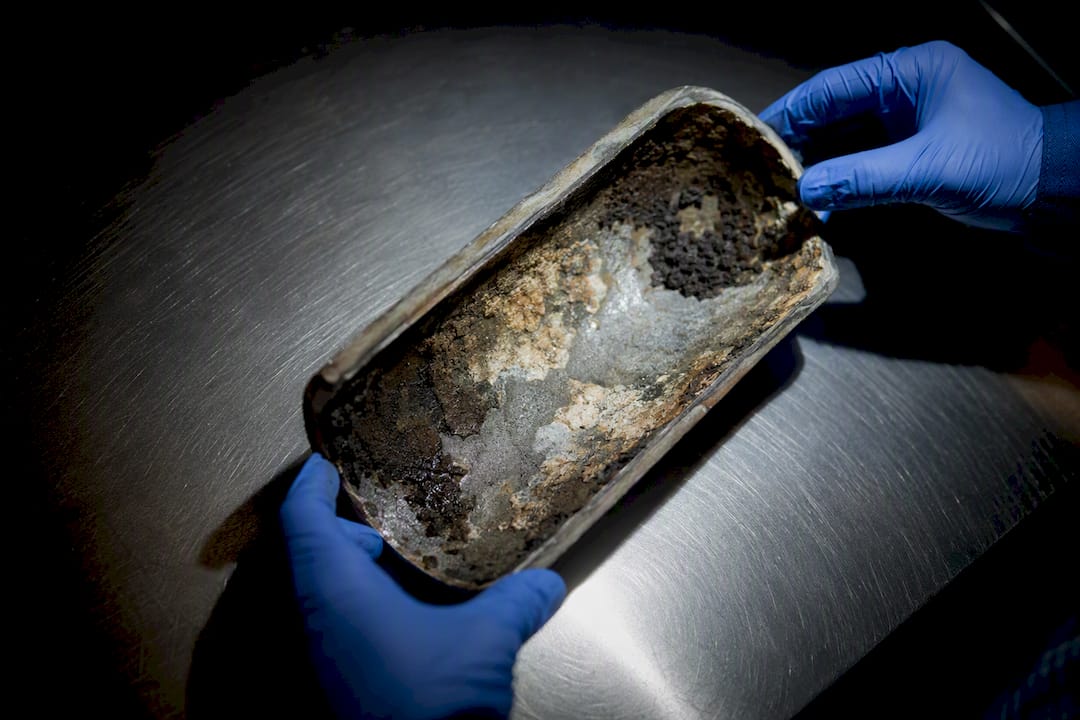
No single treatment reliably eradicates mature biofilm. The evidence favours a timed multimodal approach: disperse the protective matrix, apply a targeted kill step, then maintain residual control and verify with standard sampling. Physical, chemical, enzymatic and emerging methods each play a specific role, and getting the sequence wrong is often worse than doing nothing at all.
TL;DR:
Mechanical disruption methods like scrubbing, pigging, and high-pressure flushing are effective for accessible, thin biofilms but risk aerosolising contaminated droplets if not contained.
Chemical biocides must be paired with dispersants or enzymes to prevent dispersal of live organisms during biofilm loosening; sequencing treatment steps correctly is crucial for success.
Enzymatic treatments such as DNase I and dispersin B, especially when combined, target different components of the EPS matrix and are more effective when integrated into a multimodal approach.
Verification requires multiple, representative samples analyzed by UKAS-accredited laboratories, with repeated testing over time to confirm sustained control, not just initial clean results.
Addressing underlying pipework issues like deadlegs, stagnation, and temperature fluctuations is essential for long-term biofilm control and is often more reliable than chemical treatment alone.
Table of Contents
What makes biofilm removal methods so difficult to apply
Biofilm is not simply “dirt with bacteria in it”. It is a structured community of microorganisms embedded in a self-produced matrix of extracellular polymeric substances (EPS), a mix of polysaccharides, proteins and extracellular DNA that behaves like a gel-reinforced shield. That matrix is why a biofilm can shrug off a biocide concentration that would kill the same bacteria within seconds in open water.
Three mechanisms explain most of the resistance you will encounter on site:
The EPS matrix physically slows diffusion of chemicals and enzymes, buying the population time to adapt before a lethal dose reaches the cells at the base of the structure.
Persister cells, a dormant subpopulation with reduced metabolic activity, survive treatments that target actively dividing bacteria, then reseed the biofilm once conditions improve.
Quorum sensing, the chemical signalling bacteria use to coordinate behaviour, triggers matrix thickening and stress responses in response to a sublethal chemical attack, effectively hardening the structure against the next dose.
Multimodal approaches that combine chemical, enzymatic and physical treatments are increasingly favoured precisely because biofilms resist single-agent removal through this combination of EPS shielding, persister survival and quorum-sensing adaptation, as a recent comprehensive review of biofilm eradication strategies sets out.
The practical consequence shows up in three places: poor penetration of any single agent into deeper layers, regrowth from surviving persisters within days of an apparently successful clean, and sampling heterogeneity, where two swabs taken centimetres apart on the same pipe can return wildly different colony counts. That last point matters more than most protocols acknowledge. A biofilm rarely forms as a uniform sheet; it forms in patches, favouring joints, deadlegs and areas of low flow, which is exactly why a single sample point is never enough to declare a system clean.
Which physical biofilm removal methods actually work?
Physical methods remove biofilm through direct mechanical disruption or by using heat, sound or light to break the matrix apart, rather than relying on chemistry to dissolve it. They are usually the first line of attack on an accessible surface, and often the only realistic option where chemical residues are unacceptable, such as around certain medical devices.
Mechanical scrubbing and pigging physically shears the biofilm layer from pipe walls and hard surfaces. Foam pigs and brushes are standard in industrial pipework; manual scrubbing with appropriate brushes remains the baseline for tanks and open surfaces.
High-pressure flushing uses turbulent flow to lift loosely adhered biofilm and flush debris out of the system, particularly effective in combination with a subsequent chemical dose that can now reach a thinner matrix.
Thermal treatment (superheating water to around 70°C and above for a defined dwell time) denatures proteins in the matrix and kills vegetative cells, a technique widely used in healthcare water systems as part of Legionella control.
Ultrasonic cleaning uses cavitation, the formation and collapse of microscopic bubbles, to generate localised shear forces that dislodge biofilm from complex geometries such as dental instruments and small-bore tubing.
UV-C and photonic disruption damages microbial DNA directly and can reduce surface bioburden on transparent or line-of-sight surfaces, though it does nothing for biofilm hidden behind scale or inside opaque pipework.
Physical methods work best as the primary treatment when a surface is fully accessible and the biofilm layer is thin, for example a dental unit waterline flushed regularly, or a cooling tower basin cleaned during a scheduled shutdown. They become adjunctive, a preparatory step rather than the whole solution, once the biofilm is thick, calcified, or sitting inside pipework you cannot physically reach.
The single biggest risk with physical disruption is aerosolisation. Scrubbing, pressure washing or pigging a Legionella-colonised system can release contaminated droplets into the air at operator level. Containment matters as much as the cleaning technique itself: local exhaust ventilation, appropriate respiratory protection, and restricting access to the work area during disruption are not optional extras.
Pro Tip: Never schedule mechanical cleaning as a standalone job on a system with known or suspected Legionella colonisation. Disruption without an immediate biocidal follow-up dose simply releases what was previously contained within the biofilm structure, this is precisely the mechanism dispersal-without-kill guidance warns against.
Chemical treatment options: biocides, dispersants and chelants
Chemical treatment remains the workhorse of biofilm control, but the choice of agent has to match both the target organism and the physical layout of the system, not simply “whatever biocide is on the shelf”. Getting this wrong wastes money and, in the case of anaerobic niches, can leave the source of a recurring problem entirely untouched.
Oxidising biocides are the default for aerobic, open-flow systems:
Chlorine and chlorine dioxide oxidise cell membranes and matrix components on contact, cheap and fast, but reactive with organic load, meaning heavily fouled systems need a higher dose or a pre-clean first.
Peracetic acid breaks down into acetic acid and oxygen, leaving fewer persistent residues, useful where discharge consents restrict chlorinated by-products.
Hydrogen peroxide penetrates matrix layers reasonably well for an oxidiser and is often chosen where corrosion of stainless steel is a concern.
Non-oxidising biocides earn their place in the anaerobic pockets that oxidisers struggle to reach. Glutaraldehyde and THPS (tetrakis hydroxymethyl phosphonium sulfate) are standard choices for systems at risk of microbiologically influenced corrosion (MIC), where sulphate-reducing bacteria (SRB) colonise low-oxygen niches under scale deposits or inside deadlegs. Oxidising biocides frequently fail to penetrate these anaerobic microenvironments, so a targeted non-oxidising chemistry combined with mechanical access to the fouled area is the more reliable route, though corrosion compatibility with the base metal needs checking before dosing.
The sequencing problem: dispersal without an immediate kill step risks disseminating live organisms rather than destroying them. A biodispersant that successfully lifts EPS off a pipe wall has, at that moment, released a cloud of bacteria into the water column, and if no biocide follows quickly, you have simply relocated the biofilm downstream. Guidance on anti-biofilm agent mechanisms is explicit on this point: dispersal agents must be paired with containment and a biocidal follow-up, not used as a standalone treatment.
Chelants, agents such as EDTA that bind the calcium and iron ions holding parts of the EPS matrix together, sit alongside biosurfactants as pre-treatment options that weaken the structure before the main biocide dose. Biosurfactants in particular have picked up attention recently because they can reduce the concentration of biocide needed to achieve the same kill, an eco-friendlier route for industrial water systems that also cuts the volume of oxidising chemical discharged downstream. For operators under pressure to reduce chemical loading without sacrificing efficacy, that combination, lower dose plus better dispersal, is one of the more useful developments in this space.
The practical rule across every chemical class: match the biocide to where the organisms are actually hiding, not to where the water sample was taken from.
Enzymatic and biological methods for breaking down EPS
Enzymatic treatments target the structural components of the EPS matrix directly, rather than trying to poison the cells inside it, which makes them a genuinely different tool rather than just a gentler biocide.
DNase I degrade extracellular DNA, a structural component that acts almost like reinforcing wire within the EPS scaffold, and removing it can cause a biofilm to visibly loosen from a surface.
Dispersin B specifically breaks down poly-N-acetylglucosamine, a polysaccharide many bacterial species rely on for matrix cohesion, and is frequently paired with DNase I.
Proteases cleave the structural proteins holding parts of the matrix together, useful against biofilms with a high protein content in their EPS.
Glucanohydrolases target polysaccharide chains more broadly, complementing dispersin B’s narrower specificity.
Combinations outperform single enzymes. DNase I paired with dispersin B has shown enhanced efficacy over either enzyme alone in laboratory and applied sanitation testing, according to a review of biofilm eradication agents, because the two enzymes attack different structural components simultaneously rather than competing for the same target. That is the enzymatic equivalent of the multimodal principle running throughout this whole field: hit more than one structural weakness at once.
Biosurfactants work slightly differently again, reducing surface tension to lift biofilm off a substrate and improving the penetration of whatever chemical follows. Their appeal for industrial operators is less about raw kill efficacy and more about the knock-on reduction in biocide concentration and toxic discharge, an increasingly important compliance consideration as environmental permitting tightens.
Bacteriophages and antimicrobial peptides (AMPs) represent the most targeted end of the biological toolkit. Phages infect and lyse specific bacterial strains, offering a route to eliminate a problem organism without disturbing the wider microbial community, which matters in contexts like wound care where a broad-spectrum biocide would also damage host tissue. AMPs disrupt bacterial membranes directly and show promise against persister cells that tolerate conventional antibiotics. Both remain largely in translational research and specialist clinical use rather than routine industrial practice; cost, regulatory approval pathways and strain-specificity (a phage effective against one bacterial strain may do nothing against a closely related one) are the practical bottlenecks holding back wider deployment.
Enzymatic pre-treatment followed by a conventional sanitiser is now standard advice in food-processing environments precisely because it improves the sanitiser’s contact with cells that would otherwise sit shielded behind an intact matrix.
Emerging biofilm removal methods: how close are they to real use?
Nanoparticle, photocatalytic and light-activated systems generate some of the most dramatic laboratory results in biofilm research, and some of the biggest gaps between lab promise and practical deployment.
Silver nanoparticles (AgNPs) and Ag/TiO2 composite systems damage bacterial membranes and disrupt matrix integrity, producing strong biomass reductions in vitro, but leaching of silver ions and unresolved biocompatibility questions constrain how freely they can be used, particularly on surfaces that contact skin, wounds or drinking water. A review of multifunctional antibiofilm systems flags these leaching and illumination-dependency issues as genuine barriers to clinical and industrial translation, not minor technicalities.
Nitric oxide (NO) donors and nitroxide hybrid compounds exploit NO’s natural role as a bacterial dispersal signal, triggering biofilm cells to switch back to a free-floating, more treatable state. The chemistry works well in controlled conditions; delivering a stable, appropriately timed NO dose to a real-world surface without the compound degrading first remains the unsolved engineering problem.
Photocatalytic coatings, typically titanium dioxide activated by UV or visible light, generate reactive oxygen species that continuously degrade organic matter on the coated surface. These suit fixed installations where illumination can be controlled, door handles, work surfaces, certain device coatings, rather than pipework or anywhere light cannot reach.
Microrobots, microscale devices guided magnetically or chemically through fluid, have shown biofilm-disruption capability in laboratory models, but remain firmly experimental with no realistic near-term application in a working water system or clinical setting.
The common thread across all four is a gap between an impressive in vitro biomass reduction and a validated real-world protocol. Photocatalytic and light-activated systems in particular need biocompatibility testing against ISO 10993-1 and confirmed compatibility with existing sterilisation regimes before any clinical device coating gets near a patient. None of this makes the technology irrelevant. It does mean treating vendor claims about nanomaterial coatings with the same scepticism you would apply to any biocide marketed as a silver bullet, because right now, none of them are.
How do you adapt biofilm treatment to medical, industrial and food settings?
The method classes above only become useful once matched to the specific constraints of a sector, sterilisation compatibility in a dental surgery is a very different problem to corrosion risk in a cooling tower.
Medical and dental settings
Dental unit waterlines and similar small-bore medical tubing demand chemistry that will not damage device materials or interfere with subsequent sterilisation cycles. The typical sequence runs: a low-level continuous biocide (often chlorine dioxide or hydrogen peroxide based, chosen for material compatibility) maintained between patients, combined with scheduled shock disinfection and physical flushing at the start and end of each clinical day. Enzymatic pre-treatment features increasingly in waterline maintenance protocols, loosening biofilm before the biocide dose rather than relying on the biocide to do both jobs. For a fuller breakdown of the specific waterline risks involved, see this guidance on preventing Legionella in dental unit waterlines. Healthcare settings treating immunocompromised patients need a tighter margin still. Guidance on Legionella risk management for immunocompromised patients sets out when standard control measures need escalating to more frequent monitoring or point-of-use filtration.
Industrial water systems
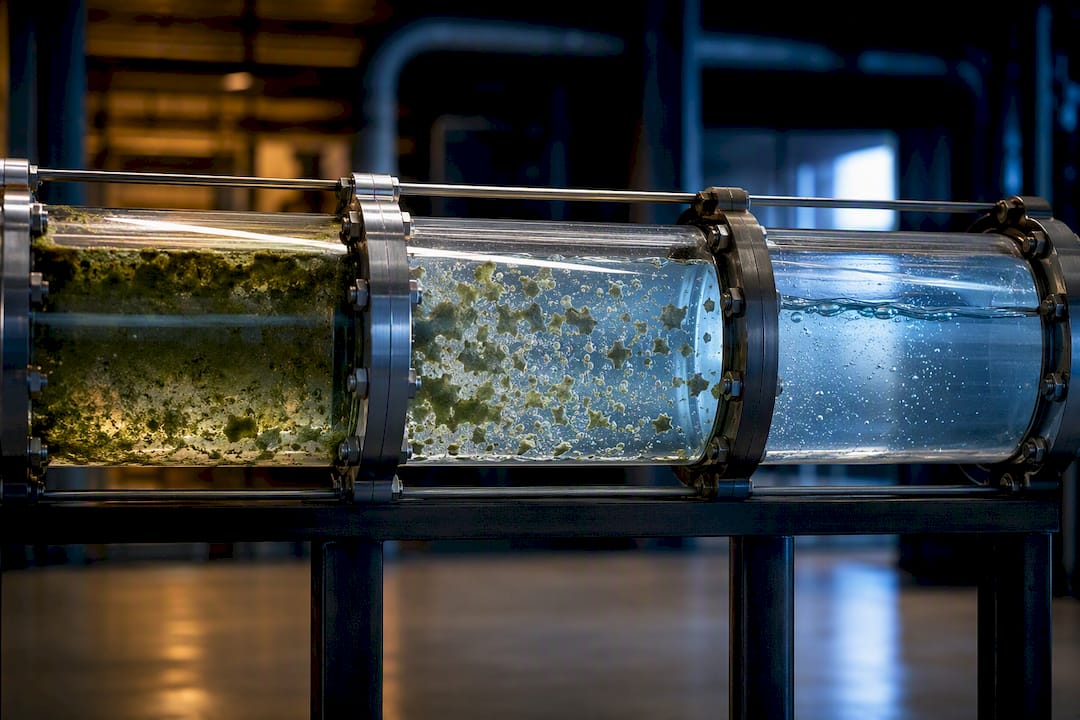
The sequence practitioners increasingly favour in cooling towers and closed pipe networks runs in three stages: a biodispersant to dislodge EPS from pipe walls and internal surfaces, a targeted non-oxidising biocide to kill the exposed cells before they can reattach, then an oxidising residual maintained afterwards to catch any planktonic survivors and keep bulk water clean between treatment cycles. Anti-MIC considerations run alongside this: where sulphate-reducing bacteria are suspected under scale or in deadlegs, the non-oxidising step needs choosing specifically for that organism, and mechanical access to the fouled area matters as much as the chemistry itself.
Food-processing environments
Enzyme pre-treatment followed by an authorised sanitiser is the standard approach on food-contact surfaces, where residue limits and approved-substance lists constrain which biocides are even permissible. Containment of dispersed material matters intensely here: a dispersal step that lifts biofilm off a conveyor surface without adequate rinsing and drainage simply redistributes contamination across the next batch, which turns a cleaning exercise into a food-safety incident.
Environmental remediation
Larger-scale biofilm problems, contaminated ground infrastructure or wastewater assets, call for controlled dispersion rather than aggressive one-shot chemical dosing. That means treating in stages, containing runoff, and following up with monitoring over subsequent weeks rather than declaring success from a single post-treatment sample. Regrowth from surviving persister cells is common enough that a single clean result a day after treatment tells you very little about the system’s actual state three weeks later.
Pro Tip: Whichever sector you work in, write the sequence and timing down before you start, not after. “We used chlorine dioxide” is not a protocol; “biodispersant applied, thirty-minute contact time, then chlorine dioxide dosed to 2 ppm free residual for one hour” is something you can actually audit and repeat.
A step-by-step framework for combining removal methods
Treat every biofilm job as a five-stage sequence rather than a single treatment event. Skipping stages, particularly jumping straight to a biocide without proper assessment, is the most common reason a treatment appears to work initially and then fails within weeks.
Assess the system: map accessible versus inaccessible surfaces, identify suspected organisms (Legionella, SRB, general heterotrophic bacteria), flag aerosol risk zones, and confirm material compatibility for whatever chemistry you are considering.
Prepare the site: isolate the work area, brief operators on respiratory protection where aerosolisation is possible, and confirm discharge routes for spent chemical or displaced water.
Disperse the matrix using a biosurfactant, chelant or enzymatic pre-treatment appropriate to the biofilm’s likely composition, giving the agent its full recommended contact time rather than rushing to the next step.
Treat with a targeted biocide immediately after dispersal, timed so the kill step lands while the matrix is weakened and cells are exposed, not hours later once the biofilm has had a chance to begin re-establishing.
Verify and maintain with post-treatment sampling, then sustain a residual biocide or engineering control to prevent the conditions that allowed biofilm to form in the first place.
The timing in step three to four matters more than most protocols spell out. A biodispersant that has done its job leaves cells exposed and vulnerable for a limited window; delay the biocide dose and quorum-sensing responses can begin rebuilding matrix defences before the kill step ever lands.
Escalate to specialist intervention when any of the following apply:
The system has a documented history of repeat positive Legionella samples despite standard control measures.
Deadlegs, redundant pipework or inaccessible sections cannot be physically reached for cleaning.
Suspected MIC or SRB activity raises corrosion concerns alongside the microbiological problem.
In-house teams lack the equipment or accreditation to sample and interpret results reliably.
At that point, the job has moved from routine maintenance into remedial works territory, and that is where a specialist water hygiene provider earns its fee rather than a general facilities contractor.
How do you verify that biofilm removal actually worked?
Verification is where a surprising number of otherwise well-run treatment programmes fall down, because a clean-looking pipe and a clean sample are not the same thing.
Sampling should follow BS7592, the British Standard covering sampling technique, location choice and handling for water systems, and analysis should go to a UKAS-accredited laboratory participating in recognised proficiency testing schemes. That accreditation is not bureaucratic box-ticking. Laboratories outside a proficiency scheme have no independent check on whether their culture technique is actually detecting what it claims to, according to HSE guidance on testing and monitoring water systems, which explicitly recommends this route for any organisation relying on sample results to demonstrate control.
Culture-based methods remain the standard for regulatory compliance, they count viable, culturable organisms, but they can under-report total bacterial load because some cells enter a viable-but-non-culturable state after treatment and simply will not grow on the plate.
Molecular methods such as PCR detect genetic material regardless of whether the cell is currently culturable, giving a fuller picture of total bioburden, but a positive PCR result does not necessarily mean the organisms detected are alive or capable of causing infection.
Interpreting biomass reduction needs both: a culture-negative result immediately after treatment tells you the kill step worked in that instant, but a molecular test week later tells you whether the underlying structure regrew.
The heterogeneity problem raised earlier in this piece has a direct practical consequence for verification: a single sample point after treatment is not sufficient evidence of system-wide control, particularly in larger or more complex pipework. A satisfactory verification outcome typically means clear culture results across multiple representative sample points, sustained over more than one sampling round, not a single good number taken the day after disinfection.
What Bespokecompliancesolutions sees on real sites
Chemistry and enzymes only get you so far if the underlying engineering keeps feeding the problem. Deadlegs, sections of pipework with little or no flow, are where biofilm establishes fastest and where treatment chemical is least likely to reach effectively, and removing them physically is often a more durable fix than any biocide programme. HSE guidance in HSG274 is explicit that engineering fixes, addressing stagnation, correcting temperature ranges outside the growth range for Legionella, and reducing scale build-up that shields organisms from biocide contact, are not optional extras alongside chemical treatment; without them, biofilm re-establishes regardless of how aggressive the chemistry was. For context on how stagnation specifically drives this, see this guide on why stagnant water causes Legionella.
A specialist water hygiene provider works across commercial, healthcare, housing association and hospitality sites delivering practical Legionella risk assessments that identify where deadlegs and temperature control failures are actually occurring, water sampling and analysis carried out to the standards described above, tank cleaning and disinfection where a physical and chemical combination is required, and on-site or online Legionella awareness training so facilities teams understand why a written scheme matters rather than treating it as paperwork.
A site should book a professional assessment when in-house checks keep returning inconsistent results, when a system has sections that have not been surveyed for temperature or flow in some time, or when a change of use, refurbishment or new plant installation has altered how water moves around the building. Waiting until a positive sample forces the issue is the expensive way to find out a system needed attention.
Why one-off cleans keep failing and monitoring programmes don’t
The failure pattern I see repeatedly is not a bad chemical choice. It is a good treatment applied once, with no follow-up structure, on a system that was always going to regrow biofilm because nothing about the underlying conditions, temperature, stagnation, deadlegs, actually changed. A biocide dose treats a symptom. A written scheme, properly maintained, treats the cause.
Aggressive chemistry has a cost beyond the invoice. Repeated high-dose oxidising treatment accelerates corrosion in older pipework, and I have seen sites trade a biofilm problem for a leak problem within a couple of years. The better trade-off, more often than not, is a lower-intensity, better-timed multimodal sequence sustained through routine monitoring, rather than sporadic aggressive intervention that stresses the asset as much as the microbiology.
Staff training is the unglamorous variable that actually determines whether any of this holds. A facilities team that understands why a deadleg matters will flag it before it becomes a sample failure. One that does not will keep calling out the same fault every six months and wondering why the problem never goes away.
— Sammi
Get professional support for biofilm and Legionella control
If any of the site-level issues above sound familiar, deadlegs you can’t fully flush, temperature ranges drifting outside control limits, or sample results that never quite settle, that is usually a sign the problem needs a proper site assessment rather than another round of DIY dosing. Bespokecompliancesolutions builds Legionella risk assessments, water sampling programmes and system disinfection work around your actual site, not a generic checklist, which matters because the biodispersant-then-biocide sequencing this article covers only works when someone has correctly mapped where your deadlegs and cold spots actually are first.
[

Our services cover the ground this article has walked through: bespoke Legionella risk assessments to identify where biofilm is most likely establishing, water sampling and Legionella testing carried out against BS7592 through accredited laboratories, and tank cleaning and system disinfection where physical and chemical treatment needs combining on site. We also run Legionella awareness training so your own team can spot the early warning signs between visits.
To get started, have your last risk assessment or sampling report to hand, along with a rough site plan or schematic if one exists, and get in touch to arrange an on-site visit.
Standards and guidance worth keeping on file
Beyond this article, a handful of primary sources are worth bookmarking for compliance and technical reference:
HSE HSG274 Part 2, the operative guidance for controlling Legionella in hot and cold water systems, including cleaning and disinfection detail.
HSE guidance on testing and monitoring water systems, covering sampling approach and laboratory accreditation expectations.
The multimodal biofilm eradication review for a fuller treatment of the mechanistic evidence behind combined approaches.
The enzymatic and biological strategies review for detailed enzyme-class evidence.
The biosurfactant review for industrial water system applications.
This article is general information, not a substitute for advice from a qualified doctor. Consult a qualified healthcare professional about your own circumstances before acting on anything here.
Sources
FAQ
What is the most effective way to remove biofilm?
The evidence consistently favours a sequenced multimodal approach: disperse the EPS matrix with a biosurfactant, chelant or enzyme, apply a targeted biocide immediately after, then maintain residual control and verify with standard sampling. No single agent reliably achieves this alone.
What dissolves biofilm naturally?
Enzymes such as DNase I and dispersin B break down the DNA and polysaccharide components of the EPS matrix without relying on harsh chemical biocides, and biosurfactants can lift biofilm from a surface by reducing surface tension. Both work better as a pre-treatment step ahead of a biocide than as a standalone solution.
Do biofilms ever get completely removed?
Biofilm can be reduced to below detectable levels on treated surfaces through a proper multimodal sequence, but persister cells and any untreated deadlegs or inaccessible sections mean regrowth remains a real risk without sustained monitoring and engineering controls. This is why verification through repeat sampling matters more than a single post-treatment result.
Does vinegar destroy biofilm?
Household acetic acid has some antimicrobial effect at high concentrations but lacks the validated efficacy, contact time control and material compatibility testing of professional-grade biocides like chlorine dioxide, peracetic acid or hydrogen peroxide. In regulated settings such as water systems or medical devices, it is not an appropriate substitute for a proper disinfection protocol.
How often should biofilm-prone water systems be sampled?
Sampling frequency depends on system risk classification, but HSE guidance points to sampling following an identified control failure, after remedial works, and at scheduled intervals as part of a documented written scheme, analysed by a UKAS-accredited laboratory. A single satisfactory sample is not sufficient; consistent results across multiple points and rounds are needed to confirm control.
Recommended
Comments