
How to prevent Legionella in dental unit waterlines
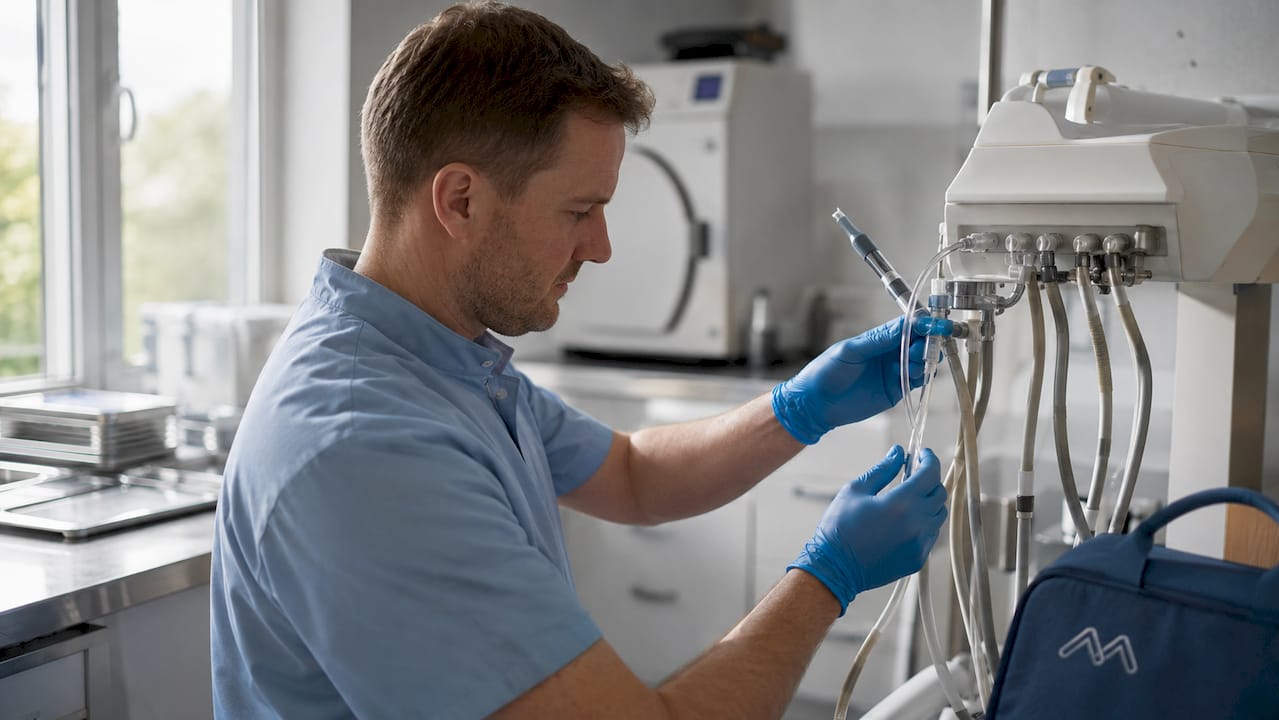
Legionella bacteria colonise dental unit waterlines by forming biofilm inside the narrow tubing that supplies water to handpieces, scalers, and air syringes. Preventing this contamination requires a structured programme of daily flushing, chemical disinfection, and microbiological testing. Without all three working together, no single measure is sufficient. Dental professionals and facility managers who want to prevent Legionella in dental unit waterlines must treat this as an ongoing clinical obligation, not a one-off maintenance task. The industry standard term for this discipline is dental unit waterline (DUWL) management, and it sits firmly within the broader framework of Legionella control.
What are the key practices to prevent Legionella in dental unit waterlines?
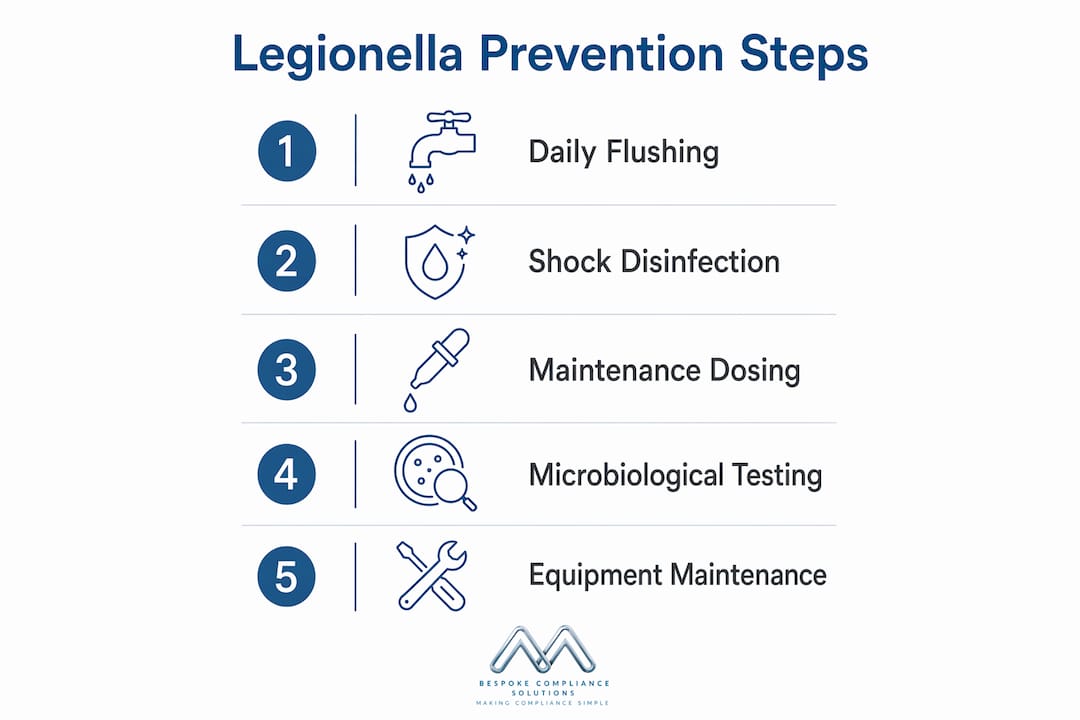
Effective DUWL management rests on four interlocking practices: flushing, chemical treatment, microbiological monitoring, and equipment maintenance. Miss any one of them and the others lose much of their value.
1. Daily flushing
Flushing waterlines for 2 minutes before the first patient of the day, and for 20–30 seconds between patients, is mandatory. Stagnation is the primary driver of biofilm growth, and flushing physically removes the standing water where bacteria multiply overnight. After any period of inactivity, such as a weekend or bank holiday, extend the pre-use flush accordingly.
2. Shock disinfection
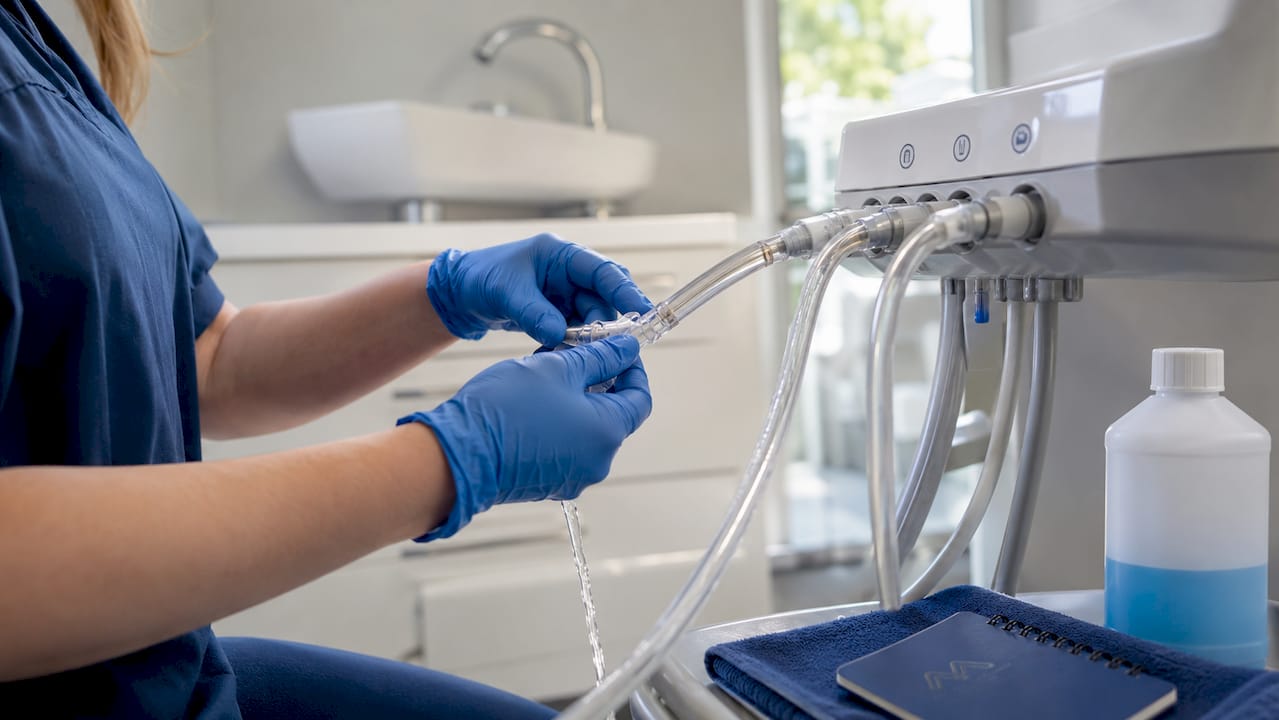
Shock treatment uses a high-dose chemical purge to remove established biofilm from waterline walls. A widely referenced protocol applies chlorine dioxide at 22.7 mg/L as a periodic shock dose. This is not interchangeable with daily maintenance dosing. Shock treatment addresses the biofilm reservoir that low-dose products cannot reach.
3. Continuous maintenance dosing
Maintenance dosing suppresses planktonic bacteria between shock treatments. Chlorine dioxide formulations at approximately 1.2 mg/L are used as a continuous low-dose application. Continuous chemical dosing prevents the regrowth cycles that occur when disinfectant levels drop during stagnation.
4. Microbiological testing
Testing verifies that flushing and chemical protocols are actually working. Start with monthly sampling until results pass, then move to quarterly monitoring. Keep every result on file. Testing is not a compliance tick-box. It is the only way to confirm that your specific unit, with its specific usage pattern, is under control.
5. Equipment maintenance
Replace waterline tubing, filters, and bottle systems according to manufacturer schedules. Worn components harbour biofilm and reduce the effectiveness of chemical treatments regardless of dosing accuracy.
Pro Tip: Record every flush, every chemical dose, and every test result in a dedicated log. If a regulator or infection control inspector visits, your documentation is your defence.
How do biofilms contribute to Legionella risk in dental waterlines?
Biofilm is the core challenge in dental waterline safety. It forms when bacteria attach to the inner surface of tubing and produce a protective matrix of polysaccharides. That matrix shields bacteria from both chemical disinfectants and physical flushing. Legionella thrives inside biofilm communities, using the structure as a reservoir from which it can shed into the water supply.
The narrow bore of dental waterline tubing creates a high surface-area-to-volume ratio. This geometry accelerates biofilm formation compared with standard plumbing. Water temperatures in dental units often sit within the range that supports bacterial growth, compounding the risk.
“Biofilms can harbour Legionella even when water tests appear compliant. Shock treatment is a critical complementary step alongside flushing and maintenance dosing.” — Dental Nursing
Low-dose maintenance treatments control planktonic bacteria in the water column but usually fail to remove established biofilm. This is why shock dosing is non-negotiable, not optional. A maintenance-only approach creates a false sense of security: water samples may pass while biofilm continues to grow undisturbed on tubing walls.
Key factors that accelerate biofilm risk:
Infrequent or inconsistent flushing, particularly after weekends or closures
Intermittent chemical dosing that allows disinfectant levels to drop
Ageing or damaged tubing with surface irregularities that trap bacteria
Use of bottle systems that are not cleaned and refilled on schedule
Failure to shock dose after any significant period of non-use
Managing biofilm requires a combined physical and chemical approach. Flushing disrupts and removes loosely attached bacteria. Shock dosing penetrates and breaks down the biofilm matrix. Maintenance dosing then suppresses regrowth between shock cycles. Remove any one element and the system fails.
What tools and schedules should dental practices use for waterline maintenance?
A structured schedule is the difference between a DUWL programme that works and one that looks good on paper. The following framework covers the minimum requirements for a compliant dental practice.
Daily tasks
Flush all waterlines for 2 minutes before the first patient. Flush for 20–30 seconds between patients. Check and refill chemical dosing bottles. Record all activity in the maintenance log.
Weekly tasks
Apply a waterline cleaner product such as CleanStream Waterlines Cleaner. The CleanStream protocol involves air purging the lines, introducing the cleaner, retaining it overnight, and then flushing thoroughly the following morning. Log the date, product batch, and the name of the person who carried out the task.
Monthly and quarterly tasks
Carry out microbiological sampling monthly until you achieve two consecutive passing results. Then move to quarterly testing. Testing frequency may start monthly until passing levels are achieved, then shift to quarterly. Integrate test results into your maintenance planning: a failed result triggers an immediate shock dose and re-test cycle.
Pro Tip: Use a dedicated DUWL logbook rather than a general maintenance file. Separate records make audits faster and demonstrate that waterline management is treated as a distinct clinical safety obligation.
The table below summarises the tools and methods used across a complete DUWL programme.
Task | Tool or method | Frequency |
Physical flushing | Dental unit handpiece lines | Daily (2 min pre-session, 20–30 sec between patients) |
Maintenance dosing | Chlorine dioxide at approx. 1.2 mg/L | Continuous |
Shock disinfection | Chlorine dioxide at 22.7 mg/L | Periodic (after inactivity or failed test) |
Weekly cleaner application | CleanStream Waterlines Cleaner | Weekly |
Microbiological sampling | Water sampling and laboratory analysis | Monthly until passing, then quarterly |
Equipment inspection | Tubing, filters, bottle systems | Per manufacturer schedule |
Integrating test results into your schedule is the step most practices overlook. A Legionella water sample result is not just a pass or fail. It tells you whether your current protocol is adequate for your unit’s specific usage pattern and water supply.
What common mistakes should dental teams avoid when managing waterline safety?
The most damaging mistakes in DUWL management are not dramatic failures. They are quiet, cumulative lapses that go unnoticed until a test fails or a patient complaint surfaces.
Treating flushing as optional after closures. Water stagnation during inactivity depletes disinfectant completely, leaving waterlines vulnerable to bacterial colonisation. After any closure, flush all lines thoroughly before treating the unit as safe for patient use.
Relying solely on maintenance dosing. Low-dose products suppress planktonic bacteria but do not remove biofilm. Without periodic shock treatment, biofilm accumulates silently over months.
Treating microbiological testing as a formality. Routine microbiological monitoring is an early warning system. A positive result means your current protocol is not working for that unit. Act on it immediately rather than waiting for the next scheduled test.
Inconsistent staff training. A protocol is only as good as the person carrying it out. If locum staff or new team members are not trained on flushing and dosing procedures, gaps appear in the schedule without anyone realising.
Poor documentation. Verbal assurances that flushing “always happens” carry no weight in an inspection. Written logs with dates, times, and staff names are the only acceptable evidence.
When a positive Legionella test result occurs, the correct response is immediate: take the affected unit out of service, carry out a shock disinfection, re-test, and do not return the unit to patient use until results pass. Notify your infection control lead and document every step. Legionella awareness training for the whole team, including reception and management staff, reduces the risk of a slow or incomplete response. Bespokecompliancesolutions offers Legionella awareness training designed specifically for healthcare settings, covering exactly this kind of response protocol.
Key takeaways
Preventing Legionella in dental unit waterlines requires daily flushing, continuous and shock chemical dosing, regular microbiological testing, and thorough documentation working together as a single programme.
Point | Details |
Flushing is non-negotiable | Flush for 2 minutes before the first patient and 20–30 seconds between patients, every day. |
Shock dosing removes biofilm | Low-dose maintenance products suppress bacteria but cannot remove established biofilm without periodic high-dose shock treatment. |
Testing is a diagnostic tool | Microbiological results tell you whether your protocol works for your specific unit, not just whether you have one. |
Documentation protects the practice | Written logs of every flush, dose, and test result are the only acceptable evidence of compliance. |
Stagnation is the primary risk | Any period of non-use depletes disinfectant and accelerates bacterial regrowth, making post-closure flushing critical. |
Legionella in dental waterlines: what I have learned from the field
By Sammi
After working across healthcare water systems for years, the pattern I see most often in dental practices is not ignorance of the risk. It is fragmentation. Practices have a flushing routine. They have a chemical product. They carry out a test once a year. But these elements are not connected into a single, documented programme with clear ownership. That gap is where Legionella takes hold.
The four-part framework of shock, treat, test, and maintain is not complicated. What makes it difficult is consistency. The flushing log that gets skipped on a busy Friday. The shock dose that gets postponed because the product is out of stock. The test result that gets filed without anyone checking whether it passed. Each lapse seems minor. Together, they create the conditions for a serious contamination event.
The practices that manage this well share one characteristic: they treat DUWL management as a clinical protocol, not a facilities task. The same rigour applied to sterilisation cycles and instrument tracking applies here. When the whole team understands why the protocol exists, not just what to do, adherence improves dramatically. That is the argument for proper training, not just a laminated instruction sheet on the wall.
One more thing worth saying plainly: a passed microbiological test does not mean your waterlines are permanently safe. It means they were safe on the day the sample was taken. Conditions change. Usage patterns change. Chemical stock runs low. The only way to stay ahead of the risk is to keep the programme running, keep the records current, and review the whole approach at least annually against current guidelines.
— Sammi
Professional Legionella compliance support for dental practices
Dental practices carry a direct duty of care for patient and staff safety, and waterline management sits at the centre of that obligation.
Bespokecompliancesolutions works with healthcare and dental settings across the UK to deliver Legionella risk assessments that go beyond a paper exercise. The team carries out site-specific assessments, designs bespoke control programmes, and provides ongoing monitoring support so your practice stays compliant between inspections. For practices that need structured water testing and analysis, Bespokecompliancesolutions provides microbiological sampling, laboratory analysis, and clear interpretation of results. Contact the team to discuss a compliance programme built around your practice’s specific waterline setup and usage pattern.
FAQ
What is the correct flushing protocol for dental unit waterlines?
Flush all waterlines for 2 minutes before the first patient of the day and for 20–30 seconds between patients. After any period of non-use, such as a weekend or holiday, extend the pre-use flush and carry out a shock disinfection before treating the unit as safe.
Why is shock dosing necessary if I already use a maintenance chemical?
Maintenance chemicals at low doses suppress planktonic bacteria in the water column but cannot penetrate established biofilm on tubing walls. Periodic shock dosing at a higher concentration, such as chlorine dioxide at 22.7 mg/L, breaks down the biofilm matrix and removes the bacterial reservoir that maintenance products leave intact.
How often should dental waterlines be tested for Legionella?
Test monthly until you achieve passing results, then move to quarterly monitoring. Integrate every result into your maintenance planning: a failed test triggers an immediate shock dose and re-test before the unit returns to patient use.
What should I do if a Legionella test comes back positive?
Take the affected unit out of service immediately, carry out a shock disinfection, and re-test before returning it to use. Document every step and notify your infection control lead. Do not wait for the next scheduled test cycle to confirm the issue is resolved.
Does continuous chemical dosing replace the need for flushing?
No. Chemical dosing and flushing address different aspects of the same risk. Flushing removes stagnant water and physically disrupts loose bacterial colonies. Chemical dosing suppresses regrowth in the water that remains. Both are required, and neither substitutes for the other.
Recommended
Comments