
Legionella prevention in social housing: 8 key examples
- Jun 9
- 8 min read
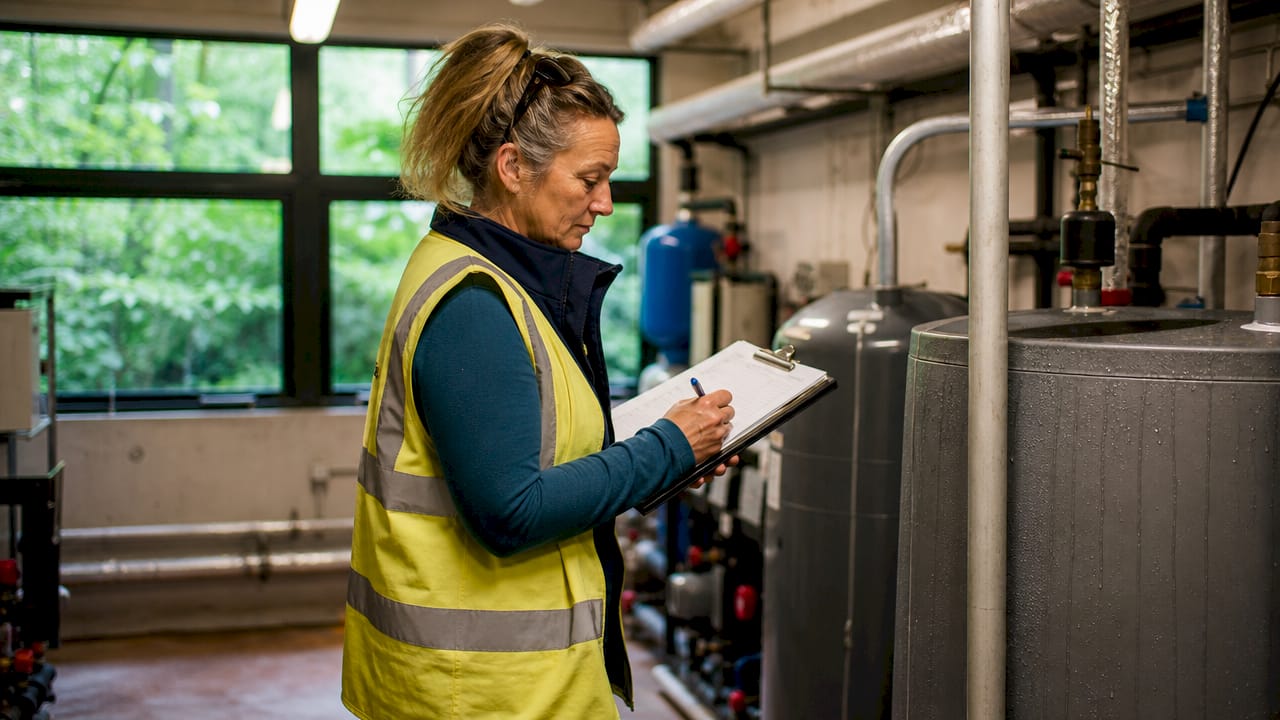
Legionella prevention is defined as the systematic control of water system conditions to inhibit the growth and spread of Legionella pneumophila bacteria. For housing association managers and social housing providers, the practical examples of legionella prevention in social housing covered here align directly with the HSE L8 Approved Code of Practice and its 2026 expectations. Effective control combines engineering design, routine maintenance, temperature management, and tenant cooperation. Failing on any one of these fronts creates the conditions bacteria need to thrive, putting vulnerable tenants at serious risk.
1. Examples of legionella prevention in social housing: system design
Design flaws such as dead legs and low-use outlets are the most common sources of stagnation where Legionella bacteria thrive in social housing water systems. Engineering out these risks at the design stage, or correcting them during refurbishment, is the single most cost-effective prevention measure available to housing providers.
Short, direct pipework reduces the volume of water sitting idle between uses. WRAS-approved materials prevent biofilm formation on internal pipe surfaces, which can otherwise provide a nutrient-rich environment for bacterial colonisation. Where pipework cannot be shortened, flow-and-return loops on hot water circuits maintain circulation and prevent temperature drop.
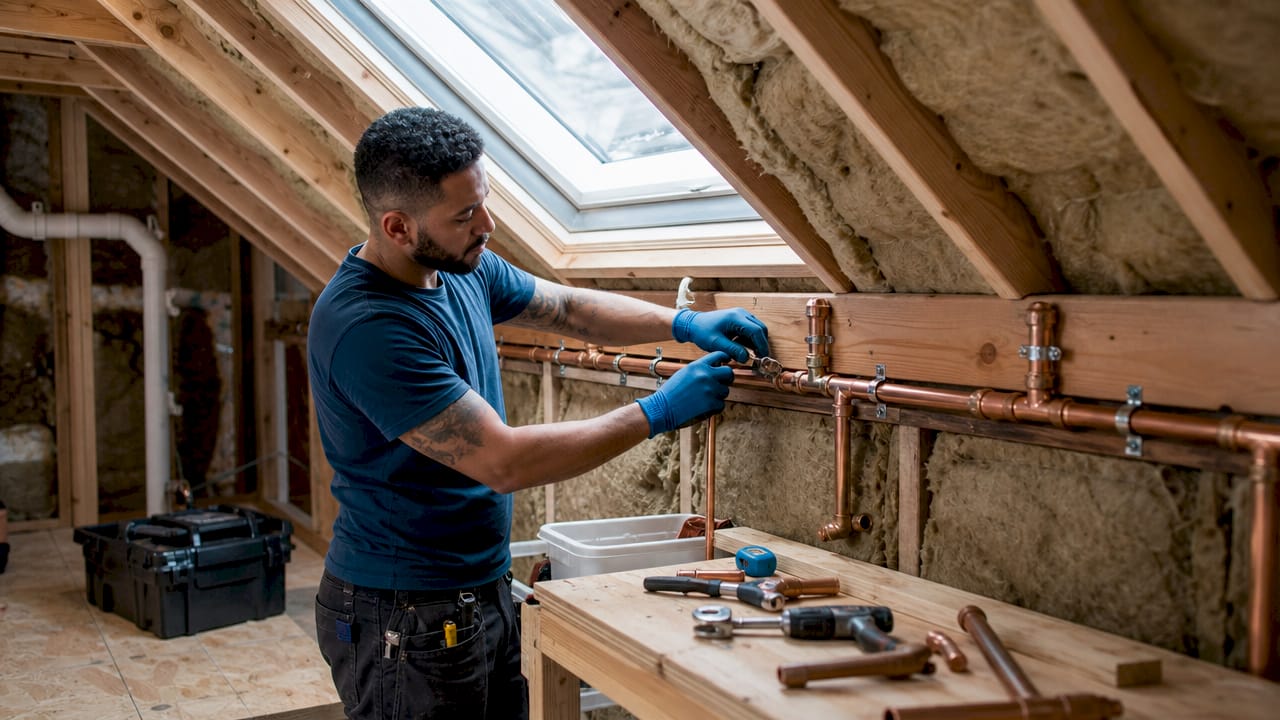
Thermostatic Mixer Valves (TMVs) are a practical example of engineering control that balances safety with scalding prevention. They blend hot and cold water at the point of use, delivering water at a safe temperature while the hot supply remains stored above 60°C. TMV servicing must be scheduled at least annually to verify correct function.
Pro Tip: When commissioning a refurbishment, request a pipe schematic review specifically to identify any capped-off or redundant pipework. Dead legs are frequently left in place after alterations and are rarely flagged unless someone is specifically looking for them.
2. Temperature monitoring at sentinel outlets
Hot water must be stored at 60°C and distributed above 50°C; cold water must remain below 20°C throughout the system. These thresholds are not guidelines. They are the accepted control parameters under HSE L8, and breaching them constitutes a compliance failure.
Monthly temperature checks at sentinel outlets, which are the first and last outlets on each circuit, provide the clearest picture of system performance. Acceptance criteria must be defined in writing before monitoring begins, so that any result outside the expected range triggers a documented corrective action rather than a verbal note.
The following table shows standard acceptance criteria used in social housing monitoring programmes:
Outlet type | Acceptable temperature | Action if outside range |
Hot water draw-off (sentinel) | Above 50°C within 60 seconds | Investigate distribution system |
Cold water draw-off (sentinel) | Below 20°C | Check cold water tank insulation |
Hot water storage (cylinder) | 60°C or above | Check thermostat and heating element |
Cold water storage (tank) | Below 20°C | Inspect tank location and insulation |
Pro Tip: Record the time taken to reach the target temperature, not just the final reading. A hot outlet that reaches 50°C after three minutes indicates a distribution problem that a single temperature figure will not reveal.
3. Weekly flushing of infrequently used outlets
Shower heads and hoses require descaling every three months, and infrequently used outlets must be flushed at least weekly. This is one of the most straightforward yet most frequently neglected examples of legionella prevention strategies in communal housing blocks.
Communal guest bathrooms, staff welfare facilities, and ground-floor outlets in blocks with low occupancy are the most common culprits. A weekly flushing regime, with the outlet run for at least two minutes, displaces stagnant water and restores temperature equilibrium. The task takes under five minutes per outlet and requires no specialist equipment.
Quarterly descaling of shower heads removes limescale deposits that harbour bacteria even when temperature control is otherwise adequate. Remove the shower head, submerge it in a descaling solution, rinse thoroughly, and refit. Log the date, operative, and condition observed. This record forms part of the five-year compliance documentation requirement under HSE guidance.
4. Cold water tank and hot water cylinder inspection
Cold water storage tanks in social housing are a high-priority risk point. Tanks that are oversized for current demand, poorly insulated, or located in warm roof spaces will regularly exceed the 20°C threshold, creating ideal conditions for bacterial growth.
Inspections should cover the condition of the lid and insulation, the presence of debris or biofilm, the integrity of the ball valve and overflow, and the temperature of the stored water. Any tank showing signs of contamination requires immediate disinfection before the system is returned to use.
Hot water cylinders require annual inspection of the thermostat, immersion heater, and any sacrificial anode. A cylinder storing water at below 60°C due to a faulty thermostat is a compliance failure and a direct legionella risk. Legionella risk assessments should formally document cylinder condition and corrective actions taken.
5. Void property protocols
Void properties longer than seven days increase legionella colonisation risk significantly if left unmanaged. Stagnant water in an unoccupied flat is one of the highest-risk scenarios in social housing, yet void management is frequently treated as a facilities issue rather than a water safety one.
A bespoke void protocol should include: flushing all outlets for a minimum of two minutes on the day of vacancy, descaling shower heads before reoccupation, verifying hot and cold temperatures at sentinel outlets, and documenting the condition of any water storage. Where a void extends beyond four weeks, a full system flush and temperature verification is required before the new tenancy begins.
Managing legionella risks in void properties is not optional. It is a defined responsibility under the duty of care owed to incoming tenants, and failure to manage it correctly has resulted in enforcement action against housing associations.
6. Tenant engagement and access management
Tenant awareness training focusing on flushing taps and showers after extended absence is a cost-effective legionella prevention measure. Encouraging tenants to run taps for at least two minutes after returning from a week away reduces bacterial risk from stagnant water at minimal cost to the organisation.
Effective tenant engagement in social housing legionella prevention includes:
Written guidance provided at tenancy sign-up explaining why flushing matters and how to do it
Annual reminder letters or digital communications ahead of summer holiday periods
Clear escalation routes when tenants deny access for safety inspections, embedded in the water safety compliance plan
Combining legionella checks with routine maintenance visits to reduce access requests and improve cooperation
Specific protocols for tenants identified as vulnerable, including those who are immunocompromised, where elevated risk management applies
Access management challenges are best resolved by segregating communal area inspections from those requiring tenant access, and by building escalation procedures into compliance plans from the outset. A no-access situation that is not escalated is a compliance gap, not a minor inconvenience.
7. Water sampling and bacterial testing
Detection of Legionella above 100 CFU/litre in water systems calls for a system review; levels above 1,000 CFU/litre require immediate remedial action. These thresholds guide social housing standards even where testing is not universally mandated.
Water sampling provides objective evidence of system performance that temperature monitoring alone cannot deliver. Sampling at high-risk points, including cold water tank outlets, hot water cylinder draw-offs, and shower outlets in communal areas, gives a quantified picture of bacterial loading. Results above the 100 CFU/litre threshold should trigger a documented investigation, not simply a repeat sample.
Risk assessments should be reviewed every two years or after trigger events such as confirmed disease cases or significant system changes. Records including system schematics, monitoring results, and corrective actions must be retained for a minimum of five years. Sampling records form a critical part of this documentation set.
8. Technology-assisted monitoring and chemical treatment
Smart sensor-based temperature and flow monitoring provides proactive legionella risk detection that surpasses traditional manual checking methods. Automated systems generate real-time data analytics that identify stagnation before it becomes a compliance failure, making them one of the most forward-looking best practices for legionella control in large housing portfolios.
The table below compares monitoring approaches relevant to social housing providers:
Method | Frequency | Strengths | Limitations |
Manual temperature checks | Monthly | Low cost, simple to implement | Misses inter-period fluctuations |
Automated sensor monitoring | Continuous | Real-time alerts, trend data | Higher upfront installation cost |
Water sampling | Quarterly or as required | Quantifies bacterial loading | Results take 10 to 14 days |
Chemical dosing (chlorine dioxide) | Continuous or periodic | Effective broad-spectrum control | Requires specialist management |
Chemical treatments including chlorine dioxide and copper-silver ionisation are used where system design or occupancy patterns make temperature control alone insufficient. These are not substitutes for physical controls. They are supplementary measures applied within a documented control programme.
Pro Tip: If you manage a portfolio of 50 or more properties, automated temperature monitoring will almost certainly reduce your overall compliance cost within two years by cutting manual visit frequency and catching problems before they escalate.
Key takeaways
Effective legionella prevention in social housing requires engineering controls, documented monitoring, tenant engagement, and a live written scheme of control working together, not in isolation.
Point | Details |
System design is the foundation | Eliminating dead legs and using WRAS-approved materials prevents stagnation at source. |
Temperature control is non-negotiable | Hot water stored at 60°C and cold water below 20°C are HSE L8 compliance requirements, not targets. |
Void properties carry the highest acute risk | Any void exceeding seven days requires a documented flushing and verification protocol before reoccupation. |
Tenant engagement reduces risk at low cost | Flushing guidance at sign-up and annual reminders are proven, cost-effective prevention measures. |
Technology improves detection speed | Automated sensor monitoring identifies stagnation in real time, ahead of manual checks. |
What I have learned from working with social housing providers
The most common failure I see is not ignorance of the rules. Housing association managers generally know what HSE L8 requires. The failure is in the written scheme of control being treated as a filing exercise rather than a working document. A live, actionable scheme names specific individuals, sets clear timescales, and includes escalation routes for no-access situations. A static PDF that nobody reads does none of those things.
The second pattern I see repeatedly is void properties being managed by the lettings team rather than the water safety team. The two functions rarely communicate well, and the result is properties being reoccupied without any flushing or temperature verification. This is not a hypothetical risk. It is a documented cause of legionella cases in residential settings.
My practical advice: prioritise your highest-risk systems first. Large cold water tanks in warm roof spaces, communal shower facilities, and any system that has been altered in the last five years without a subsequent risk assessment review deserve your attention before you worry about optimising your monitoring frequency on low-risk properties. Get the fundamentals right, document them properly, and build from there.
— Sammi
How Bespokecompliancesolutions supports social housing legionella compliance
Bespokecompliancesolutions works directly with housing associations and social housing providers across the UK to implement the kind of practical, documented legionella controls described in this article.
From system disinfection and flushing services to bespoke logbook systems and legionella awareness training for your team, every service is tailored to your portfolio and aligned with HSE L8 requirements. Bespokecompliancesolutions also provides detailed compliance methodology to give your organisation a clear, auditable framework. Contact Bespokecompliancesolutions to discuss a compliance programme built around your specific properties and risk profile.
FAQ
What are the main legal duties for legionella in social housing?
Social housing providers have a duty under the Health and Safety at Work Act 1974 and the Control of Substances Hazardous to Health Regulations 2002 to assess and control legionella risk. HSE L8 sets the accepted standard for how that duty is discharged in practice.
How often should legionella risk assessments be reviewed?
Risk assessments require formal review every two years or following trigger events such as confirmed legionella cases, significant system alterations, or changes in building occupancy. Records must be retained for a minimum of five years.
What temperature should hot water be stored at in social housing?
Hot water must be stored at a minimum of 60°C and distributed at above 50°C to inhibit Legionella growth. Cold water must be stored and distributed below 20°C throughout the system.
Are void properties a significant legionella risk?
Yes. Voids exceeding seven days carry a significantly elevated risk due to water stagnation. A documented flushing, descaling, and temperature verification protocol is required before any new tenancy begins.
Do tenants have a role in legionella prevention?
Tenants play a direct role by flushing taps and showers after returning from absence and by providing access for safety inspections. Housing providers are responsible for communicating these expectations clearly at the start of each tenancy.
Recommended
Comments