
HSE Actions for UK Dutyholders After Suspected Legionella in Showers
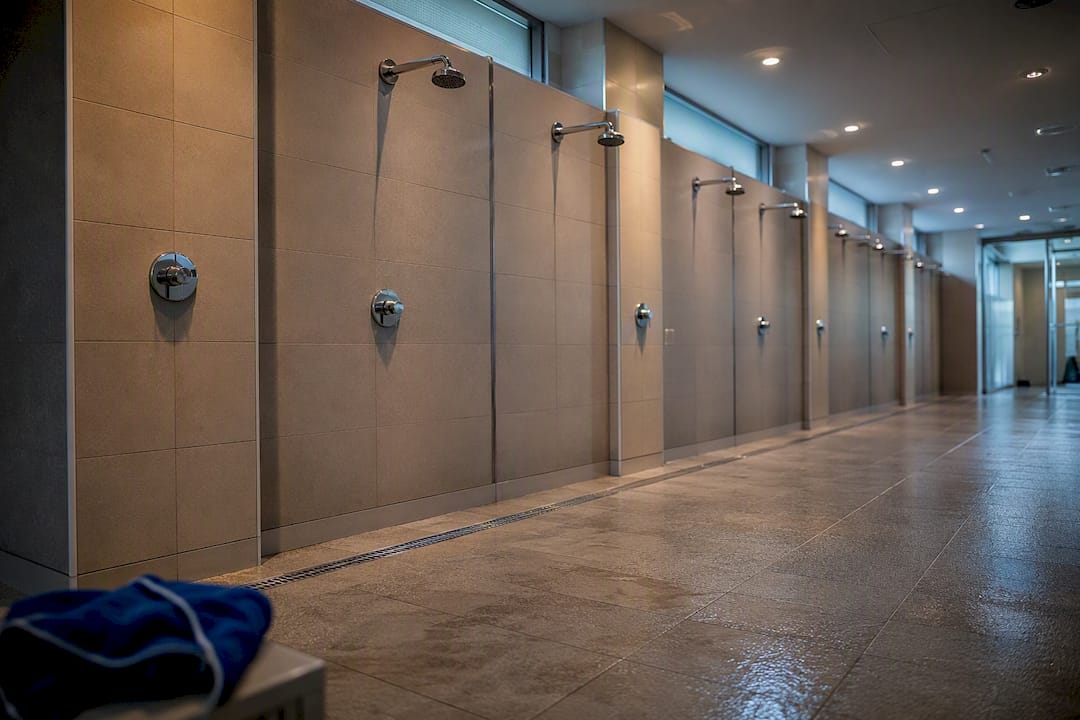
If legionella is suspected or confirmed in sports centre showers, restrict access to the affected outlets immediately, notify your responsible person, and arrange urgent sampling. Begin sentinel temperature checks straight away and follow HSE guidance on flushing or isolating outlets while results are pending. Speed matters here, since delayed action extends the window in which bathers can inhale contaminated aerosol.
TL;DR:
Rapid sampling and temperature logging are critical, with results needed urgently to prevent the spread of legionella through contaminated aerosols.
Maintaining water temperatures above 60°C and below 20°C, while flushing low-use outlets weekly, significantly reduces legionella growth risks.
Proper documentation, including timestamped records and physical evidence, is essential to demonstrate compliance during inspections or investigations.
Automated purge systems with zone controls and sensor verification outperform manual flushing regimes on busy sports sites.
Regular review and updating of comprehensive risk assessments, covering all water systems, are necessary to ensure ongoing safety and compliance.
Table of Contents
Immediate actions: what to do in the first 24 to 72 hours
The first three days after suspicion or confirmation decide whether you contain the problem or let it spread through the site’s documentation as well as its pipework. Work through these steps in order.
Close or restrict the affected showers and put up clear signage. Tell duty staff and, where relevant, members or visiting clubs why the outlets are out of use.
Isolate or zone the implicated outlets if it’s safe to do so, without creating scald risk elsewhere or starving other zones of flow.
Take and log sentinel temperature readings at hot and cold outlets immediately, before you do anything else to the system.
Arrange urgent sampling through a UKAS-accredited lab and notify your competent person; involve the local authority if the result or context requires it.
Document every action with a timestamp and preserve any physical evidence, such as a showerhead removed for descaling, in case an investigation needs it later.
Skipping the documentation step is the mistake that costs facilities the most later. An inspector or insurer will ask what you did and when, not just what the eventual sample result showed.
Key controls for shower systems in sports centres
Sports centre showers fail on the same handful of points repeatedly: temperature drift, stagnant outlets, and limescale that shields bacteria from anything you throw at it. Get these right and most of your risk disappears before it starts.
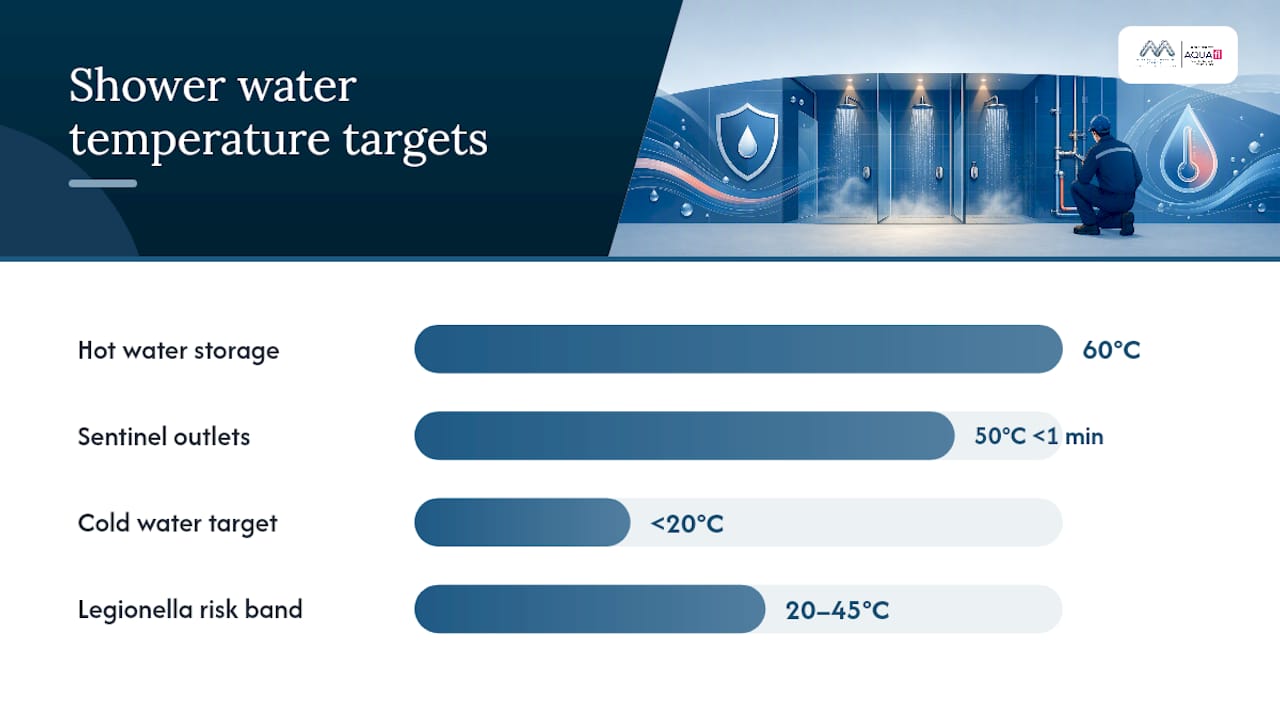
Temperature control sits at the centre of everything. Store hot water at 60°C or above and get it to sentinel outlets at 50°C within one minute, while cold water needs to stay under 20°C. Legionella multiplies fastest between 20°C and 45°C, so anything sitting in that band for long is a problem waiting to happen.
Beyond temperature, focus on:
Flushing regimes for low-use outlets, run weekly at minimum, with results logged and purge effectiveness actually verified, not assumed.
Showerhead and hose cleaning, monthly as a baseline, to strip out the biofilm and scale that build up faster than most managers expect.
TMV checks, confirming set points are correct and the valve is installed the way it should be, balancing scald protection against the temperature needed to control legionella.
Design fixes that remove deadlegs and rarely used branches, since redundant pipework and limescale create protected niches where biofilm thrives undisturbed.
Zoning oversized manifolds so water doesn’t sit and cool in a large shared volume during quiet periods, which is exactly what poorly sized manifolds and inconsistent purging tend to produce.
Pro Tip: If your shower block has more than a handful of outlets, manual flushing rotas usually break down within a few months. Automated purge systems with zone solenoids, temperature sensors and flow verification catch the outlets a busy duty manager forgets.
Scoping and reviewing a legionella risk assessment
A proper assessment for a sports centre has to cover every water system on site, not just the showers everyone worries about. That means hot and cold distribution, the shower blocks themselves, any spa pools, and cooling towers or associated plant if present.
Your written scheme should include:
Schematic diagrams of the hot and cold systems, showing every outlet and dead-end.
Task lists and frequencies for flushing, cleaning, and temperature checks.
Named temperature targets matched to each part of the system.
Remedial action protocols for when a check or sample fails.
Appoint a responsible person internally, but bring in an external competent assessor where the site is complex or where in-house expertise is thin. Risk assessments need reviewing at least every 12 months, and sooner after refurbishment, a positive result, or an extended shutdown, such as a pool closure over winter. If you’re unsure whether a change warrants an early review of your legionella risk assessment, treat any system alteration as a trigger rather than waiting for the anniversary date.
Budget for this properly. A one-off assessment for a single-site sports centre typically runs from £185, but larger or multi-system sites with spa pools or cooling towers cost more to survey properly.
Sampling and testing: reading the results correctly
Sample the outlets that matter most: sentinel showers at the top and bottom of the system, stored water tanks, a representative spread of other outlets, and any spa pools, which need specialist testing under HSG282 rather than standard shower protocols.
Legionella culture testing (measured in CFU/L) is the standard test; turnaround from an accredited lab usually runs several sample types plus microbiological and TVC testing for fuller context on water quality.
Total Viable Count (TVC) results add background on general water quality but don’t replace a dedicated legionella test.
Trace or low counts usually mean tightened monitoring rather than closure; actionable positives mean remedial disinfection and a retest before outlets reopen.
Thermal or chemical disinfection, followed by system cleaning and a confirmatory retest, is the standard remedial path after a genuine positive.
Temporary closure is necessary where counts are high or the source can’t be isolated; conditional use with tightened controls is often possible for lower-level results while remediation is underway.
Many leisure-centre regimes settle on quarterly sampling of high-risk outlets alongside weekly flushing and monthly showerhead checks, which gives a reasonable balance between cost and early warning.
Records, responsibilities and staying compliant
Under ACOP L8 and HSG274, the dutyholder must carry out a risk assessment, maintain a written scheme, and show it’s actually being implemented, not just filed away.
Keep the risk assessment and written scheme accessible, with version history showing when each was updated.
Log temperature checks, flushing records, and sampling reports as they happen, not retrospectively.
Record every maintenance visit and corrective action, including who did the work and when.
Keep training and competence records for staff and contractors current.
The most common gap inspectors find isn’t a missing document. It’s a written scheme that describes a flushing regime nobody can prove happened.
How a competent provider handles remediation
A typical project runs through a fairly consistent sequence: site survey, written scheme, targeted sampling, remedial disinfection where needed, then follow-up testing and ongoing monitoring.
Site survey and schematic mapping to identify every outlet, deadleg, and control point.
Written scheme delivery with clear task frequencies and named responsibilities.
Targeted sampling at sentinel and representative outlets, not blanket testing of everything.
Remedial disinfection and retesting where a positive result demands it.
Staff briefing and training options, so the people using the site daily understand what they’re looking for.
Clients typically want a clear report they can hand to an inspector, an action plan with dates attached, and a supplier who explains the “why” behind each recommendation rather than just listing tasks. Look at the method of works a provider follows before you commission anything, since it tells you how disciplined their process actually is.
What experience actually teaches about shower blocks
The same three failures show up again and again: manifolds sized for peak demand that sit half-empty most of the week, flushing rotas that exist on paper but not in practice, and limescale nobody’s descaled in years quietly shielding bacteria from every other control you’ve put in place.
Prioritise what you can verify. A temperature log you can produce on demand beats a policy nobody checks, and automated purging earns its cost the moment your manual rota has already failed once.
— Sammi
Get urgent legionella support from Bespoke Compliance Solutions
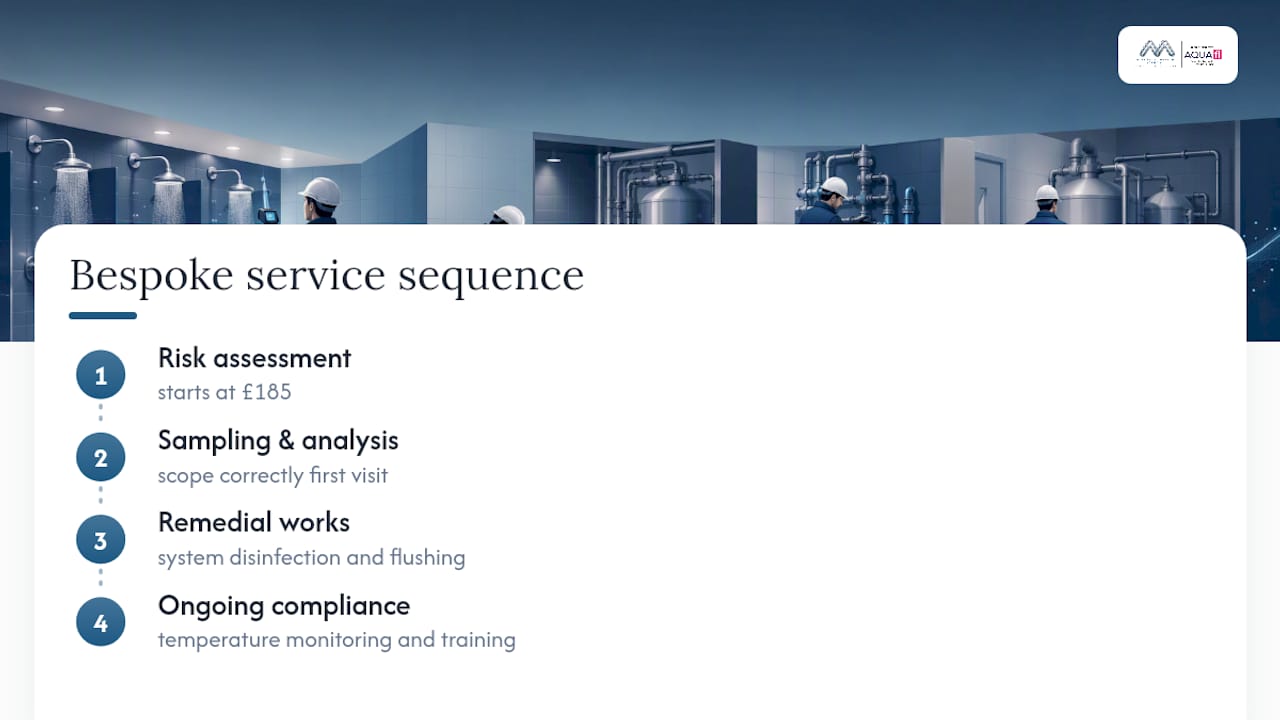
Bespoke Compliance Solutions is the alternative to piecing together separate contractors for testing, disinfection and monitoring. One provider handles the full sequence, from a risk assessment starting at £185 through to remedial works and ongoing compliance support, rather than you coordinating three different suppliers under time pressure.
[
If you need an urgent review, have this ready before you call: site size and number of outlets, which systems are present (showers, spa pools, cooling towers), any recent refurbishment or shutdown, and any sample results you already hold. That lets the team scope sampling and analysis correctly the first time rather than sending someone out twice.
For ongoing risk, look at automated water temperature monitoring to catch drift between manual checks, and legionella awareness training so your duty staff can spot problems before they become incidents. Where a positive result has already come back, system disinfection and flushing covers the remedial side. Get in touch to scope the right combination for your site.
This article is general information, not a substitute for advice from a qualified doctor. Consult a qualified healthcare professional about your own circumstances before acting on anything here.
Sources
FAQ
Can you get legionella from showers?
Yes. Legionella spreads through fine water droplets, and showers are one of the most efficient ways to aerosolise contaminated water into a breathable mist. The NHS confirms inhalation of aerosols as the main transmission route, which is exactly why shower temperature and flushing controls matter so much in sports centres.
How long should you run a shower to avoid legionella?
There’s no fixed duration that guarantees safety on a shower you’ve never checked, but flushing low-use outlets for several minutes helps clear stagnant water that’s had time to warm into the growth-friendly range. Routine use isn’t a substitute for proper temperature control and the weekly flushing regimes many leisure centres run on low-use outlets.
What kills legionella in a showerhead?
Thermal disinfection, running water above 60°C through the outlet for a sustained period, and chemical disinfection are the standard remedial methods. Regular descaling matters just as much, since limescale shields bacteria from both heat and chemical treatment, which is why routine cleaning sits alongside disinfection rather than replacing it.
How can you tell if legionella is in the water?
You can’t tell by looking, smelling, or tasting the water; the only reliable method is laboratory sampling. A positive result typically comes back as a CFU/L count, and Bespoke Compliance Solutions’ water testing service covers sampling, lab analysis and interpretation of results for sports centre systems.
Recommended
Comments