
Types of properties with high Legionella risk
- May 29
- 8 min read
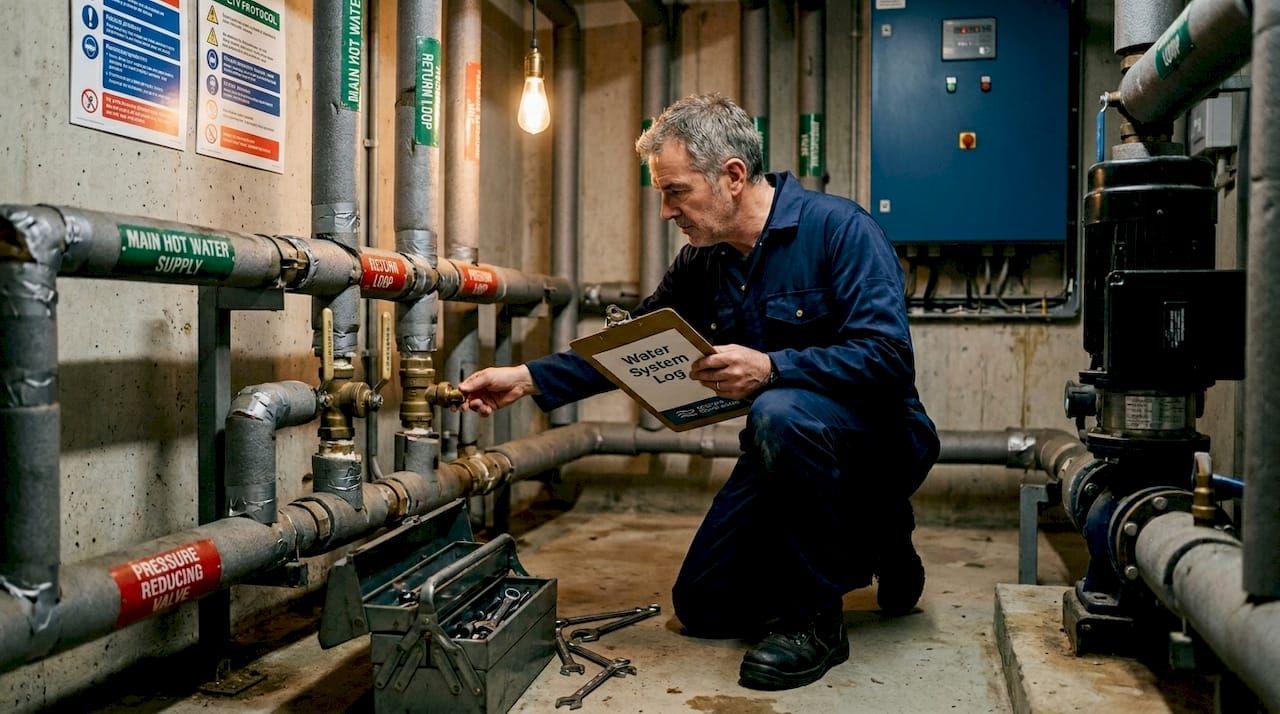
Not all buildings carry the same threat when it comes to Legionella. The types of properties high Legionella risk presents are largely determined by water system complexity, occupancy patterns, and the presence of aerosol-generating equipment. In the industry, this is framed through the concept of Legionella risk profiling, a structured approach to identifying which buildings are most likely to harbour and disperse Legionella pneumophila, the bacterium responsible for Legionnaires’ disease. Understanding which property categories fall into the highest risk brackets is not just useful knowledge. It is the starting point for every water hygiene compliance programme.
Table of Contents
Key takeaways
Point | Details |
Property type drives risk level | Building features, water system complexity, and occupancy patterns determine Legionella risk more than size alone. |
Healthcare settings carry the highest stakes | Vulnerable occupants combined with complex plumbing and aerosol-generating fixtures make healthcare the most critical sector for compliance. |
Intermittent use creates hidden hazards | Stagnant water in seasonally occupied or vacant buildings accelerates bacterial growth and disinfectant decay. |
Aerosol generation is the primary exposure route | Cooling towers, hot tubs, and misting systems create breathable droplets that deliver Legionella directly to the lungs. |
Tailored water management plans are non-negotiable | Generic approaches fail in complex buildings. Bespoke control programmes aligned to specific property types are the most effective defence. |
1. Hotels and large residential complexes
Large buildings with complex plumbing such as hotels, serviced apartments, and large residential blocks face a structural challenge: maintaining consistent water temperature and disinfectant residuals across hundreds of metres of pipework is genuinely difficult. The further water travels from the point of treatment, the more opportunity there is for temperatures to drift into the 25°C to 45°C range where Legionella thrives.
High occupancy buildings also experience uneven use. Some floors run at full capacity while others sit dormant during quieter periods, creating localised pockets of stagnation in the distribution system.
Key risk factors in these properties include:
Cooling towers on rooftops generating aerosols that can travel significant distances
Decorative water features and lobby fountains
Multiple showers and spa facilities with variable use
Long pipe runs and hydraulic dead zones in seldom-used wings
Pro Tip: In hotels, guest room showers that have not been used for more than seven days should be flushed before the next occupancy. Build this into your housekeeping protocols, not just your maintenance schedule.
2. Healthcare facilities and care homes
No other building category concentrates risk in quite the same way as healthcare. The combination of vulnerable patients requiring water management of the highest standard, complex plumbing infrastructure, and multiple aerosol-producing fixtures creates a risk profile that demands a formal, documented water management programme.
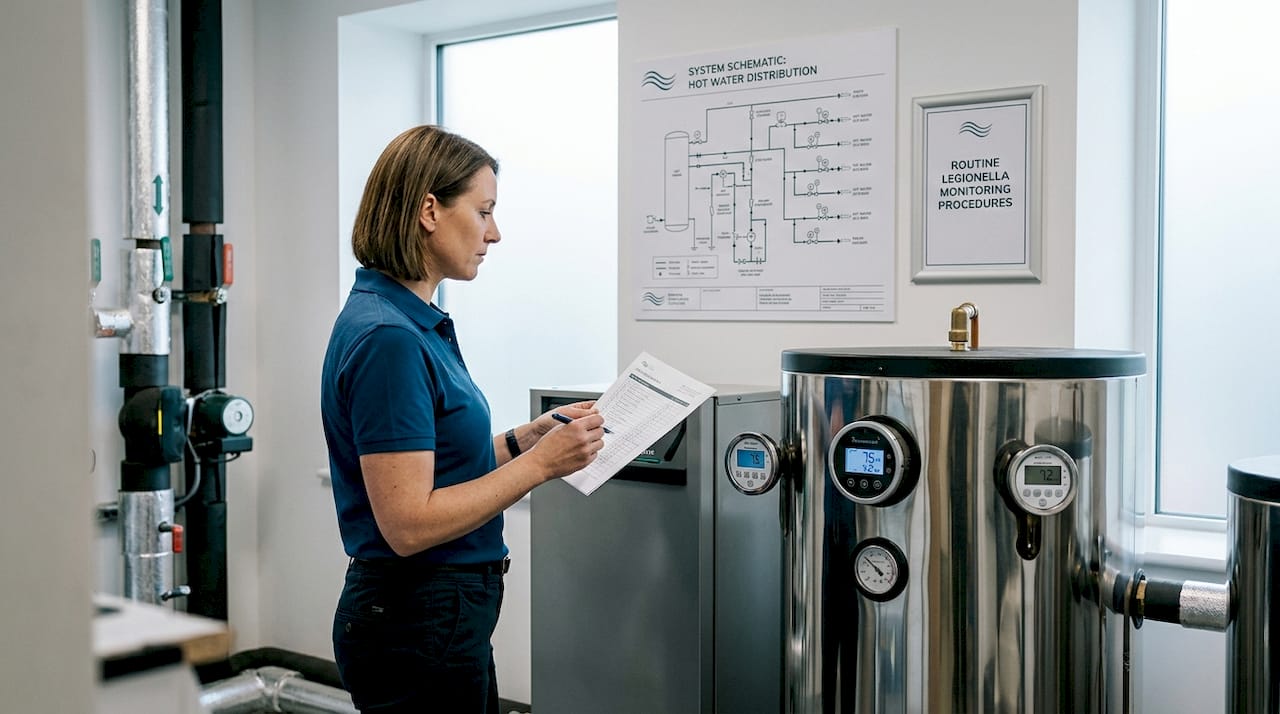
Patients with compromised immune systems, chronic respiratory conditions, or advanced age face a significantly higher risk of fatal outcomes if exposed. Legionnaires’ disease mortality rates are substantially higher in this population than in the general public, which is why bacterial colonisation above threshold levels demands immediate remediation rather than a monitored watch-and-wait approach.
Risk-elevating features in healthcare settings include:
Hydrotherapy pools and showering facilities used daily by patients
Respiratory therapy equipment that may utilise water
Hydration stations and ice machines in ward environments
Deadlegs in pipework serving infrequently used treatment rooms
Cooling and ventilation systems serving clinical areas
Regulatory expectations for healthcare are also the most stringent. NHS-managed premises operate under the Health Technical Memorandum 04-01, and independent care providers must demonstrate equivalent standards of control. Regular water testing and sampling is not optional in these environments. It is a core compliance obligation.
3. Leisure centres, spas, and gyms
Properties with wet leisure facilities represent some of the most consistent sources of Legionella exposure in the commercial sector. Hot tubs and whirlpool spas maintain water temperatures that sit squarely in the bacterial growth range, and the aeration that makes them appealing to users is precisely what generates infectious aerosols.
The disinfection challenge is compounded by bather load. High throughput of users introduces organic matter that rapidly depletes disinfectant residuals. A poorly maintained hot tub can shift from compliant to high-risk within hours, not days.
Common problem installations in this category:
Hydrotherapy pools with high aeration
Steam rooms fed by water sprays
Decorative and interactive water features in leisure complexes
Misting systems in food halls or shopping centres
Pro Tip: For hot tubs and hydrotherapy pools, daily disinfectant checks are not enough. You need a monitoring programme that records turbidity, pH, and free chlorine at multiple points in the circulation system, not just at the surface.
Nearly 1 in 7 Legionnaires’ disease patients report staying in hospitality or leisure properties before diagnosis, with about half reporting hot tub use. This is not a background risk. It is a foreground compliance obligation.
4. Seasonally occupied and intermittently used buildings
This category catches more property managers off guard than almost any other. Holiday lets, seasonal conference centres, temporarily closed offices, and vacant wings of larger buildings all share a critical vulnerability: variable occupancy drives water stagnation and causes disinfectant residuals to decay.
When water sits unused in pipework for extended periods, temperatures drift towards the growth range and biofilm establishes itself on pipe surfaces. Biofilm is particularly problematic because it protects Legionella from disinfectant contact, allowing colonies to persist even after flushing restarts.
A practical framework for managing intermittently used buildings:
Before shutdown, document the full extent of the water system and identify all outlets likely to experience prolonged stagnation.
During the closure period, schedule periodic flushing of all outlets to maintain water movement, even in a sealed building.
On reopening, flush all outlets systematically before any regular use resumes, working from cold to hot and covering every terminal fitting.
Conduct a water hygiene inspection and, for higher-risk premises, arrange a full water sample analysis before re-occupying.
Review your risk assessment to confirm it reflects any changes to occupancy patterns or system modifications made during the closure.
5. Offices, schools, and retail properties
These building types are often treated as lower priority, but several factors push certain offices and schools into elevated-risk territory. The presence of shower facilities in modern office buildings, roof-mounted cooling systems, and complex hot and cold water distribution networks means the risk profile varies considerably even within this category.
Schools warrant particular attention because of the extended summer closure period, which creates the same stagnation risk seen in seasonally used buildings. Any school with showers, swimming facilities, or a cooling tower must have a documented control programme in place before the autumn term.
Property type | Key risk factors | Priority control measures |
Office buildings | Showers, cooling towers, low Friday-to-Monday use | Regular flushing, cooling tower inspection, temperature monitoring |
Schools | Extended summer closure, pools, showers | Pre-term recommissioning, flushing programme, risk reassessment |
Retail premises | Decorative fountains, food court misters, staff facilities | Fountain maintenance, outlet monitoring, disinfectant checks |
Warehouses | Minimal water use, low-flow dead ends | Deadleg removal, regular outlet flushing |
Municipal water treatment alone is not sufficient to control Legionella growth within a building’s distribution system. The responsibility for in-building water quality sits firmly with the property or facilities manager, regardless of sector.
6. Industrial and manufacturing sites
Industrial premises are frequently overlooked in Legionella risk conversations, yet many contain water systems that combine warm process water, extensive pipework, and aerosol-generating equipment. Cooling towers associated with manufacturing processes are among the highest-risk installations in any sector.
Process cooling water circuits often operate at temperatures that support bacterial growth, and the scale of some industrial water systems makes routine temperature checks genuinely complex. Dead legs and infrequently flushed branches in large distribution systems are common pitfalls in complex plumbing that property managers sometimes discover only during a formal risk assessment.
Industrial sites with spray drying, humidification systems, or evaporative cooling should be assessed with the same rigour applied to healthcare properties. The aerosol exposure risk for site workers and neighbouring populations can be substantial.
7. Housing associations and sheltered accommodation
Residential buildings managed by housing associations occupy an interesting position in the risk hierarchy. The properties themselves may appear straightforward, but sheltered accommodation and supported housing schemes often house elderly or immunocompromised residents, bringing the occupant vulnerability dimension that elevates risk considerably.
Large communal water systems serving multiple flats through shared risers and calorifiers introduce exactly the kind of temperature and disinfectant control challenges seen in hotels. The legionella outbreak examples in commercial premises most frequently cited in residential settings involve precisely this type of shared infrastructure rather than individual domestic supplies.
Housing associations have a duty of care under the Health and Safety at Work Act and the Control of Substances Hazardous to Health regulations. Failure to maintain a current, site-specific risk assessment is not simply a paperwork issue. It is a prosecutable failing.
My honest take on where compliance actually breaks down
I have worked across enough property types to know that the buildings which end up in crisis are rarely the ones that ignored Legionella risk entirely. More often, they are the ones that applied a generic, one-size-fits-all approach and assumed it was adequate.
I’ve seen hotel groups with detailed logbooks that recorded nothing useful because the person completing the records did not understand what they were measuring. I’ve seen care homes that had temperature monitoring in place but had never reviewed their risk assessment after a major refurbishment changed the plumbing configuration. Both scenarios create a false sense of security that is, in some ways, more dangerous than acknowledged non-compliance.
What I’ve found actually works is matching the control programme to the specific risk profile of the property. A small office with a single cold water tank and no showers needs a very different programme from a care home with a calorifier, multiple shower rooms, and a hydrotherapy suite. Treating them identically means over-investing in low-risk areas and under-protecting the high-risk ones.
The second thing I’ve learned is that occupancy changes are the most commonly missed trigger for a reassessment. Whether it is a building returning from closure, a ward being repurposed, or a hotel extending its facilities, any change to how a building is used changes its risk profile. Compliance is not a static document. It is a live programme.
— Sammi
Protect your properties with the right compliance support
Managing Legionella risk across multiple property types requires more than a checklist. It requires a thorough understanding of how each building’s water system behaves under real occupancy conditions.
At Bespokecompliancesolutions, we specialise in exactly this. From office and commercial premises compliance to complex healthcare environments, our team delivers bespoke risk assessments, water sampling programmes, and control systems built around your specific sites. We also provide sector-specific Legionella solutions for housing associations, leisure operators, and industrial property managers. If you manage buildings with elevated risk profiles, speak to us about building a compliance programme that fits the properties you actually have.
FAQ
Which property types carry the highest Legionella risk?
Healthcare facilities, hotels, and leisure properties with hot tubs or cooling towers carry the highest risk, due to complex water systems, aerosol generation, and in the case of healthcare, the presence of vulnerable occupants.
Why does seasonal or intermittent use increase Legionella risk?
When a building is unoccupied or used infrequently, water becomes stagnant in pipework, temperatures drift into the bacterial growth range, and disinfectant residuals decay, all of which accelerate Legionella colonisation.
Are residential buildings at risk from Legionella?
Large residential buildings managed by housing associations can pose significant risk, particularly sheltered accommodation with shared hot water systems, communal showers, and elderly or immunocompromised residents.
What triggers the need for a new Legionella risk assessment?
Any material change to a building’s water system, occupancy patterns, or use should prompt a reassessment. This includes refurbishments, extended closures, changes in tenant type, or the addition of new water-using equipment.
Is Legionella risk only relevant to large buildings?
No. Smaller premises with showers, cooling systems, or infrequently used outlets can also present elevated risk. Building size is one factor, but system complexity, occupancy patterns, and the presence of aerosol-generating features matter equally.
Recommended
Comments