
Water safety risk assessment schools: a practical guide
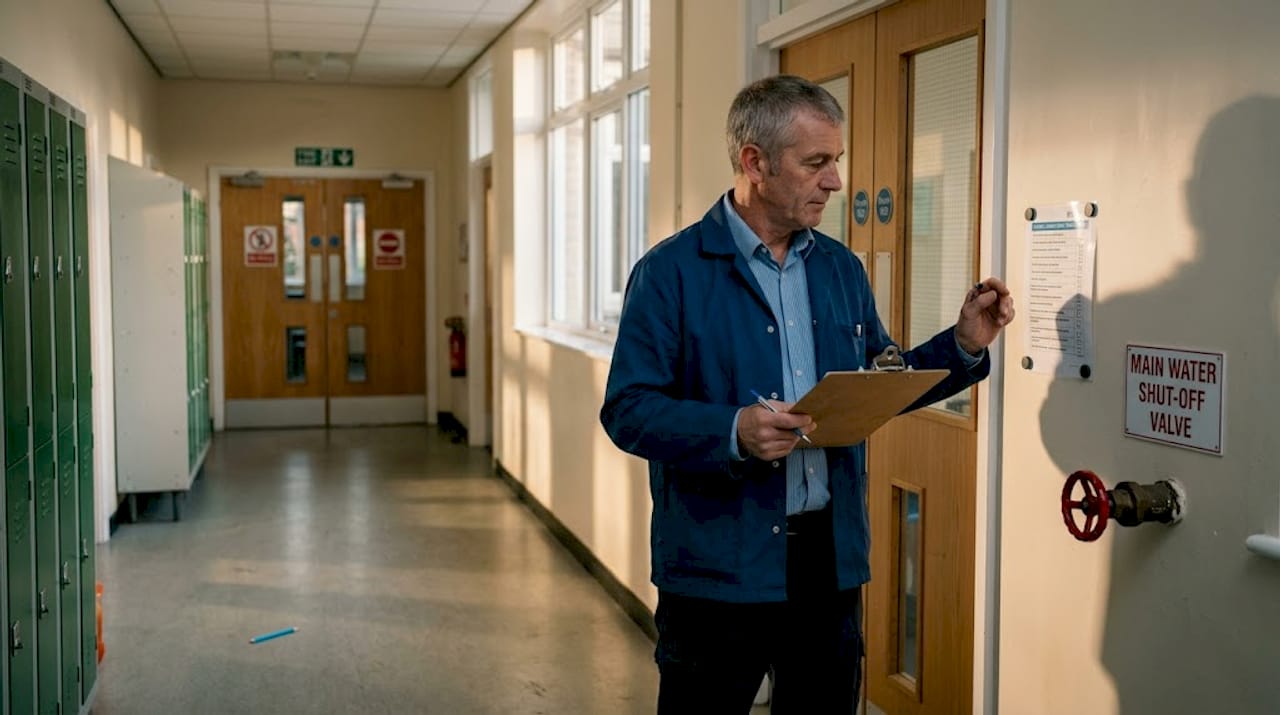
A failed water safety risk assessment in a school is not a paperwork problem. It is a health crisis waiting to happen. From Legionella bacteria multiplying in poorly maintained hot water systems to lead leaching from ageing pipework, the risks of water in schools are specific, serious, and largely preventable. As the duty holder or safety officer responsible for your site, you need a structured approach that satisfies legal requirements under the Health and Safety at Work etc. Act 1974 and the Control of Substances Hazardous to Health Regulations, while genuinely protecting the students and staff in your care. This guide gives you exactly that.
Table of Contents
Key takeaways
Point | Details |
Assign a responsible person | A named duty holder must own the school water safety plan and all associated documentation. |
Assess all water hazards | A water hazard assessment must cover infrastructure risks, chemical hazards, and activity-based risks in one integrated framework. |
Control measures are ongoing | Flushing protocols, temperature monitoring, and scheduled reviews must continue well beyond the initial assessment. |
Records determine compliance | Detailed, date-stamped documentation is what protects you during an inspection or following an incident. |
Trigger reviews promptly | Positive Legionella tests, system changes, or post-closure reopenings each require an immediate reassessment. |
Water safety risk assessment in schools: getting the foundations right
Before you complete a single risk assessment form, you need the correct foundations in place. A water safety risk assessment in schools that lacks clear accountability, up-to-date schematics, or an understanding of applicable legislation will produce a document that looks thorough but fails in practice.
What you need before you start:
A copy of all relevant water safety policy for schools, including the Health and Safety Executive’s Approved Code of Practice L8 (Legionella) and the associated Technical Guidance HSG274
A named responsible person with a formal record of their appointment and the scope of their duties
Up-to-date as-built drawings of the water distribution system, including cold water storage tanks, calorifiers, hot water cylinders, showers, and any dead legs
Records of all previous assessments, maintenance logs, water sampling results, and temperature monitoring data
Details of any external contractors who manage parts of the water system or deliver water-based activities
Water safety risk assessments are best treated as a set of linked documents covering both infrastructure systems and activity-specific hazards, rather than one generic form. This matters because the hazards associated with your swimming pool, your drinking water outlets, and your hot water system are quite different, and they require different control measures and review frequencies.
Prerequisite | Responsible party | Purpose |
Named duty holder appointed | Headteacher or site manager | Legal accountability |
Current system schematics | Facilities manager | Accurate hazard mapping |
Previous assessment records | Safety officer | Continuity and trend identification |
External contractor details | Site manager | Complete hazard picture |
Relevant legislation reviewed | Safety officer or consultant | Compliance framing |
Pro Tip: Do not assume the previous assessment is still valid. If more than 12 months have passed, or if significant building or system work has occurred since the last review, treat it as expired and begin afresh.
How to assess water safety in schools: a step-by-step process
A thorough school water safety plan addresses three categories of risk: water system hazards, chemical and biological contamination, and activity-based hazards. Work through each systematically.
Map every water system component. Walk the entire site with your system schematics and confirm that every cold water storage tank, hot water cylinder, shower head, drinking water outlet, and deadleg outlet is accurately recorded. Outdated drawings are one of the most common pitfalls in school water hazard assessment.
Assess Legionella risk across the system. Legionella risk assessments for schools must evaluate storage temperatures, the presence of dead legs, infrequently used outlets, and the potential for water stagnation. Schools are particularly vulnerable because water systems can sit unused during holidays for weeks at a time, creating ideal conditions for bacterial growth. Assessment costs typically range from £300 to £700 and should be conducted by a competent person.
Evaluate chemical contamination risk. No safe level of lead exposure exists, so every drinking water outlet used for consumption requires testing. Action is required where lead exceeds 5 parts per billion, and immediate shutoff is necessary above 15 parts per billion. Beyond lead, your school water safety guidelines should also address arsenic, nitrates, and microbiological hazards. The WHO confirms that safe WASH practices prevent waterborne diseases including diarrhoea, which directly affects school attendance and child health outcomes.
Conduct activity-based risk assessments. Safety measures for school pools require a separate, specific assessment covering supervision ratios, depth signage, pool chemical management, and emergency procedures. For off-site water activities such as kayaking or open water swimming, the risk assessment must incorporate external provider information, including their own documented hazards and control measures. Queensland’s curriculum risk assessment framework sets a useful precedent for incorporating external provider hazards into formal school documentation.
Document each risk with a severity and likelihood rating. Use a simple 5x5 risk matrix. Record the hazard, who is at risk, the existing controls, the residual risk rating, and the additional action required. Be specific. “Showers in the changing rooms” is not a sufficient description. “Six shower heads in the Year 8 changing block, cold water storage above, last temperature check October 2025” is.
Record all findings in a formal written scheme. The written scheme is your legal record of what you have assessed and how you intend to control it. It must be signed, dated, and version-controlled.
Pro Tip: When assessing seldom-used outlets such as cleaners’ sinks or isolation rooms, note the last recorded use date alongside the outlet. This gives you an evidence base for your flushing programme rather than relying on memory.
Control measures and ongoing water safety management
Completing the assessment is the halfway point, not the finish line. The control measures you identify must be implemented, documented, and reviewed continuously.
Core control measures every school should have in place:
Hot water stored at a minimum of 60°C and distributed at 50°C or above at outlets within one minute of running
Cold water stored and distributed below 20°C
A documented flushing programme for all outlets that are used less than weekly
Quarterly shower head descaling and disinfection
Monthly written temperature monitoring at sentinel outlets
Annual full Legionella risk assessment review or sooner following any trigger event
Documented pre-occupation flushing following extended closures such as summer holidays
The flushing protocol after closures deserves particular attention. Extended building closures create stagnant water conditions that increase both Legionella and metal contamination risks. Before students return, flush all outlets sequentially, take temperature readings to verify that the system has returned to safe parameters, and document everything with timestamps.
Pro Tip: Automate what you can. Automated temperature monitoring systems log readings continuously, removing the risk of missed manual checks and generating the audit trail you will need during inspections.
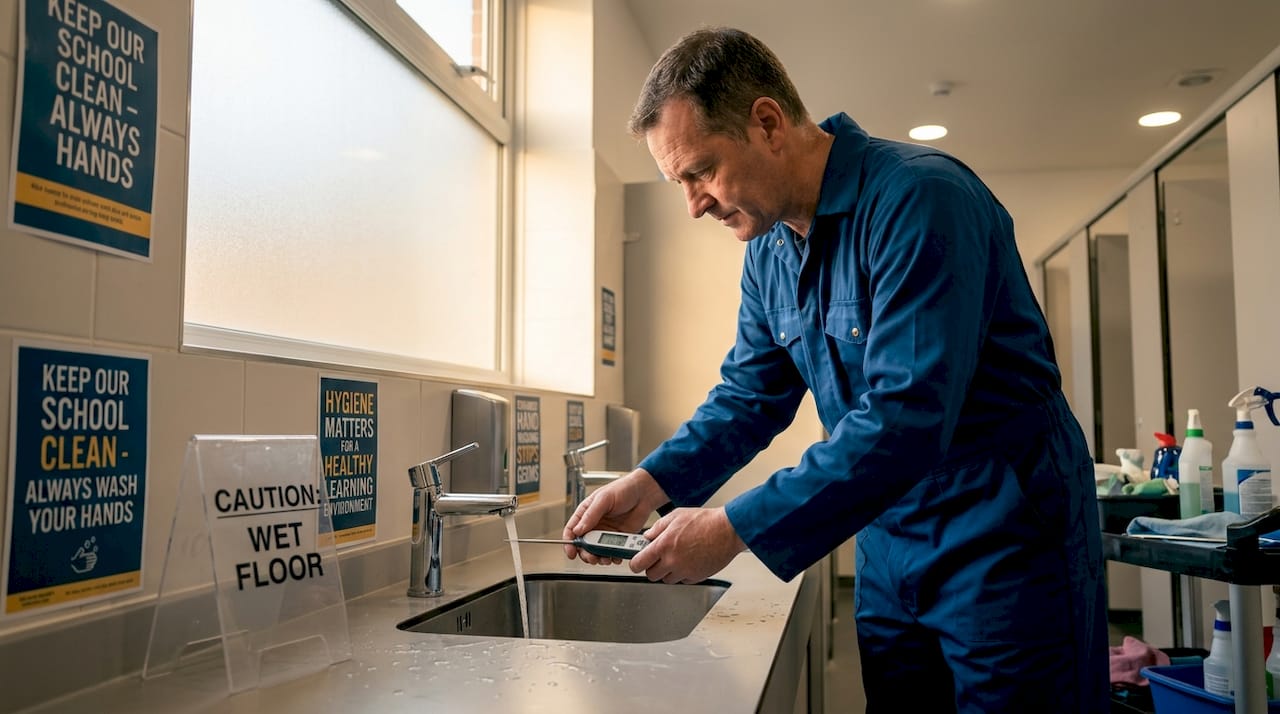
The responsible person must not only manage the written scheme but understand it well enough to make informed decisions when anomalies arise. If a monthly temperature reading falls outside the accepted range, the responsible person needs to know the correct escalation pathway without delay. Staff training is not optional. Trained staff are far better placed to spot early warning signs and respond correctly to out-of-parameter readings.
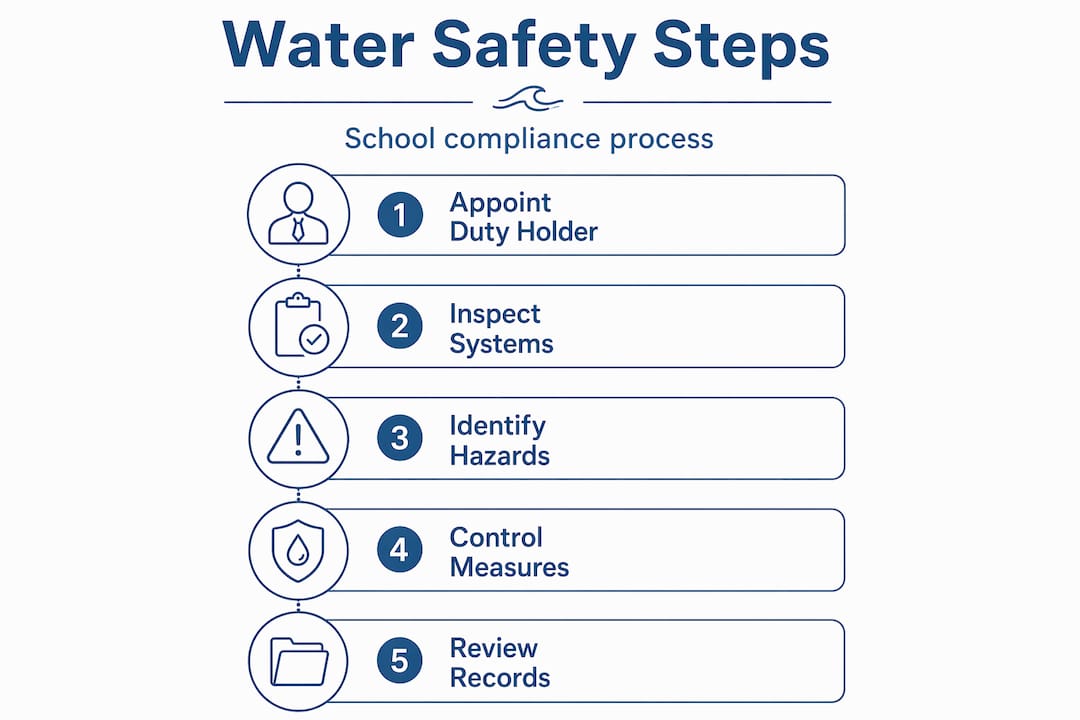
Verification, records, and compliance reviews
An assessment that is not verified and recorded is, legally speaking, nearly worthless. When an inspector or a solicitor asks for evidence, documentation is your only defence.
Every risk assessment and its associated control programme must include:
The date of the assessment and the identity of the assessor
A full list of identified hazards with risk ratings
All control measures currently in place and their status
Outstanding actions with assigned owners and deadlines
Results of water sampling and temperature monitoring, date-stamped and filed
Record retention for Legionella-related documentation is a minimum of five years. Temperature monitoring records should be kept for at least two years. Build this into your filing system from day one.
Certain events must trigger an immediate critical review of your school water safety risk assessment, regardless of when you last completed one. These include a positive Legionella test result, a confirmed case of Legionnaires’ disease linked to the premises, significant changes to the water system, and the start of occupation following any extended closure. Lead risk programmes face the same challenge: administrators who rely on assumptions rather than current test results leave themselves exposed.
Review trigger | Recommended action | Frequency |
Routine compliance review | Full assessment update | Annually |
Post-closure reopening | System flush and temperature verification | Every closure |
Positive Legionella test | Immediate investigation and remediation | As required |
System alteration or extension | Partial or full reassessment | Following works |
Inspection or audit | Documentation review | As required |
Using schools and education hygiene services alongside your internal compliance programme can help maintain the standards required between formal assessments, particularly for sanitation and surface hygiene in water-adjacent areas.
What I have learnt from working with schools on water safety
I have reviewed a great many school water safety plans over the years, and the pattern of failure is remarkably consistent. It is rarely a lack of awareness. Most administrators understand that Legionella is a risk. The problem is that the assessment gets completed, filed, and forgotten. The written scheme sits in a drawer. The responsible person leaves and nobody updates the appointment record. The flushing programme runs for a term and then quietly stops.
What actually protects schools is not the assessment document itself. It is the operational culture that document is supposed to create. Temperature monitoring only works if someone is genuinely checking the readings and acting on anomalies. Flushing protocols only reduce risk if they are completed in full, not just ticked off. Documentation only protects you if it accurately reflects what was actually done.
The other thing I see administrators consistently underestimate is the activity-based side of the assessment. Drinking water and Legionella get most of the attention, which is understandable. But the assessment of safety measures for school pools and off-site water activities carries just as much legal weight, and the consequences of getting it wrong are just as serious.
My honest advice: treat your water safety risk assessment as a living system rather than an annual compliance task. Review it when things change. Keep records you would be comfortable handing to a coroner. And if you are not confident in your own competence to conduct the assessment, commission a specialist rather than guess.
— Sammi
How Bespokecompliancesolutions can support your school
Bespokecompliancesolutions works with schools and educational settings across the UK to make water safety compliance straightforward and defensible. Whether you need a bespoke Legionella control programme developed from scratch or a professional water tank cleaning and disinfection service to prepare your system after a closure, the team can provide the specialist support your site requires.
From conducting comprehensive risk assessments and implementing logbook systems to delivering Legionella awareness training for your responsible person, every service is tailored to your specific premises. Schools present unique compliance challenges, and a one-size-fits-all approach simply does not work. Contact Bespokecompliancesolutions to discuss your school’s water safety requirements and put a genuinely effective compliance programme in place.
FAQ
What does a water safety risk assessment in schools cover?
A school water safety risk assessment covers water system hazards such as Legionella and lead contamination, chemical and biological water quality, and activity-based risks including swimming pools and off-site water activities. It must be documented formally and reviewed at least annually.
How often should schools review their Legionella risk assessment?
Legionella risk assessments must be reviewed annually at minimum. An immediate review is required following any positive Legionella test, significant system changes, or reopening after an extended closure.
Who is responsible for water safety in a school?
The duty holder, typically the headteacher or governing body, holds ultimate legal responsibility. A named responsible person is appointed to manage the day-to-day water safety plan, monitoring, and documentation.
What are the main risks of water in schools?
The primary risks include Legionella bacteria in hot and cold water systems, lead contamination in drinking water, microbiological contamination, chemical hazards such as nitrates, and drowning or injury risks associated with swimming pools and water-based activities.
What records should schools keep for water safety compliance?
Schools must retain Legionella-related records for a minimum of five years and temperature monitoring logs for at least two years. Records must include dated assessment reports, sampling results, control measure implementation, and details of any remedial actions taken.
Recommended
Comments