
Emergency water disinfection for facilities managers
- 3 days ago
- 9 min read
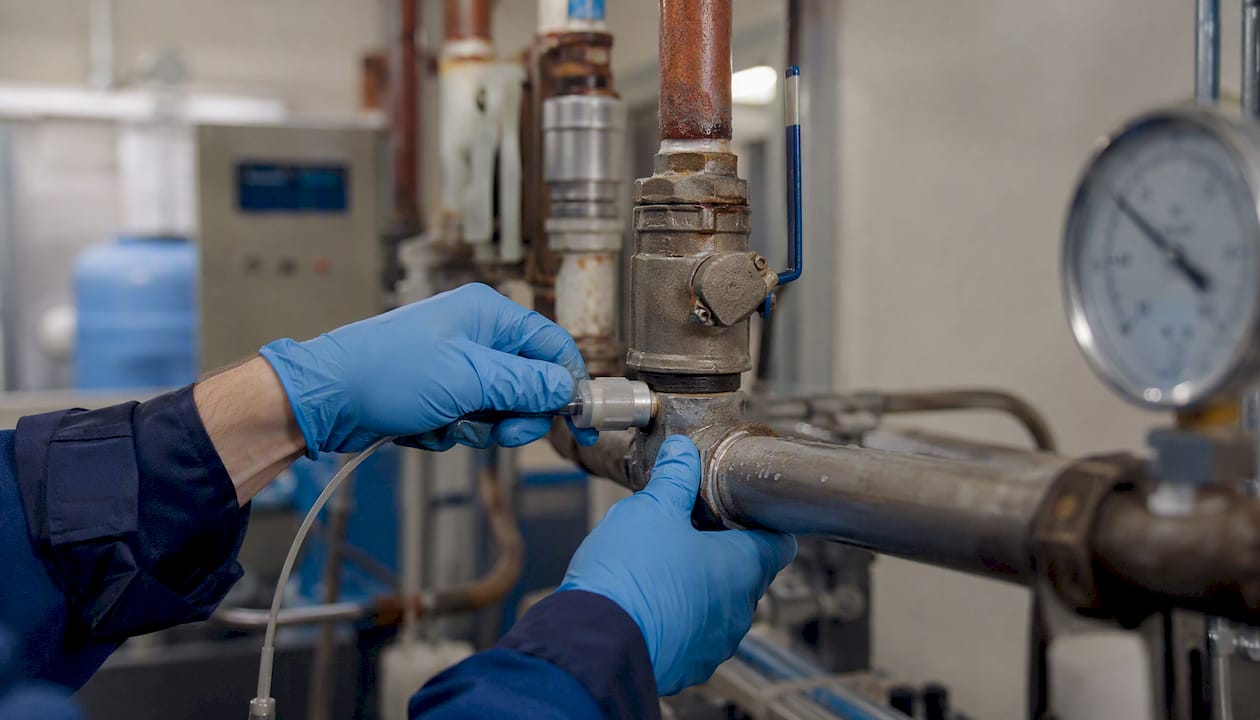
Emergency disinfection of a building water system is required when a confirmed Legionella case is linked to your site, when water samples return results above HSE action levels, when tanks or circuits are visibly contaminated following construction works, or when a system has been shut down for a prolonged period and refilled without adequate flushing. The moment any of those triggers occur, isolate the affected circuit or stop aerosol-forming plant where it is safe to do so, contact a competent contractor immediately, and notify your local authority environmental health team if a case or cluster is suspected. The governing framework is HSE L8 (the Approved Code of Practice), supported by BS EN 806 and BS 8558 for system design standards. Bespokecompliancesolutions provides emergency attendance, method statements, UKAS sampling coordination, and full incident reporting across the UK.
Key takeaways
Emergency water disinfection is required when a confirmed case, elevated samples, visible contamination or prolonged stagnation compromises your building water system, and the written control scheme must be activated immediately.
Point | Details |
When to disinfect | Act on confirmed cases, samples above action levels, post-works contamination or prolonged shutdown. |
Immediate first actions | Isolate affected circuits, notify environmental health, and engage a competent contractor the same day. |
Evidence to demand from contractors | Require method statements, COSHH assessments, insurance certificates and UKAS laboratory details before work starts. |
Update the written scheme | Revise your control scheme, schematic drawings and monitoring frequencies after every incident to address root causes. |
Bespokecompliancesolutions | Provides emergency disinfection, UKAS sampling coordination and incident reporting across UK sectors. |
Table of Contents
Why emergency water disinfection is needed: the triggers you must recognise
Understanding why emergency water disinfection is needed starts with knowing the specific conditions that cross the threshold from routine monitoring into incident response. These are not judgment calls; they are defined by HSE guidance and your written control scheme.
Common triggers requiring immediate action:
Confirmed case or cluster linked to the site. A diagnosed case of Legionnaires’ disease where epidemiological evidence points to your building requires immediate activation of your incident plan.
Samples above HSE action levels. Repeated positive Legionella results, or a single result significantly above the action level in your written scheme, require investigation and likely disinfection.
Visible contamination after construction or maintenance works. Debris, sediment or biological fouling in storage tanks or distribution pipework following building works demands physical cleaning and disinfection before the system returns to service.
Prolonged shutdown or mothballing. A system refilled after weeks or months of stagnation carries a high risk of bacterial proliferation, particularly where temperatures have drifted into the Legionella growth range of 20°C–45°C.
Cooling tower fouled by nearby construction. Dust and organic matter ingress from adjacent works can rapidly degrade water quality and trigger HSG274 Part 1 requirements for immediate cleaning and disinfection.
A hotel reopening after a six-month closure, a hospital ward with immunocompromised patients where a sentinel outlet fails its temperature check, or a school plant room where a tank lid has been left off during a refurbishment — each of these is a real scenario where waiting for the next scheduled service visit is not an option.
Where a cooling tower is involved, the Notification of Cooling Towers and Evaporative Condensers Regulations 1992 also requires the local authority to be notified of the tower’s existence; INDG458 sets out those notification duties clearly.
What the law requires from you as a dutyholder
Dutyholders must take suitable precautions where a foreseeable risk exists and must act promptly when controls fail. That obligation is not discretionary. L8 requires a written control scheme wherever a reasonably foreseeable risk is identified, and that scheme must include an incident plan specifying what to do, who is responsible and what records to produce.
During and after an incident, the records you must hold are:
BS EN 806 and BS 8558 provide the design and commissioning standards against which your system should be assessed; deviations from those standards (deadlegs, inadequate insulation, undersized calorifiers) often explain why an incident occurred in the first place.
Which disinfection methods are used and what their limits are
Thermal, high-level chlorination, chlorine dioxide dosing and mechanical cleaning are the principal emergency methods; the right choice depends on system type, age and the constraints of your building.
HSG274 Part 2 gives detailed procedures for both thermal and chemical disinfection, including flushing protocols and residual monitoring. Industry guidance summarises the thresholds: thermal disinfection requires the calorifier to reach at least 70°C and outlets to flow at 60°C or higher for a short period; chlorination is used where thermal is impractical or for cold pipework; cooling towers need mechanical cleaning plus thorough disinfection.
Method | Best for | Main strengths | Main limitations |
Thermal disinfection | Domestic hot water systems | No chemical residue; well-evidenced in L8/HSG274 | Scald risk; TMVs must be bypassed; energy-intensive |
High-level chlorination | Cold water storage and distribution | Fast; relatively low cost | pH-sensitive; corrosive to some materials; requires flushing |
Chlorine dioxide | Complex systems; biofilm-affected pipework | Penetrates biofilm better than free chlorine | Specialist equipment; on-site generation required |
Mechanical cleaning | Storage tanks; cooling towers | Removes physical fouling that biocides cannot penetrate | Labour-intensive; confined-space considerations |
Pro Tip: Biofilm and scale physically protect bacteria from chemical disinfectants. A chlorination programme applied to a fouled tank or scaled pipework will rarely achieve a lasting result. Physical cleaning or descaling must come first — skipping it is the single most common reason an emergency disinfection has to be repeated.
For HVAC and cooling systems, the mechanical cleaning step is non-negotiable before any chemical treatment is applied.
Step-by-step emergency disinfection response
Start the incident plan immediately and follow your written control scheme. Isolate and secure affected plant where it is safe to do so before any contractor arrives.
Isolate affected circuits or stop aerosol-forming plant (cooling towers, showers, spray taps) where safe.
Notify environmental health at your local authority; notify UKHSA or your regional public health body if a case or cluster is confirmed or suspected.
Engage a competent contractor with relevant experience, insurance and a method statement specific to your system.
Update your risk assessment to reflect the incident trigger and current system condition.
Agree method statement and COSHH assessment before any work begins; confirm waste disposal arrangements.
Carry out mechanical cleaning of tanks, strainers and any fouled components before chemical or thermal treatment.
Apply the chosen disinfection procedure in accordance with HSG274 Part 2 or Part 1 for cooling systems.
Controlled flushing and draining to remove disinfectant residuals to safe discharge levels.
UKAS-accredited verification sampling at agreed sample points; do not return the system to service until results confirm the system is clear.
Authorise return to service in writing, with sign-off from the responsible person and the contractor.
Record everything in the incident log and update the written control scheme.
Verification sampling should be carried out by a UKAS-accredited laboratory. Where a cooling tower is implicated, HSG274 Part 3 lists additional sampling tasks for specialist equipment. A single clear result is rarely sufficient; most competent contractors will recommend repeat sampling at intervals before final sign-off.
How to choose a competent contractor quickly
Use a contractor who can deliver the agreed method statement, UKAS-verified sampling and a signed completion report, and who demonstrably understands HSE L8 requirements. Speed matters in an emergency, but appointing an unqualified contractor creates additional legal exposure.
Evidence to request before work begins:
Public liability and professional indemnity insurance certificates
Method statement and risk assessment specific to your system type
COSHH assessment and waste disposal plan
UKAS laboratory partnership or in-house UKAS testing capability
Staff competence records and training evidence
References from comparable sector work (healthcare, housing, hotels)
Questions to ask on first contact: Can you attend today or tomorrow? What is your typical turnaround for UKAS sample results? Have you worked on systems like ours (size, type, sector)? How do you handle waste effluent and trade effluent consent?
Pro Tip: Ask for the UKAS schedule number of the laboratory they use and verify it on the UKAS website before work starts. A contractor who cannot name their accredited laboratory is a contractor to avoid.
What drives the timeline and cost of an emergency response
Realistic response ranges from same-day attendance to a multi-week verification period depending on system size, method chosen and sampling results. A typical sequence runs: same-day or next-day attendance, one to two days for cleaning and disinfection, then a two-to-six-week sampling verification window before final sign-off.
Cost driver | Why it affects price |
System size and complexity | More sample points, more chemical, more labour hours |
Method chosen | Chlorine dioxide generation equipment adds cost vs. standard chlorination |
Scaffold or confined-space access | Tank entry or roof-mounted plant requires additional safety measures |
Number of verification samples and lab charges | UKAS testing per sample; repeat rounds multiply cost |
Waste disposal and trade effluent consent | High-chlorine effluent may require neutralisation before discharge |
Budget conversations with senior management should happen on day one of an incident, not after the contractor has started work.
Safety, environmental and notification obligations
Emergency disinfection involves COSHH and environmental risks that must be managed and recorded; failure to do so creates additional legal liabilities on top of the original incident.
Key considerations:
COSHH controls: all chemical disinfectants require a site-specific COSHH assessment, appropriate PPE (gloves, eye protection, respiratory protection for chlorine dioxide) and adequate ventilation.
Scald risk during thermal disinfection: outlets must be clearly signed and controlled access enforced while water is circulating at ≥60°C. TMVs must be bypassed using the correct procedure and reinstated immediately after disinfection; refer to temperature monitoring guidance for TMV bypass protocols.
Effluent and discharge: high-chlorine or biocide-laden water must not be discharged to surface water. Neutralisation before discharge to the foul drain is standard practice; trade effluent consent may be required from your water company.
Notification obligations: notify local authority environmental health as soon as an incident is identified; notify UKHSA or your regional public health body if a case is confirmed; brief building senior management and inform occupants as required by your incident plan.
What to do after disinfection to prevent a repeat incident
Emergency disinfection must be followed by a defined aftercare programme that addresses the root cause, not just the symptom. Repeat incidents almost always trace back to a failure that was present before the emergency and was not corrected afterwards.
Immediate post-incident actions include scheduled repeat sampling, increased frequency of temperature and sentinel outlet checks, and physical remedial works such as removing deadlegs, repairing tank lids, correcting thermal controls or replacing failed TMVs. For housing associations, the Legionella prevention in social housing guidance offers practical examples of the remedial measures most commonly needed.
Your written control scheme update checklist should cover:
Revised schematic drawings reflecting any pipework changes
Updated responsibilities and contact details for the responsible person
New control limits and monitoring frequencies reflecting the incident findings
Scheduled Legionella awareness training for onsite responsible persons
Date of next full risk assessment review
HSE guidance is clear that prevention through temperature control, flushing and cleanliness is the primary regulatory expectation. Emergency disinfection is what happens when those primary controls fail. The aftercare programme is what stops them failing again.
What the field actually looks like
The most common pattern seen during emergency callouts is a system that was technically compliant on paper but had accumulated small failures over time: a deadleg that was never removed, a calorifier running five degrees below its set point, a tank that had not been inspected since the last risk assessment. None of those failures alone would necessarily trigger an incident, but together they create the conditions where a positive sample or a reported case becomes inevitable.
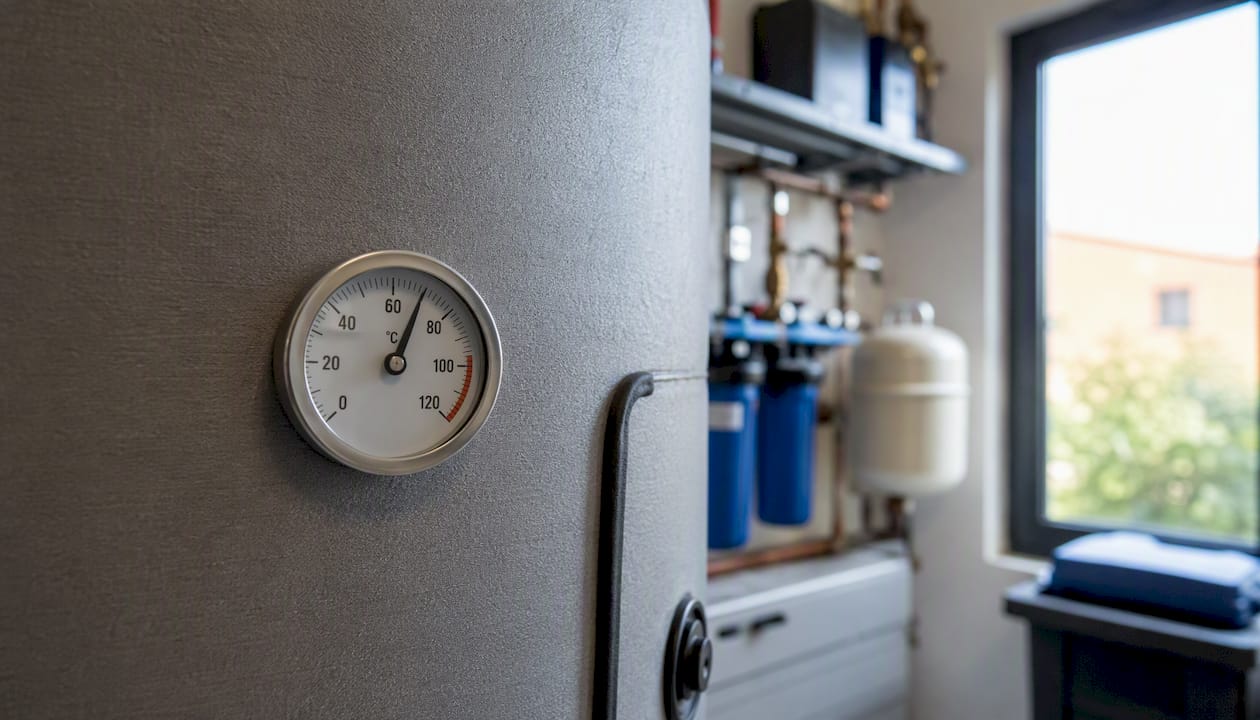
One anonymised example: a hotel that had been closed for seven months contacted us after reopening and finding elevated Legionella counts across multiple hot water outlets. The system had been left partially filled with no flushing regime in place. We attended within 24 hours, carried out a full thermal disinfection following mechanical cleaning of the calorifier and cold water storage tanks, and coordinated UKAS verification sampling over a four-week period. The system returned to service with clear results. The written scheme was updated to include a formal mothballing and recommissioning procedure, which is the change that actually prevents the same incident from happening again.
Bespokecompliancesolutions: emergency disinfection and Legionella control across the UK
When an incident occurs, the gap between a contained problem and a prolonged closure often comes down to how quickly a competent contractor arrives with the right method statement, the right equipment and a clear sampling plan.
Bespokecompliancesolutions provides emergency disinfection attendance, mechanical tank cleaning, COSHH-compliant chemical treatment, UKAS sampling coordination and full incident reporting for commercial buildings, healthcare sites, housing associations, hotels and schools across the UK. Every job includes a written method statement, a COSHH assessment and a signed completion report you can place straight into your incident log. For Legionella compliance in commercial premises or UKAS water testing and sampling, contact Bespokecompliancesolutions today to discuss your incident or arrange a site visit.
Sources
This article is general information, not a substitute for advice from a qualified doctor. Consult a qualified healthcare professional about your own circumstances before acting on anything here.
Recommended
Comments