
Cold water tank refurbishment: repair, replace or upgrade?
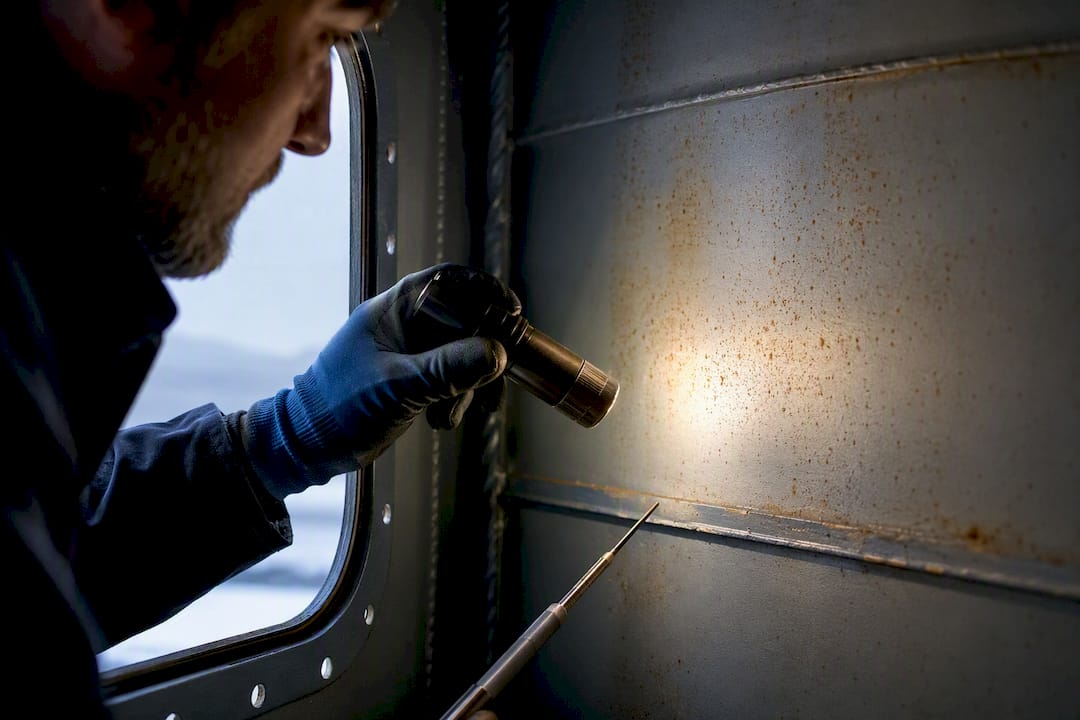
Refurbishment is the right call when a cold water storage tank is structurally sound and its problems are fixable: worn linings, ageing fittings, or a hygiene issue that inspection has flagged. Replace it when the shell has lost structural integrity or compliance gaps can’t be closed reliably. Either way, the next move is the same: commission a condition survey and a Legionella risk assessment before committing to a scope of works. Specialist companies carry out both as a starting point for facilities teams weighing up the decision.
TL;DR:
Tanks with structural damage like panel distortion or pitting are better replaced than refurbished, especially if hygiene issues persist despite cleaning.
Refit or repair must include compliance with current regulations, specifically the Water Supply (Water Fittings) Regulations 1999, which may require upgrades to lids, overflows, and fittings.
The refurbishment process requires six essential steps: drain, inspect, clean, repair or reline, cure, and disinfect, with a mandatory 4 to 5 days for sterilisation before reusing the tank.
A contractor’s competence should be confirmed through documented experience, method statements, approved materials, and clear responsibility for downstream disinfection before signing a contract.
Whole-life cost analysis favors replacement for heavily corroded tanks or those in sensitive facilities, due to higher ongoing remedial costs and risk of failure.
Table of Contents
When to refurbish and when to replace a cold water tank
The decision usually comes down to four things: shell condition, compliance gaps, hygiene history, and whole-life cost. A steel tank showing surface corrosion but no pitting through the plate is often a good refurbishment candidate. A GRP sectional tank with panel distortion from uneven foundation seating is a different story. That distortion is frequently a root cause of chronic leaks and gasket failure, and it’s an engineering problem that repair rarely fixes for good, according to Tricel Water UK’s maintenance guidance.
There’s a legal wrinkle too. Once you touch a tank for repair, it must come back into service fully compliant with current Water Supply (Water Fittings) Regulations 1999 — not the regulations in force when it was installed. That can turn a simple lining job into a bigger scope than expected.
Weigh these factors before choosing a route:
Shell integrity: pitting, panel distortion or structural movement points towards replacement, not repair.
Hygiene red flags: repeated positive Legionella samples, heavy sediment, or visible biofilm are strong signals the tank’s internal environment is failing, not just its coating.
Compliance shortfall: missing screened overflows, ill-fitting lids, or non-WRAS-approved fittings add cost to any refurbishment.
Whole-life economics: compare the cost of ongoing remedial work against a one-off replacement capital spend, factoring in likely recurrence.
Industry experience is blunt on this: heavily corroded tanks are usually better replaced than refurbished, even where removal logistics favour repair.
What are the steps in a cold water tank refurbishment?
A refurbishment programme follows a fairly fixed sequence, and skipping steps is where most compliance problems start.
Isolate and drain the tank, arranging temporary or phased supply if the building can’t tolerate a full outage.
Prepare safe access, including confined-space assessment and permit-to-work sign-off before anyone enters the vessel.
Inspect the shell and fittings to confirm the scope: this is the diagnostic step that determines whether cleaning alone will suffice or repairs are needed.
Clean manually or pressure-wash, removing sediment and biofilm from all internal surfaces, including the underside of the lid and baffles.
Repair or reline using butyl liners, epoxy coatings, or GRP panel repairs, chosen against the substrate and the extent of damage.
Cure the lining for the period the manufacturer specifies, which cannot be shortened without risking product failure or tainting.
Disinfect and sterilise the tank and downstream pipework, since sterilising the vessel alone isn’t sufficient.
Sample and clear before returning the tank to service.
Cleaning and disinfection should be triggered by what the inspection actually finds, sediment, corrosion, or contamination, rather than a routine date on a calendar as HSG274 Part 2 sets out. Lining and coating systems typically need a controlled cure period, and sterilisation of the tank and connected pipework commonly adds around 4 to 5 days after the physical works finish, before anyone can draw water from it again.
Pro Tip: Ask your contractor for the cure time in writing before works start, not after. Manufacturers publish minimum cure periods for a reason, and a rushed sterilisation is the single most common cause of a failed clearance sample.
What compliance standards apply to a refurbished tank?
Three frameworks govern the work, and a duty-holder needs evidence against all three, not just the one that feels most relevant.
ACoP L8 requires a written risk assessment, a documented control scheme, an appointed competent person, and records retained for at least five years. That’s the backbone of any defensible compliance file.
The Water Supply (Water Fittings) Regulations 1999 govern materials and fittings. Any part replaced during refurbishment, overflow pipes, screens, lids, must meet current standards, which usually means WRAS or Kiwa-approved materials. Older tanks frequently lack close-fitting lids or properly screened overflows, and bringing these up to standard is routinely part of the refurbishment scope rather than an optional extra.
On frequency: treat annual inspection as the baseline, then let condition drive the rest.
Inspect at least annually, and after any works or known contamination event.
Clean and disinfect when inspection finds sediment, biofilm, corrosion, or a hygiene failure, not on a fixed schedule.
Log temperatures, inspection findings, and dates in a proper logbook system.
Keep cleaning and disinfection certificates and contractor method statements on file for at least five years.
Practical checklist for facilities teams during works
Getting through a refurbishment without a compliance headache comes down to preparation and paperwork as much as the physical work itself.
Before anyone starts, confirm permits are in place, confined-space controls are agreed, and access equipment (scaffolding, platforms) has been checked. During the works, seal vents and protect overflow points so nothing recontaminates the vessel while it’s open. Run temperature sentinel checks before and after, and agree a microbiological sampling plan with the contractor up front rather than deciding on it midway through.
Confirm permits, confined-space controls, and access checks before entry.
Protect vents, screens and overflow points from contamination during works.
Run sentinel temperature monitoring pre and post works.
Require clearance sampling results before sign-off, not just a verbal assurance.
Set a post-works turnover regime to stop stagnation recurring.
Water stored above 20°C creates conditions Legionella bacteria favour, so tanks in warm plant rooms often need insulation or active turnover monitoring once they’re back in service. A 24-hour turnover checklist is a practical way to keep this under control after handover, rather than discovering a stagnation problem at the next annual inspection.
How much does tank refurbishment cost against replacement?
Cost comparisons on paper often understate what refurbishment actually costs to deliver, because several line items sit outside the headline lining price.
Access enabling: scaffolding, cranage, or temporary platforms to reach plant room tanks.
Lining or coating materials: cost varies significantly by system and substrate condition.
Sterilisation and sampling: mandatory, not optional, and adds both cost and days.
Downtime cover: temporary supply, bottled water, or phased works to keep the site running.
Cure and sterilisation periods extend the perceived downtime well beyond the physical works window, which is where budgets often go wrong: a two-day lining job can mean five days before the tank is usable again.
Taking a whole-life view often changes which option looks cheaper. A well-specified GRP tank can outlast galvanised steel by a wide margin, but that only holds if foundations were correctly levelled at installation, since panel distortion from a poor base is a common driver of premature failure regardless of material. For sites with low tolerance for residual risk, hospitals, care settings, data centres, the calculation tilts further towards replacement even where refurbishment looks marginally cheaper on paper.
How do you choose a contractor for tank refurbishment work?
Ask for evidence before you ask for a price. A contractor should be able to show sector experience relevant to your building type, a clear understanding of WRAS or Kiwa material approval, a written method statement, and current insurance cover.
Request the proposed cure-time schedule and disinfectant concentrations in writing before works are booked.
Ask what the sampling plan and acceptance criteria look like, and who signs off clearance.
Confirm contractual responsibility for downstream disinfection, since pipework sterilisation is sometimes treated as a separate scope.
Get written warranties on any lining system, and staged payment terms tied to milestones rather than a single lump sum.
Pro Tip: Make final payment conditional on receiving written compliance confirmation and clearance sample results, not just a completion certificate. A certificate says the work was done; a clearance result says it worked.
What actually matters once the work is signed off
Most refurbishment failures aren’t technical, they’re procedural. Someone skips the clearance sample, or the cure time gets squeezed because the building needs water back on Monday. Documentation matters as much as the physical repair, because a tank that’s technically clean but poorly recorded is still a liability at the next audit.
If there’s one thing worth doing before anything else, book a proper condition survey alongside a Legionella risk assessment. Some companies work from a documented method of works and a 24-hour turnover checklist that gives facilities teams something concrete to follow after handover, not just a certificate to file away.
— Sammi
How Bespokecompliancesolutions supports tank refurbishment decisions
Bespokecompliancesolutions gives facilities teams a single point of contact for the assessment, cleaning, and compliance sign-off that a refurbishment demands, rather than juggling separate contractors for each stage. That matters most where downtime and documentation both carry real consequences, commercial sites, healthcare settings, housing portfolios.
[
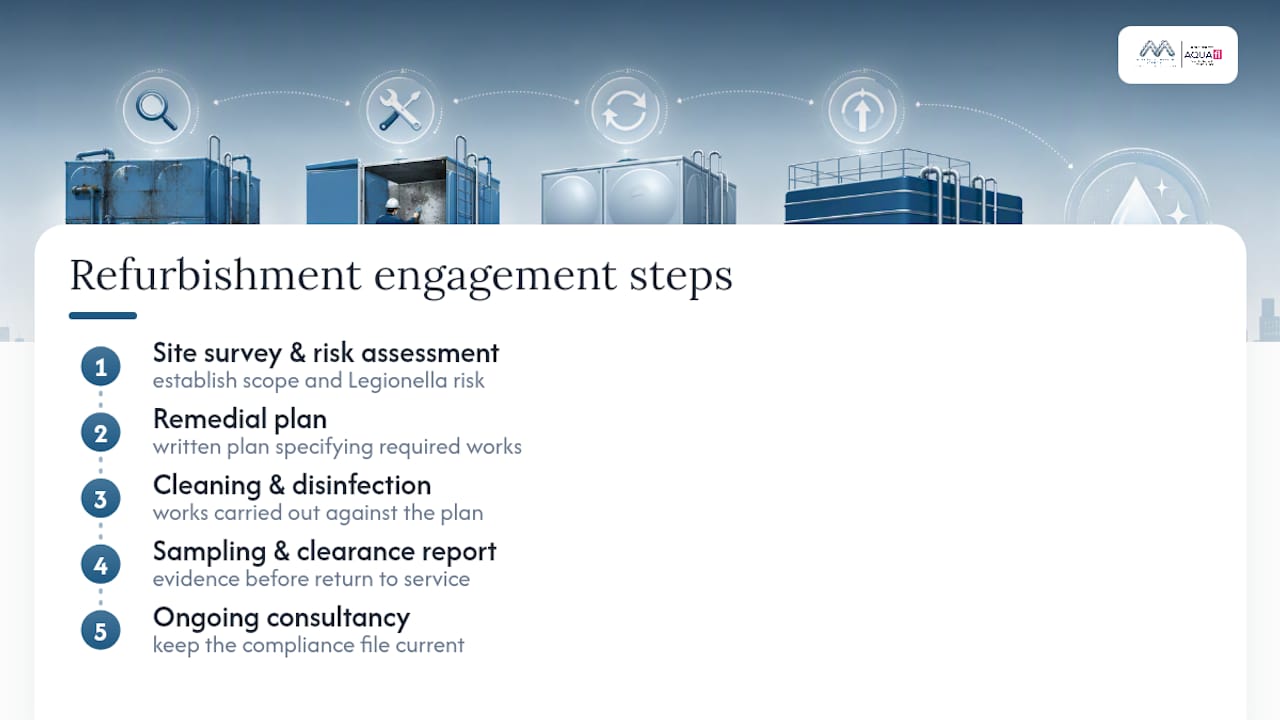
A typical engagement starts with a site survey and a Legionella risk assessment, followed by a written remedial plan setting out exactly what the tank needs. From there, water tank cleaning and disinfection work is carried out against that plan, with sampling and clearance reporting provided as evidence before the tank goes back into service. Ongoing consultancy keeps the compliance file current afterwards, so the next annual inspection isn’t a scramble.
If a tank on your site is due an inspection or you’re already looking at a refurbishment quote, book a Legionella risk assessment with Bespokecompliancesolutions to get a clear, written view of what’s actually needed before any works are commissioned.
This article is general information, not a substitute for advice from a qualified doctor. Consult a qualified healthcare professional about your own circumstances before acting on anything here.
Sources
FAQ
How often should a cold water tank be inspected?
Annual inspection is the recognised baseline under ACoP L8, with cleaning and disinfection carried out when the inspection finds a reason to, not on a fixed calendar.
How long does a tank refurbishment take before it’s back in service?
Physical works are often quick, but sterilisation and clearance sampling typically add around 4 to 5 days before a refurbished tank can safely return to service.
Does refurbishing a tank mean it has to meet current regulations?
Yes. A repaired tank must come back into service fully compliant with the Water Supply (Water Fittings) Regulations 1999, which often means upgrading lids, screens and overflow fittings.
When should a tank be replaced instead of refurbished?
Replace when the shell shows structural damage such as panel distortion or through pitting, or when hygiene failures keep recurring despite cleaning, since these point to a root cause repair won’t fix.
Who can carry out a Legionella risk assessment before refurbishment works?
Bespokecompliancesolutions carries out Legionella risk assessments and condition surveys as a starting point for facilities teams deciding between refurbishment and replacement.
Recommended
Comments