
UK Gym Shower Controls to Meet ACOP L8 and Pass Inspections
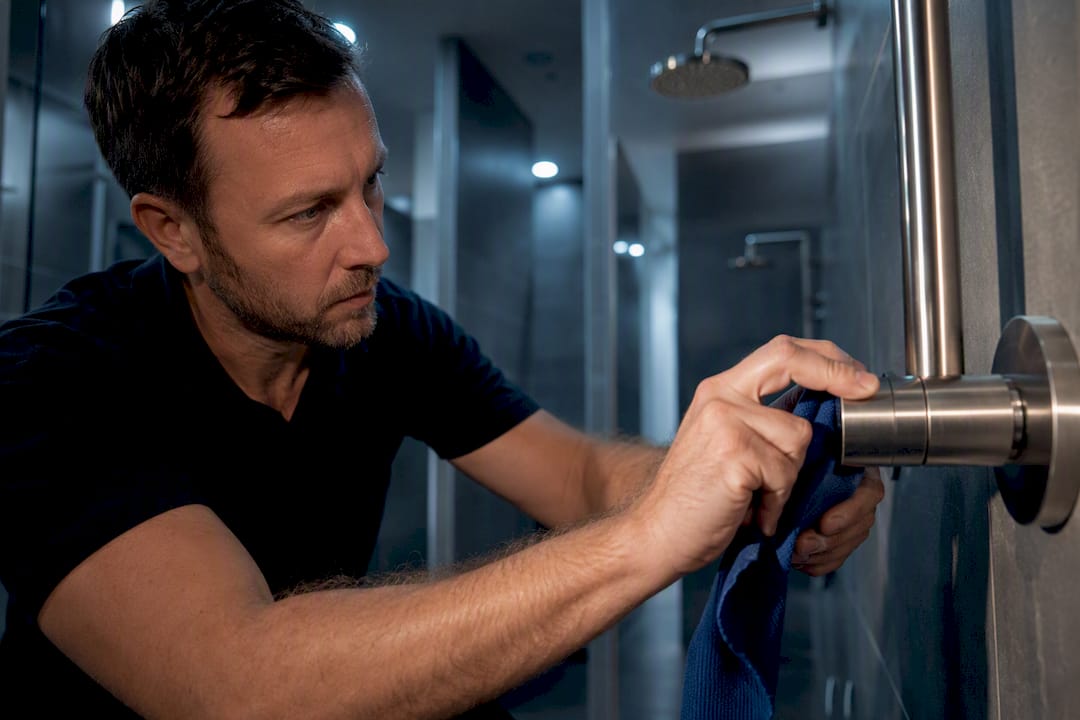
Yes, gym showers can transmit Legionella, but only under specific conditions: stagnant water sitting between 20 and 45°C, given time to breed bacteria, then dispersed as a fine spray. Cut off any one of those three factors and the risk collapses. That means the priorities are a strict temperature regime, weekly flushing of low-use outlets, and a written control scheme under ACOP L8.
TL;DR:
Regular weekly flushing of low-use outlets for at least two minutes is essential to prevent stagnant water and bacterial buildup.
Service and check thermostatic mixing valves frequently to balance scalding risk with infection control, and record all temperature readings.
Remove or shorten dead legs during refits to eliminate reservoirs where bacteria can settle and multiply, reducing reliance on chemical dosing.
Keep detailed, signed logs of all control measures, as inspectors view record accuracy as key evidence of compliance.
Table of Contents
Flushing, cleaning and descaling regime for showerheads, hoses and low-use outlets
Risk assessment and the written control scheme required by ACOP L8 / HSG274
Sampling, testing and temperature monitoring: what gyms should do and why
Practical checklist: weekly, quarterly and annual tasks for gym facility teams
Why and how showers become a Legionella risk in gyms
Legionella bacteria multiply fastest between 20°C and 45°C, feeding on the scale, sediment and biofilm that accumulate inside pipework and showerheads. Dead legs, the disused sections of pipe left after refits or removed equipment, act as reservoirs where water barely moves and bacteria settle undisturbed.
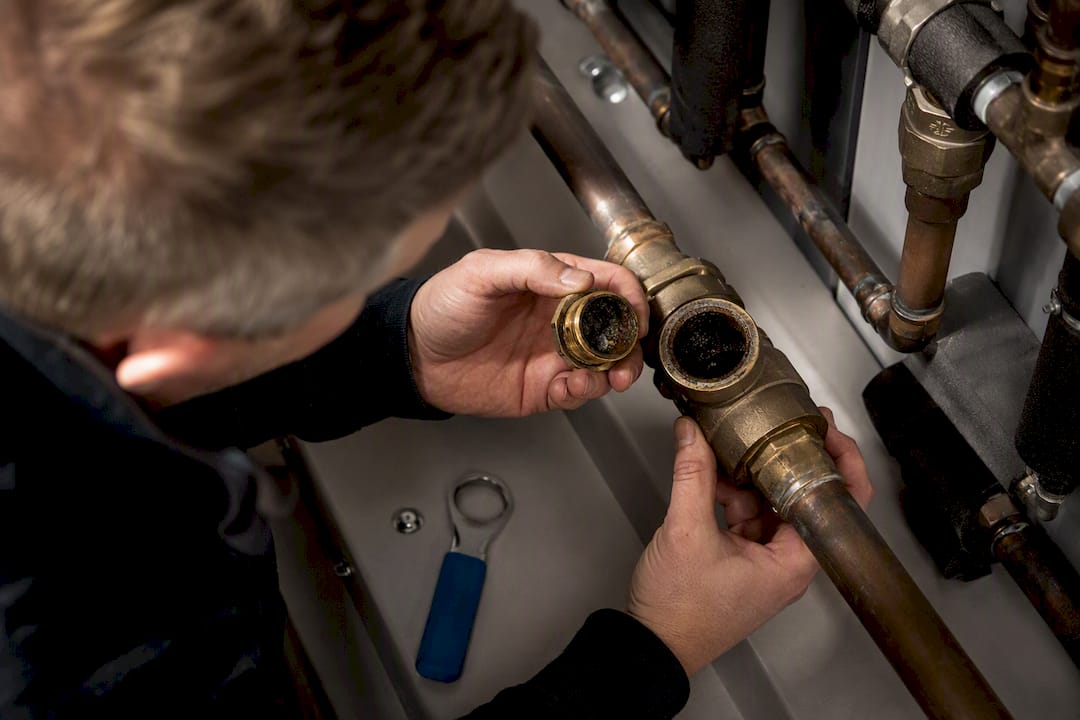
Gyms present a particular problem: usage swings wildly between peak evening rushes and dead midweek mornings, so some cubicles can sit unused for days. Add flexible shower hoses that trap water in their coils, cold-water tanks feeding multiple floors, and cubicle drains that never quite clear, and you have a system built for stagnation.
The exposure route is inhalation, not ingestion. Fine aerosol droplets thrown off by a showerhead can carry viable bacteria deep into the lungs, which is precisely why the NHS describes Legionnaires’ disease as a potentially fatal pneumonia. Older members, smokers, and anyone with a weakened immune system or chronic respiratory condition face the highest risk, which matters for any leisure centre with a broad membership base.
Stagnant, low-flow outlets are the single biggest contributor to bacterial growth.
Scale and biofilm inside showerheads and hoses provide the nutrients bacteria need.
Aerosol dispersal from a shower head is the actual transmission mechanism, not the water itself.
Temperature control and managing TMVs in gym showers
Temperature is the cheapest, most reliable lever a facility manager has, and it works in both directions. Hot water storage should stay at or above a temperature that prevents legionella growth; distribution to outlets should reach a similarly safe temperature promptly, and cold water should be stored and distributed below the temperature range that supports legionella multiplication, according to HSE guidance on managing Legionella. Temperatures outside this range prevent viable bacterial growth.
The catch is scalding risk, particularly in communal showers used by children, older members or anyone with reduced sensation. This is where thermostatic mixing valves (TMVs) earn their keep, blending hot and cold to a safe delivery temperature. HSE guidance recommends weighing scalding risk against infection risk when deciding where TMVs are needed, because an unserviced valve can itself become a stagnation point behind the mixing chamber.
Service TMVs regularly, with frequency increased in high-use gym environments.
Check sentinel outlets regularly, as recommended, for temperature compliance.
Record every reading with date, outlet reference and initials, not just a tick.
Pro Tip: Run the shower for a minute before taking a temperature reading. A cold showerhead skews the first reading and can mask a genuine fault behind the wall.
Flushing, cleaning and descaling regime for showerheads, hoses and low-use outlets
Weekly flushing is the baseline. Shower cubicles that go unused for extended periods, as common in gyms with rotating class schedules, need a flush of sufficient duration to clear stagnant water and refresh the system, per HSE’s flushing guidance. Log who did it and when; an unsigned entry is worth nothing during an inspection.
Descaling and disinfecting showerheads and hoses should be done regularly. Limescale traps bacteria and shields biofilm from disinfection, so a showerhead that looks clean can still harbour a colony inside its rose. Increase that frequency where footfall is low or where members include vulnerable groups such as rehabilitation or older adults.
Flush every low-use outlet weekly for at least two minutes, running both hot and cold.
Strip, descale and disinfect showerheads and hoses quarterly, or monthly for rarely used cubicles.
Identify dead legs during any refit and physically remove or shorten them rather than relying on flushing alone.
Pro Tip: Keep a spare set of descaled showerheads on hand so you can swap and clean off-site without leaving a cubicle out of action for hours.
Risk assessment and the written control scheme required by ACOP L8 / HSG274
Every gym and sports centre with showers has a legal duty under ACOP L8 to identify Legionella risk, appoint a named responsible person, and produce a written scheme covering how that risk is controlled. This isn’t a one-off document; it’s a live record that inspectors expect to see updated.
A properly built scheme should include:
A schematic of the water system showing tanks, pipe runs and every outlet.
Sentinel outlets identified and a monitoring calendar attached to each.
Defined corrective actions when a temperature or sample reading fails.
Emergency contacts, including your water treatment contractor and environmental health.
Inspectors tend to focus on records before they look at the pipework itself. A gap in the log is routinely read as evidence the check never happened, whatever actually took place at the taps. Our guide on reviewing a Legionella risk assessment walks through what a compliant document should contain.
Sampling, testing and temperature monitoring: what gyms should do and why
Sampling isn’t a blanket annual requirement; it’s risk-based, driven by what your written scheme identifies as vulnerable points in the system. Microbiological sampling confirms that controls are actually working, particularly after a fault, a refit, or a period of low occupancy such as a summer closure.
Temperature monitoring runs on a set rhythm. HSE’s hot and cold water guidance recommends regular checks of hot water storage and sentinel outlets, with cold water tanks inspected periodically as part of risk-based monitoring. Where chemical disinfection is in use, pH-corrected halogen readings matter, because pH swings can make a biocide look effective on paper while doing almost nothing in practice.
Sample when the risk assessment flags a specific concern, not on a fixed generic schedule.
Check storage and sentinel outlet temperatures monthly, cold tanks every six months.
Escalate immediately if a reading falls outside the range set in your written scheme, and record the corrective action taken.
Practical checklist: weekly, quarterly and annual tasks for gym facility teams
Turning HSE guidance into a working rota removes the guesswork. Most gym operators find a simple weekly, quarterly, annual split covers everything without becoming a full-time job for one person.
Weekly: flush every low-use shower outlet, visually check cubicles and hoses for damage or pooling, and sign the logbook.
Quarterly: descale and disinfect showerheads and hoses, and service any TMVs fitted to the system.
Monthly/Annual: check storage cylinder and sentinel outlet temperatures monthly, inspect cold tanks twice yearly, and review the whole risk assessment annually or after any refit.
Frequency | Task | Who signs off |
Weekly | Flush low-use outlets; visual cubicle check | Facility team member |
Monthly | Storage cylinder and sentinel outlet temperature check | Responsible person |
Quarterly | Descale/disinfect showerheads and hoses; TMV service | Contractor or trained staff |
Six-monthly | Cold water tank inspection | Responsible person |
Annually | Full risk assessment review | Competent person / consultant |
Common failures and design priorities from inspections
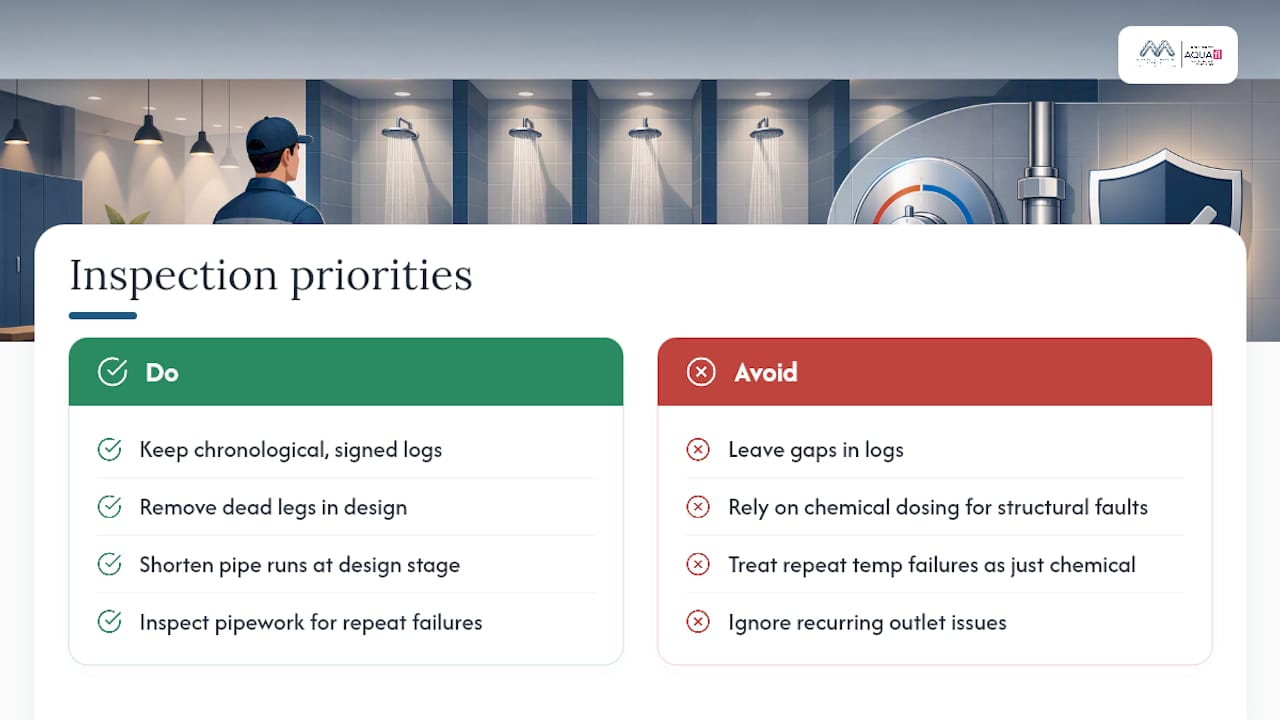
Chronological, signed logs are usually the first thing an inspector checks, and gaps get read as proof the work never happened, regardless of what was actually done at the outlets.
Physical fixes at design stage, removing dead legs and shortening pipe runs, tend to outperform relying on repeated chemical dosing to fix a structural problem. Our piece on dead leg pipe risks covers this in more depth.
Pro Tip: If the same outlet keeps failing temperature checks, stop treating it as a chemical problem and get someone to look at the pipework itself.
Our take on making gym compliance stick
The gyms that struggle rarely lack knowledge of the rules; they lack a habit of recording what they’ve already done. Bespoke Compliance Solutions sees this pattern repeatedly across leisure sites: good intentions, patchy logs. Bespoke risk assessments and proper staff training turn a paper exercise into something that actually holds up under scrutiny.
— Sammi
Get your gym’s water system inspected properly
This approach offers a practical alternative to piecing together compliance from generic checklists and hoping the paperwork holds up at inspection. For gyms and sports centres, that means Legionella risk assessments built around your actual site layout, not a template, alongside water sampling and analysis, TMV servicing, bespoke logbook systems, and on-site or online Legionella awareness training for the staff who’ll be doing the weekly flushing.
[
Booking a site survey is straightforward: have your current risk assessment (if one exists), a rough schematic of your hot and cold water system, and details of any recent refits or closures to hand. Get in touch with a specialist provider to arrange an assessment and put a written scheme in place that will stand up when someone comes to check it.
This article is general information, not a substitute for advice from a qualified doctor. Consult a qualified healthcare professional about your own circumstances before acting on anything here.
Sources
FAQ
Can you catch Legionella from a shower?
Yes, but only if the water has been allowed to stagnate at 20 to 45°C and is then dispersed as an aerosol spray; well-maintained, correctly heated systems carry minimal risk.
How long should you run a shower to avoid Legionella?
Flush any low-use outlet for at least two minutes to clear stagnant water, running through both hot and cold before the shower is used normally.
Is Legionella testing mandatory in UK gyms?
Microbiological sampling itself isn’t automatically mandatory everywhere, but a risk assessment and written control scheme under ACOP L8 are, and that assessment determines whether sampling is needed.
What kills Legionella in a showerhead?
Heat above 60°C and regular descaling both remove the scale and biofilm that shelter bacteria; quarterly disinfection of showerheads and hoses is the standard baseline for gyms.
Recommended
Comments